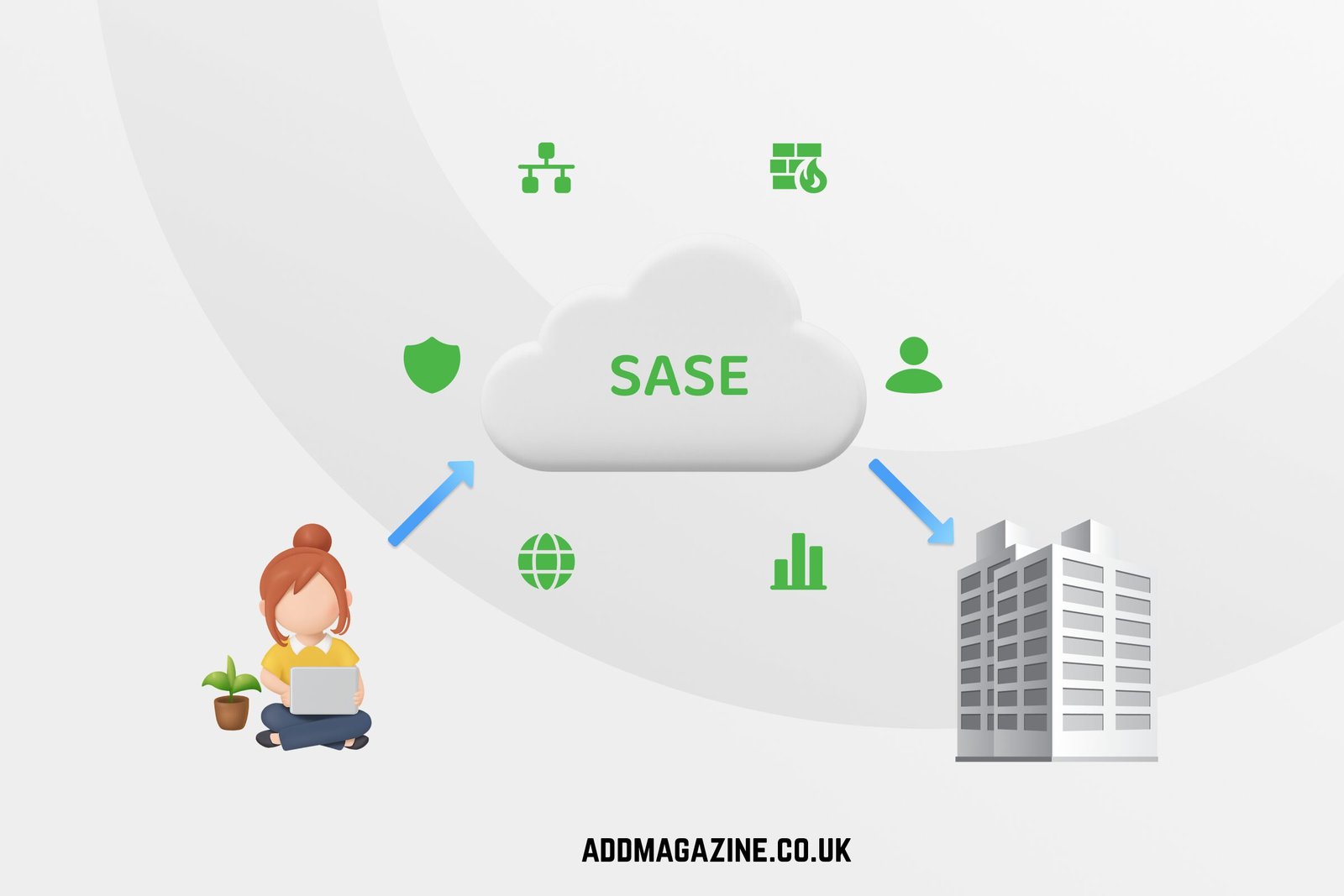
The way organizations connect employees, applications, devices, and data has changed. Hybrid work, cloud applications, and distributed offices have made network perimeters harder to manage and secure. A SASE platform for secure access combines networking and security capabilities at the cloud edge.
VPNs can enable remote access but usually allow users to connect to the corporate network without providing access to applications that require such access. SASE takes all of these factors into consideration prior to providing access.
Why VPNs Are No Longer Enough
VPNs were conceived with a corporate perimeter in mind. The user would establish a connection to the gateway, be authenticated, and have network access. The applications could be spread across private data centers, public clouds, and SaaS platforms. Even contractors and partners might require access, but not join the internal network. Centralized infrastructure for a VPN solution could lead to bottlenecks.
Modern access solutions should solve certain questions: Who requests access? What device is being used? What application is requested? Is the device compliant? Does the request conform to policy?
What Is a SASE Platform?
SASE stands for Secure Access Service Edge. It is an architecture in which networking and security services provided via cloud delivery models are combined. Services could include SD-WAN, secure web gateways, cloud access security broker, firewall as a service, and ZTNA. According to research conducted by a cybersecurity agency from Europe, SASE represents the convergence of network and security services delivered as services, which include SD-WAN, secure web gateways, cloud access security brokers, firewalls, and ZTNA.
Instead of managing separate controls at multiple locations, SASE can provide these capabilities through distributed cloud infrastructure. Policies can be applied closer to users and applications, reducing reliance on a central data center.
How SASE Changes Secure Access
The biggest change is moving from network-level trust toward application-specific access. A VPN may place an authenticated user inside a network segment. SASE can provide access only to authorized applications and resources.
Current government guidance on zero-trust network access recommends evaluating requests using signals such as user identity, device identity, device health, and user behavior. It also warns that simply replacing a VPN with SASE while keeping broad network access can recreate the same trust model.
Access decisions can consider factors such as:
- User identity and authentication status
- Device security and compliance
- Application and resource sensitivity
- Location and connection context
- Security policies and risk signals
If conditions change, policies can respond. A user may receive access from a managed device but face additional controls from an unfamiliar or noncompliant endpoint.
VPN vs. SASE: What Changes?
| Area | Traditional VPN | SASE Platform |
| Access model | Network-level access | Identity- and policy-based access |
| Security delivery | Often centralized | Distributed through cloud edges |
| Application access | Broad network connectivity | More granular resource access |
| Remote users | Connect through VPN gateways | Connect through distributed enforcement points |
| Cloud applications | May require traffic backhauling | Designed for direct cloud access |
| Management | Multiple tools may be needed | Centralized policy and visibility |
| Scalability | Gateway capacity can become a constraint | Designed for distributed environments |
SASE does not require organizations to eliminate VPNs immediately. It can support a gradual transition toward application-specific access.
Supporting Zero-Trust Security
Zero trust alters the premise that any successful connection implies trust of the user. The approach requires all connections to be validated on the basis of identity, resource, device, and context.
A SASE infrastructure could enable such an approach by bringing identity-based control mechanisms closer to the user. Zero trust network access would be able to create secure connections to specific applications without compromising the entire network.
Such an approach would enable hybrid workforces to connect to applications without compromising their internal infrastructure.
Improving Visibility and Performance
Users also expect reliable applications. If traffic travels through distant gateways or repeatedly returns to a central data center, latency can increase and the user experience can suffer.
SASE can address this challenge by using distributed points of presence and cloud-based security enforcement. Traffic can be inspected closer to users, while networking policies can select appropriate paths to applications and services.
Centralized visibility can simplify troubleshooting by connecting access activity, policy enforcement, and application behavior.
Key Benefits for Modern Organizations
The implementation of SASE will offer the following benefits:
- Unified security policy deployment regardless of geographic location or user.
- Fine-grained application and resource access
- Decreased reliance on network gateways
- Enhancement of cloud/SaaS support
- Ease of administration both from networking and security perspectives
- Increased visibility of application usage
Key Factors to Consider When Selecting a SASE Solution
SASE evaluation by organizations will depend on their infrastructure, security needs, user needs, and application context. Good evaluation will factor in identity-aware controls, networking and security combination, cloud-based enforcement points, central management, and wide-spread deployment capabilities.
Other elements to be evaluated include compatibility, reporting, resiliency, and identity management. The platform will have to match the security architecture and not make every workload conform to one type of access.
Why SASE Matters Beyond the VPN
The importance of SASE is not limited to the fact that it replaces one particular method of remote access. This technology changes the approach taken by organizations for establishing secure connections.
In addition to determining whether or not a person is allowed into the organization’s network, the security team will be able to determine what particular resource the user needs and under what circumstances. Rather than routing all traffic to one central location, organizations will be able to implement security solutions near users, devices, and applications.
Moreover, such an approach is better suited for today’s environment where both users and applications are located beyond the corporate perimeter.
Conclusion
The issue of providing safe access was solved by VPNs; however, with the development of cloud computing, hybrid workforce, and other trends, new needs have arisen.
SASE technology gives an opportunity to implement architectural principles which would ensure networking, security, identity-aware access control, and cloud enforcement. Such a solution could enable a company to transition from the general access to the corporate network to limited access to selected apps and data.
The process may start with a few essential apps; further, depending on requirements, it can be expanded. The main aim is not to substitute one technical solution with another, but rather to build an architecture for modern conditions.
Frequently Asked Questions
1. Can SASE completely replace a VPN?
SASE could be used to replace traditional VPN access in many cases where application access is concerned, provided that organizations are using zero trust network access. In some cases, organizations will use the VPN while transitioning to SASE.
2. Is SASE only useful for remote employees?
Not really. SASE enables connectivity to remote workers, branch offices, contractors, mobile workers, devices, and other distributed access models. Its worth lies in implementing unified security and networking policies to different locations.
3. Does SASE improve application performance?
SASE improves efficiency by eliminating unnecessary traffic backhaul and applying networking and security controls closer to the user. The effectiveness depends on network design, application placement, traffic pattern, and availability.
4. How can an organization begin adopting SASE?
Organizations may begin with a user, device, application, VPN dependency, and security policy mapping. An implementation of a specific pilot for chosen applications or user groups would allow teams to assess controls, performance, visibility, and operations needs before scaling the architecture.