When a tap leaks, a toilet becomes unreliable or a shower develops another fault, the decision is not always as simple as booking the cheapest repair. Homeowners contacting a Plumber Dartford service often want to know whether to fix the existing fitting or replace it. The answer depends on the cause of the problem, the condition of the fitting and what each option actually includes.
A relatively new fixture with one replaceable component is different from an ageing fitting that has needed repeated attention. Before deciding, ask for an explanation of the fault and the practical options. Understanding what you are paying for makes it easier to compare an immediate repair with a longer-term change.
Plumbing Repairs: When Keeping the Existing Fitting Makes Sense
Repair can be a sensible option when the problem is isolated, and the rest of the fitting remains in reasonable condition. A faulty component does not necessarily mean the entire fixture needs replacing.
Keeping an existing fitting may also avoid disturbing surrounding finishes. For example, replacing a bath or shower installation can involve more than disconnecting the old unit and connecting a new one. Access, seals, panels and adjacent surfaces may all affect the scope.
However, a useful repair should address the identified fault. Ask what will be replaced or adjusted and whether the plumber has found any other concerns. A clear explanation helps distinguish a straightforward repair from a temporary measure that leaves further work outstanding.
Plumbing Replacement: When a Fresh Start Is Worth Considering
Replacement deserves consideration when faults keep returning, suitable parts are difficult to obtain or the fitting no longer meets the household’s needs.
The important distinction is between replacing something because it looks dated and replacing it because its condition or performance makes further repairs less appealing. Both are valid choices, but they involve different priorities.
A replacement can also be an opportunity to improve usability. You might prefer easier tap controls, a different basin arrangement or a toilet that suits a planned bathroom update. Check compatibility and installation requirements before purchasing, rather than assuming a new product will fit the existing connections.
Evaluate the Total Expenses Before Choosing to Fix or Replace
The price of the new fitting is only one part of a replacement project. Equally, the price of a repair means little without knowing what it covers.
For either option, clarify the labour, materials and access work included. If surfaces need opening or making good, establish who will do that work and whether it appears in the quotation.
Useful questions include:
- What has caused the fault?
- Which parts will the repair address?
- Are there signs of wider deterioration?
- What additional work would replacement involve?
- Are removal and disposal included?
- How will any unexpected work be priced and approved?
This information allows you to compare complete options. A low initial figure can become less attractive if it excludes essential tasks.
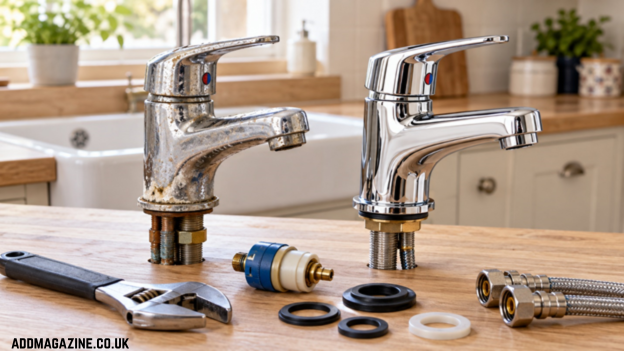
Dripping Taps: Repair the Component or Replace the Tap?
With a dripping tap, start by identifying where the leak originates. Water from the spout, around the handle or beneath the basin may point to different issues.
If an appropriate replacement component is available and the tap body is sound, repair may be worth considering. If the fitting has several problems or you can’t source suitable parts, replacement may be a more practical route.
Appearance can influence the choice too. Replacing one tap in a matching bathroom set may leave an inconsistent finish. Discuss product availability before committing, particularly if retaining the existing style matters to you.
Toilet Repairs: Look Beyond the Most Recent Fault
A toilet that keeps running or develops an unreliable flush may need attention to its internal components. That doesn’t automatically mean replacing the whole toilet.
Nevertheless, the previous repair history matters. Explain whether the same symptom has returned or whether several different faults have occurred. Recurring problems warrant a fresh assessment rather than assuming the last repair simply needs repeating.
Homeowners preparing an enquiry can visit PGMplumbingandheating.co.uk and provide a short account of the problem. Include photographs of the fitting and details of previous work where available. This gives the initial discussion useful context without attempting to diagnose the fault yourself.
Shower Replacement: Check What Is Included
A shower replacement can mean changing a handset, replacing controls or altering a larger installation. Those are very different projects.
Ask the installer to explain which components need attention and whether the proposed replacement suits the existing water system. Also discuss access to concealed connections and any effect on tiles, panels or seals.
If you are planning a bathroom renovation soon, mention it. That may influence whether an immediate repair or a more substantial replacement fits your wider plans.
Select a Solution Based on the Problem You Need to Address
Repair and replacement both have a place in home maintenance. The key question is which option fixes the fault at an acceptable cost, with manageable disruption and clear benefits. Ask for a diagnosis, understand the scope and compare the complete work involved. For Dartford homeowners, that approach makes plumbing decisions more informed and reduces the chance of paying for a change that leaves the original problem unresolved.