
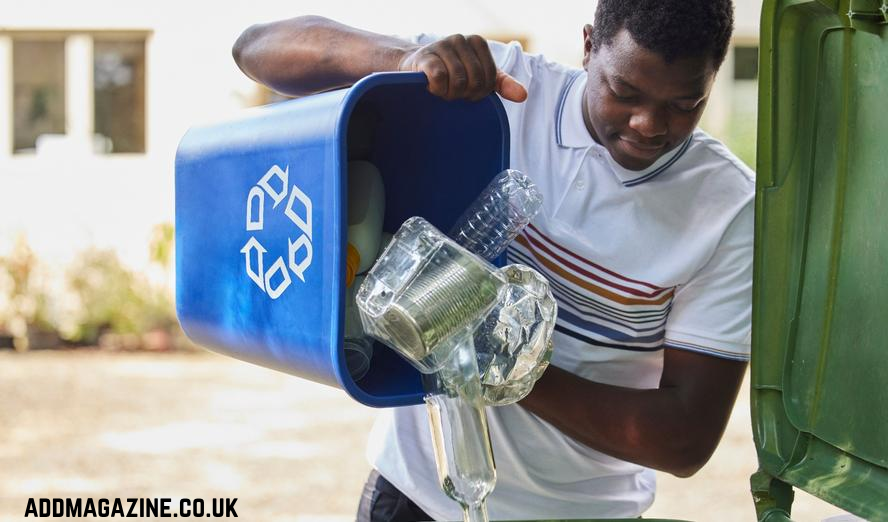
Recycling is now a familiar part of everyday life across the United Kingdom. Households regularly separate cardboard, glass bottles and plastic packaging from general rubbish, while businesses increasingly look for ways to recover materials that would otherwise be discarded.
However, recycling habits are changing. New collection requirements, growing attention to food waste and improvements in recycling infrastructure are influencing how materials are managed.
England’s recent waste collection reforms are particularly significant. For households and businesses, these changes affect everything from which materials go into recycling bins to how waste collections are organised.
What Do Recycling Rates Reveal?
Despite widespread recycling efforts, the UK’s overall performance has remained relatively stable.
According to government statistics, the UK recycled 44.5% of waste from households in 2024, compared with 44.6% in 2023. However, recycling rates vary considerably between the four nations. Wales recorded 58.6% in 2024, while Northern Ireland reached 50.1%. England recorded 43.8%, and Scotland 42.7%.
These differences reflect variations in collection arrangements, recycling infrastructure and local waste management policies. The figures also highlight an important challenge: encouraging households to recycle does not automatically guarantee that collected materials will be successfully recovered.
Improving recycling performance requires effective collection systems, appropriate processing facilities and reliable markets for recovered materials.
How Recycling Rules Are Becoming More Consistent
One significant development is England’s Simpler Recycling initiative, designed to reduce confusion surrounding waste collection.
Since 31 March 2026, waste collectors in England have generally been required to provide separate collection arrangements for food and garden waste, paper and card, other dry recyclable materials, and residual waste. Some local authorities have transitional arrangements for introducing food waste collections.
This does not necessarily mean every household requires four individual bins. Collection arrangements can vary, and certain recyclable materials may be collected together where permitted.
The aim is to establish more consistent standards across England, making it easier for residents to understand what belongs in each collection. Scotland, Wales and Northern Ireland operate under their own waste policies, meaning households should continue following local council guidance.
Why Food Waste Is Receiving More Attention
Food waste is becoming an increasingly important part of household recycling policies. When food scraps decompose in landfills without sufficient oxygen, they can generate methane, a greenhouse gas that contributes to climate change.
Separate food waste collections allow suitable organic materials to be processed through composting or anaerobic digestion. Anaerobic digestion involves microorganisms breaking down organic matter under controlled conditions. This process produces biogas and a nutrient-rich residue that may be used after appropriate treatment.
Households can support food waste collections by following local instructions and keeping unsuitable packaging out of designated containers. However, preventing unnecessary food waste remains preferable. Planning meals, storing ingredients correctly and using leftovers can reduce the amount of food requiring disposal.
How Shopping Habits Influence Recycling
The products people purchase determine much of the waste they eventually generate. Online deliveries, takeaway meals and convenience foods often involve cardboard boxes, plastic wrapping and other packaging materials.
Consumers can reduce unnecessary waste by choosing products with appropriate recyclable packaging, avoiding excessive wrapping and reusing delivery boxes where practical.
However, packaging should not be judged solely by its material. Some packaging helps preserve food, prevent transportation damage and extend product shelf life. Choosing products with less packaging is useful, but not when it leads to unnecessary food waste or damaged goods.
Manufacturers and retailers also influence recycling habits by designing packaging that is easier to separate, collect and process.
The Growing Importance of Business Recycling
Recycling is not limited to household waste. Warehouses, retailers, offices and manufacturing facilities generate substantial quantities of potentially recoverable materials. Common examples include cardboard packaging, plastic wrapping, paper, metals and production residues.
Businesses can improve recycling practices by identifying their main waste streams and introducing suitable collection arrangements. For example, a distribution centre might collect corrugated cardboard separately from plastic stretch film, making both materials easier to handle and assess for recycling.
Specialist recycling companies help connect commercial waste producers with appropriate material recovery options. Organisations looking for recycling support in the UK can explore professional providers when evaluating how to manage commercial waste and recover useful materials.
For companies generating consistent quantities of recyclable materials, reliable collection arrangements can also improve operational efficiency.
Why Proper Sorting Still Matters
Placing an item in a recycling bin does not guarantee it will become a new product. Recyclable materials must be collected, sorted and processed before manufacturers can use them again.
Contamination remains a challenge. Food residue, unsuitable packaging and mixed materials can reduce the quality of recovered resources or complicate processing. For example, clean cardboard is generally easier to recycle than paper contaminated with food. Different plastic polymers may also require separate processing.
Households should follow local collection guidelines, empty containers where required and avoid placing unsuitable materials in recycling bins. Businesses can improve sorting through clearly labelled containers and straightforward employee instructions.
Better recycling often begins with knowing exactly which materials a collection service accepts.
Are People Moving Towards Reuse and Waste Prevention?
Recycling remains important, but preventing waste before it is created is receiving greater attention. Reusable shopping bags, refillable bottles and durable food containers can reduce dependence on disposable products when used regularly.
Repairing damaged belongings, donating unwanted items and purchasing second-hand products can also extend the useful lives of existing materials. These habits support the circular economy, which aims to keep products and resources in use through reuse, repair, refurbishment and recycling.
Waste prevention matters because recycling itself requires energy, transportation and processing equipment. Using fewer unnecessary materials can reduce pressure on both natural resources and waste management systems.
What Challenges Remain?
Despite improvements in recycling policies, several obstacles continue to affect waste management across the UK. Different local collection arrangements can confuse residents, particularly when dealing with unfamiliar packaging or moving between council areas.
Some materials remain difficult to recycle because they contain bonded components or require specialised treatment. Market demand presents another challenge. Recovered materials need manufacturers capable of using them. Without suitable buyers, recycling can become economically difficult.
Clearer packaging labels and better local collection facilities could help residents recycle more confidently. Businesses also need reliable information about material quality, processing requirements and available recovery options.
What Does the Future Hold for UK Recycling?
Recycling habits across the UK continue to evolve as collection requirements change and greater attention is given to food waste, packaging design and resource recovery. England’s 2026 collection reforms represent an important development, although their long-term impact on recycling rates will require further measurement.
For households, the most useful actions remain straightforward: follow local recycling guidance, avoid unnecessary purchases and separate suitable materials correctly. Businesses can contribute by improving collection arrangements and identifying opportunities to recover valuable resources.
Future progress will depend not only on how much waste people separate, but also on whether those materials can successfully return to manufacturing. Effective collection, responsible consumption and dependable recycling markets will all influence how efficiently the UK uses its existing resources.