
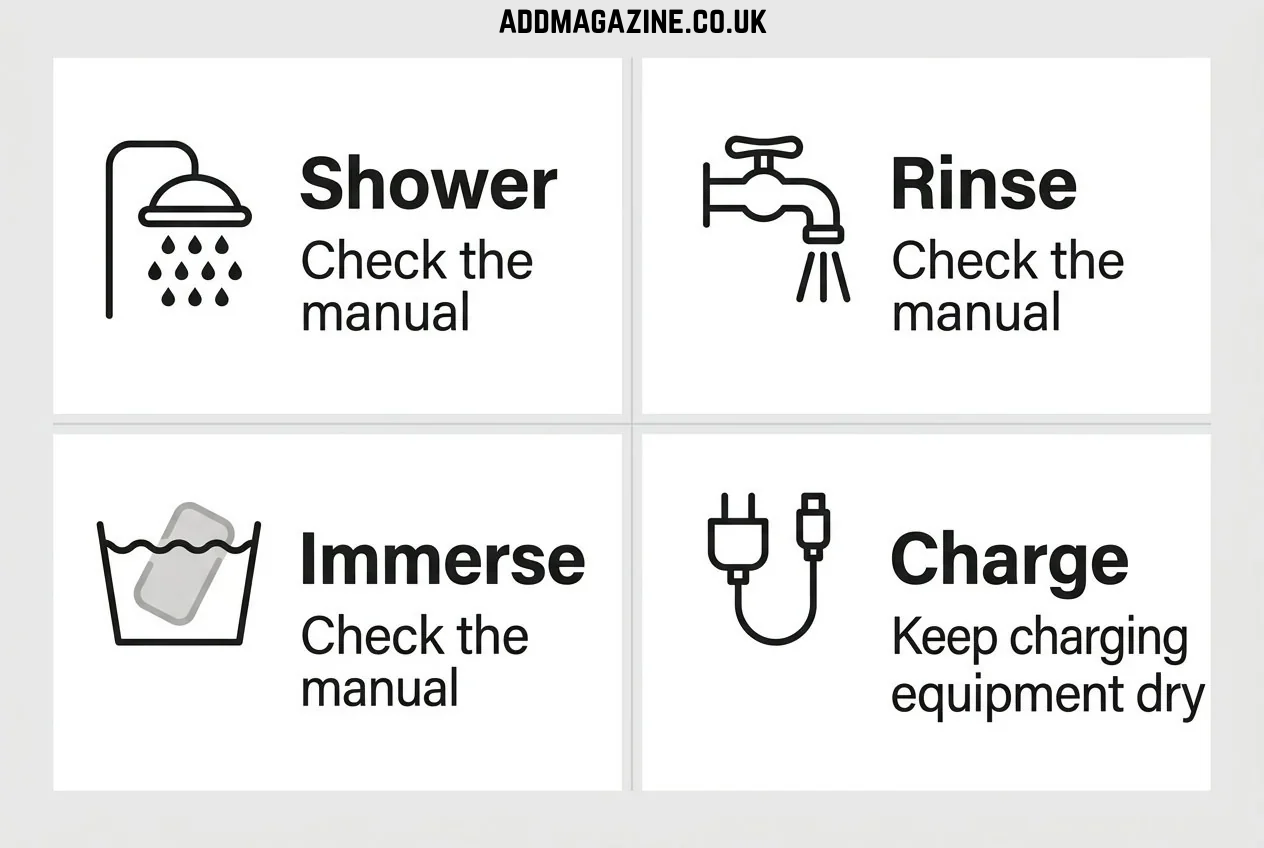
It is a very common question: can I use my scalp massager in the shower? Each device requires a different approach. Some are made to handle water, and many are not. Using a device in a way the maker did not intend can damage it, and with anything electric it can also be unsafe. This article shows you how to find the answer for your own device before it gets anywhere near water.
If you would like a quick reference to keep, this guide to scalp massager water-exposure limits covers the basics.
1. Three different situations
People often mix up three things that are not the same:
- Dry use: the device is used on a dry scalp and dry hair, and kept away from water.
- Wet-hair use: the device is used on damp or wet hair, for example just after washing. This still puts water close to the device, so it needs the maker’s approval too.
- Shower use: the device is used under running water. This is only for devices where the maker clearly says so.
One does not imply the others. A device approved for dry use is not automatically fine on wet hair, and approval for wet hair is not the same as approval for the shower.
2. Words that can mislead
Product pages use friendly words that sound reassuring but do not always mean what you hope:
- “Water-resistant”: this suggests some protection, but it does not say how much, and it does not mean safe under a shower.
- “Splash-proof”: it may cope with a few drops, which is very different from running water.
- “Removable silicone head”: the head can come off, but that says nothing about whether the body is waterproof.
- “Easy to rinse”: check exactly which part can be rinsed, and what the maker says about the rest.
The safest habit is to look for the maker’s exact statement in the manual, such as whether use in the bath or shower is allowed.
3. Why the rules matter
A cordless scalp massager has a motor, a battery and a charging port inside. If water gets into those parts, it can damage the device and may create an electrical risk. That is why manuals for these products usually include clear safety notes about water. When a manual says not to use something in the shower, that is a safety instruction, not just a suggestion.
4. What the NEH-101 manual says
Here are the water-related points from the NEH-101 manual:
- Avoid using the product during bathing or showering.
- Do not place or store it where it may fall or be pulled into a tub or sink.
- Do not place it in water or other liquid, or drop it into water.
- Use it on a clean, dry scalp and dry hair. The product is not waterproof.
- Do not use water to clean it. A slightly damp cloth is all that is advised.
- If it has been dropped into water, do not operate it. Arrange for the item to be inspected at an authorized repair facility.
So the NEH-101 is a dry-use device. It is not made for the shower, and because the manual asks for dry hair, wet-hair use is not covered either.
5. How to check any other device
- Find the manual. If you cannot find one, that is a warning sign in itself.
- Look for plain wording about water, bath and shower use.
- Check any rating and what it means. Do not guess what a rating covers.
- Ask the seller in writing if the wording is unclear, and keep the reply.
- If you still cannot tell, treat the device as dry-use only.
6. A routine that avoids the problem
If your device is dry-use only, you do not have to give up the routine. Wash and dry your hair first, then use the device at a calm moment later in the day. The NEH-101 manual suggests 10 to 30 minutes of use per day, and the device switches itself off after 10 minutes. When you are not using it, store it away from sinks, tubs and anywhere it could fall into water.
7. What to do if it gets wet
If a dry-use device is splashed or dropped into water, stop using it. The NEH-101 manual says not to operate a device that has been dropped into water, and to send it to the service center for examination. Do not carry on using it just to see whether it still works. The same goes for a device that has been damaged or is not working properly.
Quick checklist before you buy
- Does the manual clearly say whether shower use is allowed?
- Does it say anything about wet hair?
- Do I understand what any water rating actually covers?
- Do I know how the maker says to clean it?
- Do I have somewhere dry to store it?
Final thoughts
Before a scalp massager goes anywhere near water, read what the maker says. Dry use, wet-hair use and shower use are three separate things, and each needs its own clear permission. If you are still deciding which device to buy, our notes on choosing a scalp massager for wet or dry use can help you match the device to the way you plan to use it.