Introduction
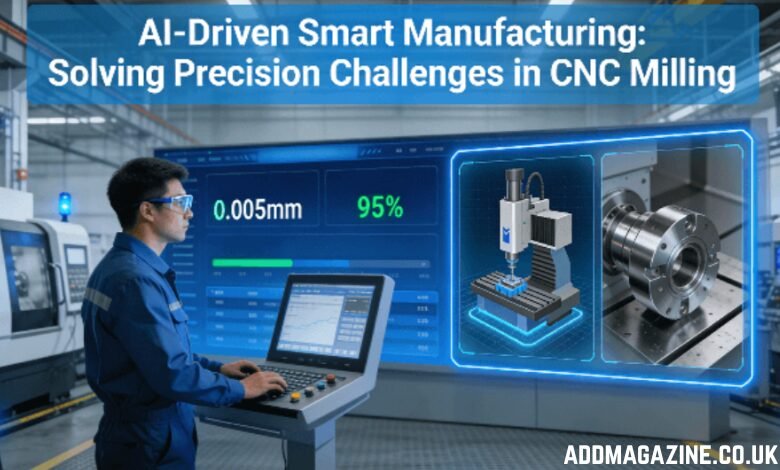
In today’s rapidly shifting world of technology, such as consumer technology and aerospace, improving the product development cycle is increasingly making it difficult to remain a leader in the market. In traditional CNC milling manufacturing processes, not only is it difficult to preserve consistency in accuracy, but there is a lack of control over time and costs, particularly when complex customized orders must be made. This stems from the absence of digital integration, creating a significant disconnect between design and production, as conventional manufacturing methods fail to meet the precise, micron-level accuracy required in today’s AI and IoT-driven era.
In this research paper, we will look at the application of smart manufacturing facilitated by AI in meeting this gap in CNC milling precision part manufacturing, thereby making entry into the market rapidly. In the following sections, we will look at the technologies that can aid in addressing these issues.
In What Way Is Artificial Intelligence Aiding in Enhancing the Precision of CNC Milling?
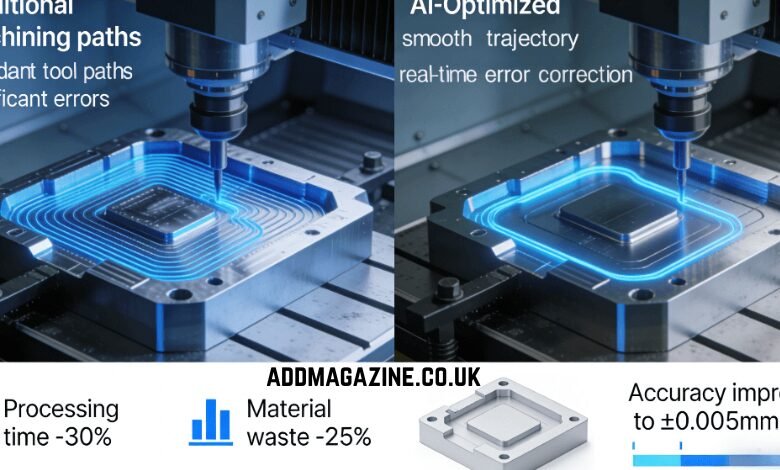
Figure 2: AI-optimized tool path analysis – machine learning algorithms reduce machining time by 30% and minimize material waste by 25% while maintaining precision standards.
The CNC milling industry is experiencing an AI revolution that is making improvements based on data. Machine learning algorithms can handle huge amounts of data to optimize tool path programming and precision to ±0.005mm. The shift from experience-driven processing to technological processing is correcting the flaws inherent in experience-driven processing.
Tool Path and Error Correction that are AI-Optimized
AI promotes the optimization of the movement of the tools in real time, which ensures that there are fewer mistakes in terms of vibration and drift. For instance, through the prediction of the lifetime of the tool, depending on the dynamic parameters, AI promotes the optimization of the machining process by 30%, and this has been showcased in several industrial reports. The approach promotes the quality of the final product, which may be of high complexity, such as in the case of a drone, as well as in relation to a medical product. The adoption of predefined frameworks, such as smart manufacturing frameworks by National Institute of Standards and Technology (NIST), enables the creation of such innovations.
Quality Control and Predictive Analytics Based on Data
Predictive analytics, on the other hand, helps the AI system monitor milling and detect anomalies that can lead to defects. Based on the data collected by sensors on spindle load and temperatures, the system can make appropriate adjustments to ensure that appropriate tolerance is maintained. In fact, according to a case study on aircraft parts, for example, it has been evident that joint use of AI and quality control systems can help reduce scraps by at least 25%. This is accurate and adheres to the rules for smart manufacturing that prioritize traceability according to process continuity.
H3: 3. Integration with Digital Twins & Real-Time Adaptation
AI makes use of digital twins in order to create virtual replicas of the milling process, hence allowing the optimization of the said processes. Here, one is able to test situations without necessarily carrying out trial processes. For example, in the aspect of developing robotics parts using AI, the integration cut the development time by 20%. This shows that the use of AI offers support in precision engineering.
What Cybersecurity Protocols Are Critical for Securing Digital Manufacturing Workflows?
With the growing digital nature of manufacturing, cybersecurity must be a top consideration as a means of protecting intellectual property in the form of design files against a breach. Encryption methods are a top consideration in this regard.
- Encryption and Secure Data Transmission: Encryption algorithms such as AES-256 are employed for protecting data being transferred from the design teams and production centers. One of the best examples of this best practice is that of a medical equipment firm which ensured that there were no instances of design fraud through the use of safe cloud environments, thereby reducing the time taken for compliance by 15%. All of this is in line with global cybersecurity norms such as ISO/IEC 27001.
- Access Control and Identity Management: Role-Based Access Control (RBAC) secures the system so that only authorized personnel have permission to view or edit the design files. In an incident, an automobile supplier introduced multi-factor authentication to ensure the prevention of leakage of data, thus improving trust in the cybersecurity processes in digital manufacturing practices of the supplier organization.
- Audit Trails and Compliance Monitoring: Continuous monitoring as well as the creation of audit trails ensure transparency so that companies are able to monitor data usage as well as detect any anomalies. Tech innovation companies must therefore be in line with regulations such as the GDPR regulations. It is essential in relation to cybersecurity.
How Cloud Computing Makes Quotes and Cost Management Feasible in Real-Time for CNC Machining Services
Cloud computing has changed the manner in which quotes are made by providing an immediate, precise quote with intelligent algorithms. Cloud platforms are capable of assessing 3D models in a short time by breaking down prices in an open manner in order to allow tech innovators to plan better.
Automated Model Analysis and Instant Quoting
Additionally, the AI algorithm used in cloud computing enables estimates regarding part complexity, materials, and machining time to be completed within five minutes. It has been observed that automation of quotes helps cut costs associated with quoting by 25%, which has been evidenced by client-based scenarios related to the production of custom electronical enclosures.
Cost Transparency and Resource Optimization
Cloud systems also provide real-time cost analysis that enables customers to optimize designs to be more cost-effective. A company, for instance, optimized tool paths and improved material waste efficiency by 20% in low-volume production orders. Such optimization can aid online CNC milling quote procedures and benefit innovators to plan iterations without any costs.
Enhancements in Scalability and Collaboration through Cloud Integration
The scalability of cloud-based infrastructures significantly streamlines teamwork across global teams, facilitating quicker and more informed decision-making processes. A case involving AI-driven hardware in a collaborative project demonstrated a 30% reduction in approval time, illustrating how cloud computing can benefit cost management in smart manufacturing. Such advancements precede discussions on customized components, as platforms now provide real-time feedback, enhancing responsiveness.
How Smart Manufacturing Contributes to Shorter Lead Times and Cost Reduction in High-Volume Production
Smart manufacturing, integrating automation and IoT technologies, has dramatically transformed the production process, enabling high-scale operations while reducing both lead times and costs. Automated scheduling and maintenance have replaced traditional methods, drastically reducing production time from weeks to mere days.
Real-time equipment monitoring through IoT sensors helps detect potential failures early, preventing unplanned downtime. For example, an automotive parts supplier successfully increased production capacity by 20% after incorporating AI-powered maintenance systems, illustrating smart manufacturing’s direct impact.
Optimizing Workflow and Reducing Inventory Costs: Automated and Just-in-Time Production
AI-based systems enable production planning to be optimized through real-time demand monitoring and just-in-time techniques, effectively cutting inventory costs. In the consumer electronics industry, one company reduced lead times by 35% through automating workflow processes. Compliance with ISO 9001 standards further enhances production consistency and reliability.
Advances in Energy Efficiency and Sustainability in Smart Manufacturing
Smart manufacturing increasingly focuses on energy management, using data-driven techniques to reduce energy consumption in processes like CNC milling. This sustainable approach will likely attract industries committed to eco-friendly technology, further driving the adoption of these methods. By implementing such energy-efficient practices, manufacturers can offer quicker and more cost-effective CNC milling services.
How Custom CNC Milling Parts Foster Innovation in AI and Robotics
Custom CNC machining plays a crucial role in advancing technological innovation, particularly in fields like AI and robotics, by enabling the precise manufacturing of specialized components. The flexibility of CNC milling allows for the rapid creation of complex parts that are essential for these advanced technologies.
Speeding Up Prototyping and Supporting Design Iterations
With the advent of 5-axis machining, custom components can be produced in individual setups, reducing prototyping times by as much as 40%. In AI robotics, a company managed to produce adaptive grippers in just weeks, thanks to the flexibility that custom CNC milling parts provide in shaping complex components.
Enhancing Material Performance for Technological Applications
CNC milling allows manufacturers to work with various materials, including titanium and advanced engineering plastics, crucial for high-temperature applications in industries like aerospace and robotics. Using the expertise of CNC manufacturers, technological innovators can achieve optimized performance, such as weight reduction in drone components, where minimizing mass is critical.
Facilitating Cross-Industry Collaboration and Knowledge Sharing
The use of custom components facilitates the exchange of expertise across industries. For example, precision techniques used in aerospace technology are being applied in the development of healthcare equipment, accelerating innovation.
International Standards for Quality and Reliability in CNC Milling
International standards are essential in ensuring the quality and reliability of CNC milling, particularly in highly regulated industries. Certifications like ISO 9001 and AS9100D set rigorous guidelines that minimize defects, ensuring consistency and fostering client trust.
Process Standardization and Quality Management
ISO 9001 outlines a robust framework for quality management, ensuring that each milling process follows documented protocols. This standard has led to optimal operations, as demonstrated by a company achieving a perfect 0-defect rating over the course of a year. This strong foundation is essential for success in precision engineering.
Compliance with Industry-Specific Standards and Risk Mitigation
Certifications such as ISO 13485 (for healthcare) and AS9100D (for aerospace) address sector-specific risks, ensuring that certified companies navigate the auditing process smoothly. These standards also reassure clients that projects will meet high-quality requirements, enhancing peace of mind during the manufacturing process.
Ensuring Traceability and Continuous Improvement
International standards also emphasize traceability, from raw material sourcing to final product inspection, allowing continuous improvements. This traceability is especially crucial in tech industries where certifications lead to faster approvals, thus accelerating time to market. It also reinforces the commitment to quality in the supply chain.
Conclusion: The Role of AI in Revolutionizing Smart Manufacturing and CNC Milling
AI-driven advancements in smart manufacturing have reshaped CNC milling technologies, particularly in cloud quoting, cybersecurity, and high-precision solutions. These innovations offer optimal cost management, reduced lead times, and minimized risks, allowing organizations to focus on innovation. Companies embracing these technologies can achieve remarkable accuracy, developing products rapidly in their respective fields.