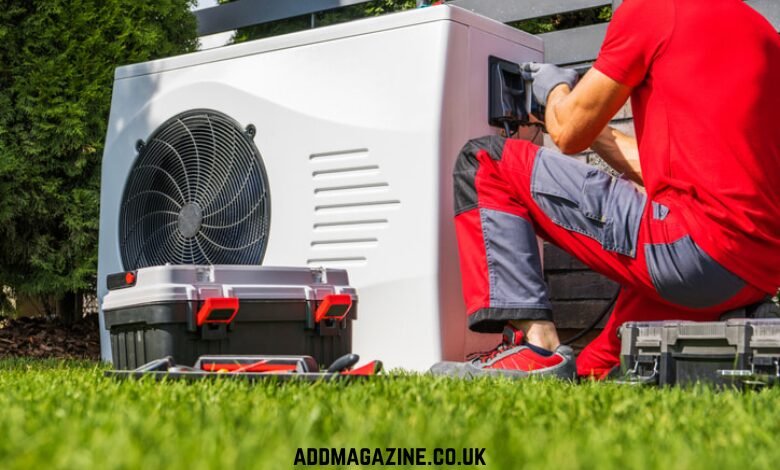
Heat pump systems represent a significant capital investment for commercial facilities and residential properties across Central Texas. When these systems fail, property managers and facility operators face immediate pressure to restore climate control while managing repair costs and minimizing downtime. The decision between quick fixes and comprehensive repairs often determines whether a system will operate reliably or require repeated service calls.
In Bryan’s climate conditions, heat pump failures create operational disruptions that extend beyond comfort issues. Commercial facilities risk tenant complaints, equipment damage from temperature fluctuations, and increased energy costs from backup heating systems. Residential property owners face similar pressures, particularly during extreme weather periods when HVAC systems experience peak demand.
According to Limestone Country Properties San Marcos, the pattern of repeated repairs within months of initial service calls indicates deeper systemic issues in how heat pump problems are diagnosed and addressed. Understanding why repairs fail helps property owners and facility managers make informed decisions about service approaches and contractor selection.
Incomplete Diagnostics Drive Most Repair Failures
Heat pump systems operate through interconnected components that affect each other’s performance. When technicians address only visible symptoms without identifying underlying causes, repairs often provide temporary relief while allowing root problems to persist. This approach creates a cycle where the same issues resurface within months, requiring additional service calls and increasing total repair costs.
Many service providers focus on component replacement rather than system analysis. A failed capacitor might be replaced without examining why it failed, missing issues like voltage fluctuations, refrigerant imbalances, or airflow restrictions that contributed to the original failure. Comprehensive diagnostics require time and specialized equipment, leading some contractors to prioritize quick turnarounds over thorough problem-solving. For property owners seeking reliable solutions, resources like this Heat Pump Repair Bryan Tx guide provide insight into proper diagnostic approaches and service standards.
Electrical issues exemplify this diagnostic challenge. Heat pump systems depend on precise electrical relationships between components. Surface-level electrical problems often mask deeper issues like grounding problems, control board malfunctions, or wiring degradation. When technicians replace failed electrical components without testing the broader electrical system, underlying problems continue to stress new parts, leading to premature failures.
Refrigerant System Complexity
Refrigerant-related repairs demonstrate how incomplete diagnostics create recurring problems. Low refrigerant levels indicate leaks somewhere in the system, but leak detection requires systematic pressure testing and often involves accessing components in crawl spaces, attics, or outdoor units. Quick repairs might involve adding refrigerant without locating leaks, providing temporary function while allowing continued refrigerant loss.
Refrigerant leaks also affect system pressures and temperatures throughout the heat pump. When leaks remain unaddressed, compressors work harder to maintain cooling and heating output, leading to premature compressor wear. Evaporator coils may freeze more frequently, and overall system efficiency declines. These cascading effects create new problems that appear unrelated to the original refrigerant issue.
Control System Integration
Modern heat pump systems rely on electronic controls that coordinate between indoor and outdoor units, manage defrost cycles, and optimize energy usage. Control problems often create symptoms that seem related to mechanical components. Thermostats with calibration issues might cause compressors to cycle incorrectly, creating wear patterns that eventually require mechanical repairs.
When technicians replace mechanical components without testing control system operation, the underlying control issues continue affecting new parts. Defrost controls that malfunction during winter operation can cause ice buildup that damages fan blades and restricts airflow. Addressing fan blade replacement without correcting defrost control problems ensures similar damage will recur.
Climate-Specific Challenges in Central Texas
Bryan’s climate patterns create specific operational stresses that affect heat pump longevity and repair requirements. The combination of high humidity, temperature extremes, and seasonal variation demands system components that can handle diverse operating conditions. Repairs that don’t account for local climate factors often fail because replacement components or repair methods aren’t suited to regional environmental demands.
High humidity levels affect heat pump operation differently than dry climates. Evaporator coils handle more moisture removal, creating conditions where drainage problems develop more frequently. Condensate removal systems experience higher volumes and face greater risk of algae growth, clogs, and overflow situations. According to the U.S. Department of Energy, proper moisture management is essential for heat pump efficiency and longevity in humid climates.
Temperature swings between seasons require heat pump systems to transition between heating and cooling modes multiple times per year. This operational flexibility depends on reversing valves, control systems, and refrigerant pressures that must function correctly across a wide temperature range. Repairs that focus on single-mode operation might not address components critical for seasonal transitions.
Humidity-Related Component Wear
Electrical connections throughout heat pump systems face accelerated corrosion in humid environments. Terminal blocks, wire connections, and control circuits develop resistance issues that affect system performance over time. Surface-level electrical repairs might restore immediate function without addressing corrosion patterns that will continue affecting new connections.
Condensate drainage problems compound in high-humidity climates. Primary drain lines handle larger water volumes, and backup drainage systems become critical for preventing water damage. Repairs that clear immediate drainage blockages without evaluating entire drainage systems often result in future overflow situations when primary systems become overwhelmed during peak humidity periods.
Seasonal Transition Demands
Heat pump systems in Central Texas operate year-round with frequent transitions between heating and cooling modes. Reversing valves must function reliably across temperature ranges, and refrigerant systems must maintain proper pressures for both operational modes. Component repairs that restore function in current seasonal conditions might not address wear patterns that will cause failures during opposite-season operation.
Defrost cycles become critical during winter heating operation, even in relatively mild Central Texas winters. Ice formation on outdoor coils requires automated defrost systems that coordinate between multiple components. Repairs focused on immediate heating restoration might not test defrost system operation, leading to ice-related damage during subsequent winter periods.
Parts Quality and Sourcing Issues
Replacement parts quality directly affects repair longevity and system reliability. The HVAC parts market includes original equipment manufacturer components, aftermarket alternatives, and refurbished options with different quality levels and compatibility characteristics. Part selection decisions made during repairs influence whether systems operate reliably or experience repeated failures.
Aftermarket parts often cost less than original equipment alternatives but may not meet the same specifications or durability standards. Capacitors, contactors, and control components with lower voltage ratings or temperature tolerances might function initially but fail under normal operating stresses. These failures create service callbacks and additional labor costs that often exceed the initial savings from less expensive parts.
Compatibility issues between replacement parts and existing system components create subtle problems that emerge over time. Control circuits designed for specific voltage or resistance characteristics might malfunction when connected to aftermarket components with different electrical properties. Motor replacements with different starting characteristics can affect system performance and component interaction throughout the heat pump.
Supply Chain and Availability Pressures
Parts availability pressures sometimes drive technicians toward whatever components are immediately accessible rather than optimal parts for specific applications. Emergency repair situations create urgency to restore system operation quickly, leading to compromises in part selection that affect long-term reliability. Universal replacement parts might fit multiple system types but lack optimization for specific heat pump configurations.
Seasonal demand spikes affect parts availability during peak HVAC usage periods. Summer cooling season and winter heating periods create higher demand for common failure components like capacitors, contactors, and fan motors. Limited availability might force repairs using suboptimal parts that provide temporary function while creating conditions for future failures.
Installation and Calibration Requirements
Replacement parts often require calibration or adjustment procedures specific to individual heat pump systems. Control components need programming or setting adjustments that match existing system operation. When installation procedures skip these calibration steps, new components might function but operate outside optimal parameters that ensure longevity.
Electrical connections require proper torque specifications and wire preparation techniques that vary between component types. Loose connections create resistance heating that damages terminals over time. Over-tightened connections can crack component housings or damage wire conductors. These installation factors affect component lifespan regardless of parts quality.
Inadequate Testing and Verification Procedures
Post-repair testing determines whether repairs address underlying problems or merely restore immediate function. Comprehensive testing procedures verify system operation across different modes, confirm proper pressures and temperatures, and validate control system responses. Without thorough testing, repairs might appear successful initially while allowing problems to persist in less obvious ways.
Pressure testing throughout refrigerant systems reveals leaks and flow restrictions that affect long-term operation. Temperature measurements at multiple system points indicate whether heat transfer occurs efficiently. Electrical testing confirms proper voltages, amperages, and control signal operation. These testing procedures require time and specialized equipment, leading some service approaches to rely on basic function verification rather than comprehensive system validation.
Operational testing under different load conditions reveals problems that might not appear during basic function checks. Heat pump systems must operate effectively during peak cooling demand, mild weather transitions, and heating mode operation. Testing that only confirms current operational needs might miss problems that will cause failures when operating conditions change.
Load Testing and Performance Verification
Heat pump systems experience different operational stresses during various load conditions. Light load operation requires different component behavior than peak demand situations. Control systems must respond appropriately to thermostat calls, outdoor temperature changes, and internal load variations. Repair verification that occurs only during moderate conditions might not reveal problems that emerge under operational extremes.
Efficiency testing indicates whether repairs restore optimal system performance or merely basic function. Energy consumption measurements, temperature differential readings, and airflow verification reveal system health beyond simple operational status. Repairs that restore basic heating and cooling without optimizing efficiency often indicate incomplete problem resolution.
Control System Response Testing
Electronic control systems require testing that verifies proper responses to input changes and system conditions. Thermostat communication, safety control operation, and automated sequence verification ensure control systems coordinate properly with mechanical components. Control problems often create symptoms that appear mechanical, leading to component replacements that don’t address underlying control issues.
Safety control testing becomes critical for reliable operation and prevents equipment damage from abnormal conditions. High pressure switches, temperature sensors, and overcurrent protection must respond correctly to protect system components. Testing these protective systems requires creating controlled abnormal conditions that verify proper safety responses.
Service Provider Selection and Expertise Gaps
The technical complexity of modern heat pump systems requires service providers with specific training, diagnostic equipment, and repair experience. Expertise gaps in system analysis, parts selection, or installation procedures directly contribute to repair failures. Property owners often select service providers based on availability or cost rather than technical capabilities specific to heat pump systems.
Heat pump technology differs significantly from traditional heating and cooling systems. Reversing valve operation, heat pump-specific controls, and refrigerant cycle optimization require specialized knowledge beyond general HVAC repair training. Service providers without heat pump expertise might apply conventional repair approaches that don’t address heat pump operational requirements.
Diagnostic equipment investment represents a significant cost for service providers. Electronic refrigerant leak detectors, digital manifold gauges, and electrical testing equipment enable comprehensive system analysis but require capital investment and ongoing calibration maintenance. Service approaches that rely on basic tools and visual inspection might miss problems that require advanced diagnostic capabilities.
Training and Certification Considerations
Heat pump repair requires understanding of refrigeration principles, electrical control systems, and mechanical component interaction. Ongoing training keeps technicians current with evolving heat pump technology, new diagnostic techniques, and improved repair procedures. Service providers without continuing education programs might use outdated approaches that don’t reflect current best practices.
Manufacturer-specific training provides insight into particular heat pump designs, common failure patterns, and recommended repair procedures. Generic HVAC training might not cover specific requirements for different heat pump brands or system configurations. This knowledge gap can lead to repair approaches that work for some systems but create problems for others.
Equipment and Tool Requirements
Comprehensive heat pump diagnosis requires specialized tools beyond basic HVAC equipment. Electronic leak detectors identify refrigerant leaks that might not be visible or audible. Digital manifold gauges provide precise pressure readings and can log data over time to reveal intermittent problems. Electrical meters with advanced functions test control circuits and component operation.
Investment in diagnostic equipment affects service provider capabilities and repair quality. Companies that provide technicians with comprehensive toolsets enable more thorough problem analysis and accurate repairs. Limited tool availability forces technicians to rely on basic diagnostic methods that might miss underlying issues contributing to repair failures.
Long-Term System Maintenance Integration
Successful heat pump repairs consider how immediate fixes integrate with ongoing system maintenance requirements. Repairs that restore function without addressing broader system health often fail because underlying maintenance needs continue affecting system operation. Property owners benefit from repair approaches that identify maintenance requirements alongside immediate problem resolution.
Preventive maintenance schedules help identify developing problems before they cause system failures. Regular filter replacement, coil cleaning, and electrical connection inspection prevent many common heat pump problems. When repairs occur on systems with deferred maintenance, addressing only immediate failures without correcting maintenance deficiencies often results in additional problems within months.
System age and overall condition affect repair decision-making and expected outcomes. Older heat pump systems might have multiple developing problems that contribute to current failures. Repair approaches that address only current symptoms without evaluating system-wide condition might provide temporary relief while missing other developing issues that will require attention soon.
Maintenance Schedule Integration
Heat pump systems require seasonal maintenance that addresses different operational requirements for heating and cooling modes. Spring maintenance prepares systems for cooling season demands, while fall service ensures heating mode readiness. Repairs that occur outside regular maintenance schedules should include evaluation of seasonal preparation requirements.
Filter replacement schedules affect airflow throughout heat pump systems. Restricted airflow creates stress on blower motors, reduces heat transfer efficiency, and can cause freezing problems with evaporator coils. Repairs that restore immediate function without establishing proper filter maintenance practices often result in repeated problems caused by airflow restrictions.
System Upgrade Considerations
Aging heat pump systems might benefit from component upgrades during repair situations. Programmable thermostats, improved control systems, and enhanced safety controls can improve system reliability and reduce future repair requirements. Repair decisions that consider upgrade opportunities often provide better long-term value than basic component replacement.
Energy efficiency improvements might justify more comprehensive repairs on systems that would otherwise require basic fixes. Improved insulation, ductwork modifications, or airflow optimization can reduce system stress and improve repair longevity. These improvements require evaluation beyond immediate repair needs but often prevent future problems.
Conclusion
Heat pump repair failures within six months typically result from approaches that address symptoms rather than underlying causes. Incomplete diagnostics, climate-specific challenges, parts quality issues, inadequate testing, service provider expertise gaps, and limited maintenance integration all contribute to repair longevity problems. Property owners and facility managers who understand these failure patterns can make informed decisions about service provider selection and repair approaches.
Successful heat pump repairs require comprehensive system analysis, appropriate parts selection, thorough installation procedures, and verification testing that confirms proper operation across different conditions. Service providers with heat pump-specific expertise, proper diagnostic equipment, and commitment to complete problem resolution provide repairs that restore reliable system operation rather than temporary fixes.
The investment in comprehensive repairs often costs more initially than basic fixes but provides better value through improved system reliability, reduced callback requirements, and longer component life. For commercial facilities and residential properties dependent on consistent climate control, repair approaches that prioritize long-term reliability over immediate cost savings deliver better operational outcomes and reduced total ownership costs.