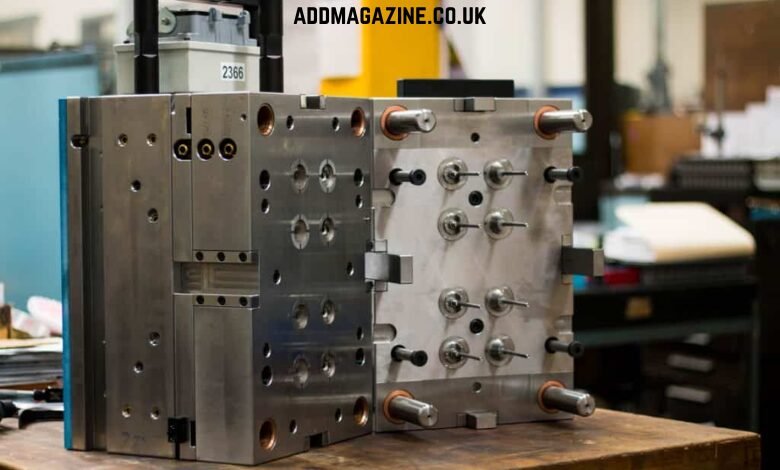
Manufacturing operations across the United States face a critical decision that can reshape their cost structure and production reliability for years. The choice between maintaining in-house mold component production or transitioning to external suppliers represents more than a simple make-or-buy analysis. This decision influences everything from cash flow and operational flexibility to quality consistency and delivery schedules.
For manufacturers processing thermoplastics, thermosets, and composite materials, mold components form the backbone of production capability. These precision-engineered elements determine cycle times, part quality, and ultimately, profitability. When internal production costs climb beyond sustainable levels or quality issues create downstream problems, leadership teams must evaluate whether external sourcing offers a viable path forward.
The financial implications extend well beyond immediate cost savings. Capital allocation, workforce management, and strategic focus all factor into an equation that typically involves hundreds of thousands of dollars in annual impact. Understanding how these variables interact helps manufacturing decision-makers structure an evaluation that accounts for both immediate operational needs and longer-term business objectives.
Understanding the Wholesale Component Supply Market
The wholesale mold components fabrication market has evolved significantly over the past decade, driven by manufacturers seeking specialized expertise and cost optimization. External suppliers now offer comprehensive fabrication services that span design consultation, precision machining, and quality validation processes. This evolution has created opportunities for manufacturers to access advanced capabilities without the capital investment required for in-house development.
Wholesale suppliers typically operate with dedicated equipment, specialized tooling, and experienced personnel focused exclusively on component fabrication. Their business model depends on achieving consistent quality across multiple clients while maintaining competitive pricing through operational efficiency. For manufacturers evaluating this option, a Wholesale Mold Components Fabrication overview reveals how these suppliers structure their operations to deliver reliable results.
The market structure includes both regional suppliers serving local manufacturing clusters and national providers with distributed capabilities. Regional suppliers often provide faster turnaround times and more direct communication, while larger providers may offer broader technical capabilities and more stable pricing. Understanding these distinctions helps manufacturers align their supplier selection with operational priorities.
Supplier Capability Assessment
Evaluating wholesale suppliers requires examining their technical capabilities alongside their operational reliability. Most established suppliers maintain quality management systems that align with ISO 9001 standards, providing documented processes for quality control and continuous improvement. However, certification alone does not guarantee alignment with specific manufacturing requirements.
Technical capabilities vary significantly across suppliers, particularly in areas like complex geometries, tight tolerances, and specialized materials. Some suppliers excel in high-volume, standardized components while others focus on custom applications requiring engineering collaboration. Manufacturers must match their specific requirements with supplier strengths to achieve reliable outcomes.
Operational reliability encompasses delivery performance, communication responsiveness, and problem resolution capabilities. Suppliers with established track records typically demonstrate consistent lead times and proactive communication about potential issues. This operational predictability becomes crucial when component delays can disrupt entire production schedules.
Cost Structure Analysis
Wholesale pricing structures reflect the supplier’s cost base, which differs fundamentally from internal manufacturing costs. External suppliers spread fixed costs across multiple clients, potentially offering lower unit costs for manufacturers with moderate volume requirements. However, pricing includes supplier margins and may incorporate risk premiums for complex or critical applications.
Transportation costs and inventory carrying costs become additional factors when sourcing externally. Suppliers located significant distances from manufacturing facilities may offset lower fabrication costs with higher logistics expenses. Similarly, longer lead times may require increased inventory levels, affecting working capital requirements.
Volume thresholds often determine pricing competitiveness for wholesale mold components fabrication. Suppliers typically offer better pricing for larger orders or longer-term commitments, but these arrangements may conflict with manufacturers’ flexibility requirements. Understanding these volume relationships helps structure procurement strategies that balance cost optimization with operational flexibility.
Internal Production Cost Analysis
Maintaining in-house mold component production involves both direct manufacturing costs and indirect overhead expenses that may not be immediately apparent in basic cost accounting. Direct costs include materials, labor, and machine time, while indirect costs encompass facility allocation, equipment depreciation, and support functions like quality control and engineering.
Equipment utilization rates significantly impact internal production costs. Specialized machining centers and tooling required for mold component fabrication represent substantial capital investments that must be justified through consistent utilization. When production volumes fluctuate or equipment sits idle, fixed costs per unit increase rapidly, eroding the economic advantage of internal production.
Labor costs extend beyond direct machining time to include setup, inspection, and material handling activities. Skilled machinists and toolmakers command premium wages, and their availability can constrain production scheduling. Additionally, maintaining expertise in specialized processes requires ongoing training investments and may limit personnel flexibility across other manufacturing operations.
Hidden Cost Factors
Quality-related costs often remain hidden in internal production until problems emerge. Scrap rates, rework expenses, and delayed deliveries due to quality issues can substantially increase true production costs. Internal operations may also lack the process controls and inspection capabilities that specialized suppliers maintain, leading to higher defect rates and associated costs.
Inventory management costs include raw material storage, work-in-process handling, and finished component warehousing. Internal production typically requires maintaining broader material inventories to support diverse component requirements. These inventory investments tie up working capital and require warehouse space that could otherwise support core production activities.
Opportunity costs represent perhaps the most significant hidden expense in internal component production. Management attention, engineering resources, and production capacity devoted to component fabrication reduce focus on core manufacturing activities. For many manufacturers, this diversion of resources limits growth opportunities and competitive positioning in primary markets.
Scalability Considerations
Internal production capacity must align with both current requirements and future growth projections. Underutilized capacity increases per-unit costs, while insufficient capacity creates bottlenecks that disrupt production schedules. Predicting future component requirements with sufficient accuracy to optimize capacity investments presents ongoing challenges for most manufacturers.
Technology evolution in mold component fabrication requires periodic equipment upgrades and process improvements. Internal operations must justify these investments based on component production alone, while external suppliers can spread technology costs across broader customer bases. This dynamic often favors external sourcing for manufacturers with moderate component requirements.
Workforce scalability presents additional challenges for internal operations. Training qualified personnel takes considerable time, and skilled workers may be difficult to retain if component production represents only part of their responsibilities. External suppliers typically offer more stable workforce access and specialized expertise development.
Risk Assessment Framework
Supply chain risk evaluation must account for the potential impact of component supply disruptions on overall manufacturing operations. Internal production eliminates supplier-related risks but creates different vulnerabilities related to equipment failures, personnel availability, and process capability limitations. External sourcing transfers some risks while introducing others related to supplier performance and communication.
Quality risk assessment requires comparing internal process control capabilities with external supplier quality systems. Many manufacturers discover that specialized suppliers maintain more robust quality processes than feasible for internal operations. However, external sourcing may reduce direct control over quality issues and problem resolution timelines.
Financial risk factors include cost volatility, payment terms, and long-term pricing stability. Internal costs may be more predictable but could increase rapidly if equipment failures or quality issues emerge. External suppliers may offer cost stability through long-term agreements but could adjust pricing based on market conditions or their own cost pressures.
Operational Risk Mitigation
Backup supplier development becomes critical when relying on external component fabrication. Single-source dependencies create vulnerability to supplier-specific problems, while multi-source strategies may increase management complexity and potentially compromise pricing advantages. Establishing qualified backup suppliers requires investment in relationship development and process validation.
Communication protocols between manufacturers and external suppliers must ensure timely information flow about production schedules, design changes, and quality requirements. Poor communication can lead to inventory shortages, obsolete components, or quality problems that disrupt manufacturing operations. Clear expectations and regular performance reviews help maintain alignment between manufacturers and suppliers.
Intellectual property protection requires careful consideration when sharing component designs and specifications with external suppliers. Confidentiality agreements and supplier selection criteria should address IP security concerns while enabling necessary technical collaboration. Some manufacturers maintain internal production for particularly sensitive or proprietary components while outsourcing standard items.
Decision Implementation Strategy
Transitioning from internal to external component production requires careful planning to avoid supply disruptions during the changeover period. Phased implementation allows manufacturers to validate supplier performance on non-critical components before transferring high-impact items. This approach provides opportunities to refine processes and relationships before committing fully to external sourcing.
Internal resource reallocation becomes necessary when reducing component production activities. Equipment, personnel, and facility space previously dedicated to component fabrication can support expanded core manufacturing capabilities or new product development initiatives. Planning these transitions helps maximize the strategic benefits of wholesale mold components fabrication decisions.
Performance measurement systems must adapt to evaluate external supplier performance rather than internal production metrics. Key performance indicators should focus on delivery reliability, quality consistency, and total cost of ownership rather than traditional manufacturing efficiency measures. Regular supplier performance reviews help maintain accountability and identify improvement opportunities.
Long-term Strategic Alignment
Component sourcing decisions should support broader manufacturing strategy and competitive positioning objectives. External sourcing may enable faster response to market changes and reduced capital requirements for growth initiatives. However, maintaining some internal capabilities might be necessary for proprietary applications or strategic flexibility.
Supplier relationship development requires ongoing investment in communication, collaboration, and mutual understanding of requirements and capabilities. Successful external sourcing relationships often evolve into strategic partnerships that provide competitive advantages through innovation collaboration and cost optimization initiatives.
Market condition monitoring helps manufacturers adapt their sourcing strategies as business requirements and supplier capabilities change over time. Regular evaluation of internal versus external cost structures ensures continued alignment with operational objectives and financial performance targets.
Conclusion
The decision between in-house and wholesale mold component production represents a strategic choice that extends far beyond simple cost comparison. Manufacturers must evaluate their specific operational requirements, financial constraints, and risk tolerance to determine the most appropriate approach for their circumstances.
Internal production offers direct control and potential cost advantages for high-volume applications, while external sourcing provides access to specialized capabilities and operational flexibility. The optimal choice depends on factors including production volumes, technical requirements, capital availability, and strategic priorities.
Successful implementation of either approach requires careful planning, clear performance expectations, and ongoing evaluation of results against objectives. Manufacturers who invest in thorough analysis and structured decision-making processes typically achieve better outcomes regardless of which sourcing strategy they select.