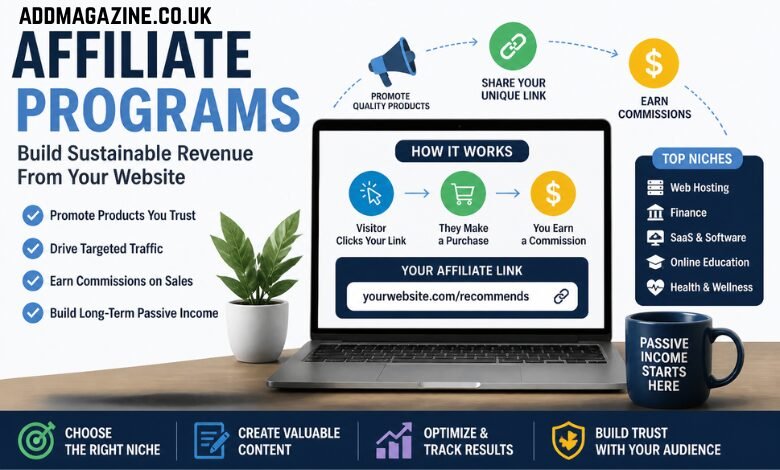
Affiliate marketing has become one of the most reliable ways for website owners to earn money without creating their own products, managing inventory, or handling customer support. The model is straightforward — you recommend a product or service to your audience, and when someone makes a purchase through your unique referral link, you receive a commission. What makes affiliate programs especially attractive in 2026 is how seamlessly they integrate with the broader digital monetization ecosystem. Many publishers combine affiliate revenue with income from online advertising platforms such as Google AdSense, Mediavine, or programmatic display networks to build diversified income streams that do not depend on any single source. Whether you run a niche blog, a comparison portal, or a high-traffic content site, the right affiliate partnerships can significantly increase your earnings per visitor.
How Affiliate Programs Work in Practice
The affiliate model involves three core parties working together within a transparent tracking framework.
- The merchant. This is the company that sells the product or service. Merchants create affiliate programs to expand their reach beyond their own marketing channels by incentivizing external publishers to drive sales on their behalf.
- The affiliate (publisher). This is you — the website owner who promotes the merchant’s offer through content, links, banners, or email campaigns. You earn a commission each time a referred visitor completes a qualifying action.
- The affiliate network or platform. Many merchants manage their programs through intermediary networks that handle tracking, reporting, and payment processing. Networks like ShareASale, CJ Affiliate, Impact, and Awin aggregate thousands of merchant programs into a single dashboard, making it easier for publishers to discover and manage partnerships.
When a visitor clicks your affiliate link, a tracking cookie is placed in their browser. If they complete a purchase within the cookie’s lifespan — which can range from 24 hours to 90 days depending on the program — the sale is attributed to you and your commission is recorded.
Types of Affiliate Programs Worth Considering
Not all affiliate programs are created equal. The best choice for your site depends on your niche, audience intent, and content format.
- Pay-per-sale programs. Commission rates vary widely — physical product programs like Amazon Associates typically pay between 1% and 10%, while digital products, SaaS subscriptions, and financial services can offer 20% to 50% or even recurring monthly commissions.
- Pay-per-lead programs. You earn a fixed fee when a referred visitor completes a specific action such as filling out a form, requesting a quote, or signing up for a free trial. These programs are common in insurance, education, finance, and B2B software verticals where the customer acquisition value is high.
- Pay-per-click programs. Less common but still available, these programs pay you simply for sending traffic to the merchant’s site regardless of whether a purchase occurs. Payouts per click tend to be low, but they can add up on high-traffic sites.
- Recurring commission programs. Particularly popular among SaaS and subscription-based companies, these programs pay you a commission every month for as long as the referred customer remains a paying subscriber.
- Two-tier programs. Some affiliate networks offer a secondary commission when you recruit other affiliates into the program. This adds a passive income layer on top of your direct referral earnings.
High-Performing Affiliate Niches for Website Monetization
Certain industries consistently offer higher payouts and better conversion rates for affiliate publishers.
- Web hosting and domain services. Hosting companies like Bluehost, SiteGround, and Cloudways offer commissions ranging from $50 to $200 per signup, making this one of the most lucrative niches for tech-oriented content creators.
- Financial products. Credit cards, investment platforms, insurance quotes, and personal finance tools frequently pay $50 to $150 per qualified lead. The audience intent in this space tends to be very high, which supports strong conversion rates.
- Software and SaaS tools. Project management platforms, email marketing services, CRM systems, and design tools commonly offer 20% to 40% recurring commissions. Review sites and comparison content perform particularly well in this vertical.
- Online education. Course platforms, language learning apps, and professional certification programs offer commissions between 15% and 50%. Educational content naturally lends itself to affiliate recommendations because readers are already in a learning mindset.
- Health and wellness. Supplements, fitness equipment, meal delivery services, and wellness apps attract large consumer audiences. Commission rates are moderate, but the volume potential is enormous for sites with strong organic search traffic.
Strategies for Maximizing Affiliate Revenue
Joining affiliate programs is the easy part. Earning meaningful income requires a deliberate content and optimization strategy.
- Create content that matches buyer intent. Product reviews, head-to-head comparisons, “best of” roundups, and tutorial guides that mention specific tools generate far more affiliate clicks than generic informational articles. Readers engaging with this type of content are actively evaluating options and are much closer to making a purchase.
- Prioritize trust and authenticity. Recommending products you have personally used or thoroughly researched builds credibility that translates directly into higher click-through and conversion rates. Audiences can quickly detect insincere endorsements, and a single dishonest recommendation can damage your reputation permanently.
- Optimize link placement. Affiliate links embedded within the first few paragraphs of an article, inside comparison tables, and alongside clear calls to action consistently outperform links buried at the bottom of a page. Strategic placement puts the link in front of the reader at the moment their purchase intent peaks.
- Disclose affiliate relationships transparently. Beyond being a legal requirement in most jurisdictions, clear disclosure actually increases trust. A simple statement at the beginning of your content letting readers know that you may earn a commission from recommended products removes suspicion rather than creating it.
- Track and test performance. Use affiliate dashboard analytics and tools like Google Analytics event tracking to monitor which pages, links, and content formats drive the most conversions. Double down on what works and refine or remove what does not.
- Negotiate custom terms. Once you demonstrate consistent referral volume, many merchants will offer increased commission rates, extended cookie windows, or exclusive discount codes that improve your conversion rates further. Do not hesitate to ask — the worst they can say is no.
Common Mistakes That Limit Affiliate Earnings
Even experienced publishers fall into traps that quietly erode their affiliate income.
- Promoting too many products at once. Spreading your efforts across dozens of programs dilutes your focus and confuses your audience. Concentrating on a curated selection of products that genuinely serve your readers produces better results than trying to monetize every possible keyword.
- Ignoring content quality. Thin, keyword-stuffed pages built solely to capture affiliate clicks rarely rank well in search engines and convert poorly even when they do attract visitors. Investing in comprehensive, genuinely helpful content is the most reliable path to sustainable affiliate revenue.
- Neglecting mobile experience. A significant share of affiliate traffic now comes from mobile devices. If your site loads slowly, displays poorly on small screens, or makes it difficult to tap affiliate links, you are leaving money on the table.
- Failing to update old content. Products change, prices shift, and programs modify their terms. Regularly auditing your top-performing affiliate pages to ensure links work, information is accurate, and recommendations remain current protects both your revenue and your credibility.
Building a Long-Term Affiliate Monetization Strategy
The publishers who earn the most from affiliate marketing are those who think of it as a long-term business rather than a quick revenue hack. Building a library of high-quality, search-optimized content around products your audience genuinely needs creates a compounding asset — each new article adds another entry point for organic traffic and another opportunity to earn commissions month after month. Combined with display advertising, email monetization, and direct partnerships, affiliate programs form a critical pillar of any well-rounded website monetization strategy.