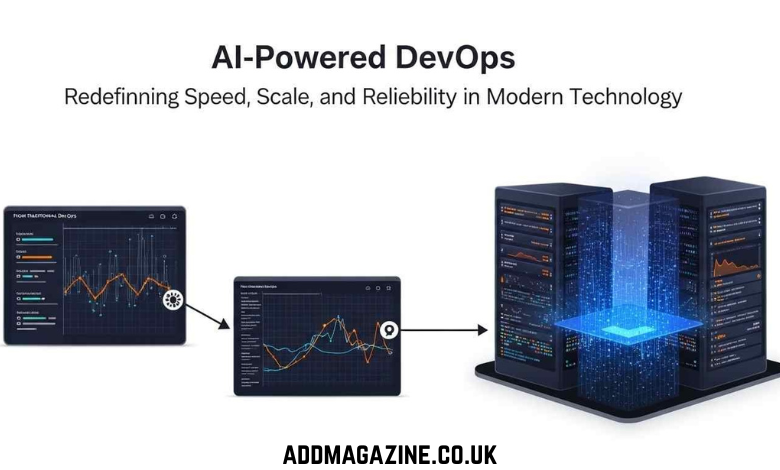
The rapid evolution of digital products has placed unprecedented pressure on engineering teams to deliver faster, more reliable software. Traditional DevOps practices, while effective, are increasingly challenged by complex cloud environments, growing data volumes, and the need for continuous innovation. This is where AI-powered DevOps is emerging as a transformative force, reshaping how organizations build, deploy, and maintain modern systems.
By combining automation, data intelligence, and adaptive learning, AI-driven DevOps is helping teams move beyond reactive workflows toward predictive, self-optimizing operations.
From Traditional DevOps to Intelligent Automation
DevOps was originally designed to break silos between development and operations, enabling faster releases and better collaboration. Over time, however, modern infrastructures have become more distributed and harder to manage manually. Microservices, containers, and multi-cloud architectures generate massive operational data that humans alone cannot efficiently process.
This shift has accelerated the adoption of AI-based systems that analyze logs, performance metrics, and deployment data in real time. Organizations investing in generative ai development are now applying these capabilities within DevOps pipelines to automate decisions, reduce downtime, and improve deployment accuracy at scale.
How AI Enhances the DevOps Lifecycle
AI does not replace DevOps teams—it augments them. By learning from historical patterns and real-time signals, AI systems enhance every stage of the DevOps lifecycle.
In development, AI can predict code vulnerabilities, suggest optimizations, and flag potential integration issues before they reach production. During testing, intelligent automation improves test coverage while reducing execution time. In operations, AI enables proactive monitoring by detecting anomalies long before users are affected.
The result is a DevOps workflow that is faster, smarter, and more resilient.
Predictive Monitoring and Incident Prevention
One of the most powerful applications of AI in DevOps is predictive monitoring. Traditional monitoring tools alert teams only after a threshold is breached. AI-powered systems, however, recognize subtle behavior changes that signal future failures.
By analyzing trends across infrastructure metrics, application performance, and user behavior, AI can forecast incidents and trigger preventive actions automatically. This reduces downtime, improves service reliability, and allows engineering teams to focus on innovation instead of firefighting.
Smarter CI/CD Pipelines
Continuous integration and continuous deployment (CI/CD) pipelines are the backbone of modern software delivery. AI introduces intelligence into these pipelines by dynamically adjusting workflows based on context.
For example, AI can prioritize high-risk builds for deeper testing, optimize deployment schedules to avoid peak usage hours, and roll back releases automatically when anomalies appear. These capabilities significantly reduce deployment failures while accelerating release cycles.
Scaling DevOps in Cloud-Native Environments
Cloud-native systems are designed to scale, but managing them efficiently remains a challenge. AI simplifies this complexity by enabling automated resource allocation, load balancing, and cost optimization.
Machine learning models continuously analyze infrastructure usage and predict demand spikes, allowing systems to scale up or down without manual intervention. This not only improves performance but also controls cloud spending—an increasingly critical concern for growing organizations.
Security and Compliance Through AI
Security is deeply integrated into modern DevOps practices, often referred to as DevSecOps. AI strengthens this approach by continuously scanning for vulnerabilities, suspicious behavior, and compliance risks.
Rather than relying on periodic audits, AI systems provide continuous security intelligence. They learn from new threats, adapt to evolving attack patterns, and help teams respond faster to incidents. This proactive approach is especially valuable in regulated industries uwhere compliance is non-negotiable.
Business Impact of AI-Powered DevOps
Beyond technical benefits, AI-powered DevOps delivers measurable business value. Faster release cycles mean quicker time-to-market. Improved reliability enhances customer trust. Reduced operational overhead lowers costs.
Organizations adopting AI-driven DevOps are better positioned to scale globally, experiment confidently, and respond rapidly to market changes. In competitive digital landscapes, these advantages often define industry leaders.
Challenges in Adoption
Despite its benefits, adopting AI in DevOps is not without challenges. Data quality, integration complexity, and skills gaps can slow implementation. Teams must also balance automation with human oversight to avoid over-reliance on algorithms.
Successful adoption requires a clear strategy, gradual implementation, and alignment between engineering, operations, and leadership. When approached thoughtfully, these challenges become manageable stepping stones rather than barriers.
The Future of DevOps Is Intelligent
AI-powered DevOps represents a natural evolution of software engineering practices. As systems grow more complex, intelligence becomes essential—not optional. The future points toward self-healing infrastructures, autonomous deployments, and predictive operations that continuously learn and improve.
Technology service providers like MindRind reflect this shift by helping organizations build AI-enabled engineering ecosystems that prioritize scalability, reliability, and long-term digital growth.
FAQs
1. What is AI-powered DevOps?
AI-powered DevOps integrates artificial intelligence and machine learning into DevOps workflows to automate decisions, predict issues, and optimize system performance.
2. How does AI improve software deployment?
AI enhances deployment by detecting risks early, optimizing CI/CD pipelines, and enabling automated rollbacks when anomalies occur.
3. Is AI-powered DevOps suitable for small teams?
Yes. Even small teams benefit from AI through reduced manual workload, faster troubleshooting, and improved system stability.
4. Does AI replace DevOps engineers?
No. AI supports engineers by handling repetitive tasks and providing insights, allowing teams to focus on strategic and creative work.
5. What industries benefit most from AI-driven DevOps?
Industries such as SaaS, fintech, healthcare, e-commerce, and cloud services gain significant value from AI-powered DevOps practices.