
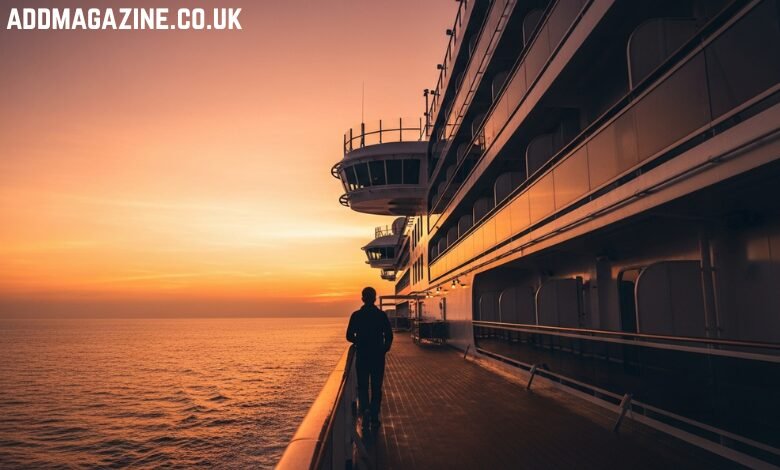
There was a time when a sea voyage implied a singular type of experience: formal nights, fixed dining hours, and a certain rigid etiquette that governed life on board. That era has long since vanished. Today, the maritime landscape is as varied as the hospitality sector on land, presenting a complex array of choices that requires a discerning eye to navigate successfully.
It is all too easy to be seduced by a glossy advertisement. The photography rarely captures the acoustic reality of a main pool deck at midday or the specific atmosphere of a dining room during the second sitting. The distinction between a memorable holiday and a regrettable expense often lies not in the destination—many ships call at the same ports—but in the vessel itself.
A ship is not merely a mode of transport; it is your residence, your restaurant, and your social club for the duration of your leave. Selecting the wrong environment can result in a holiday that feels more like an endurance test than a retreat. One must look past the marketing to understand the pedigree and purpose of each line, particularly in the UK market, where our tastes differ significantly from the American standard.
We tend to value understated service over boisterous entertainment, and we generally prefer a clear understanding of the final bill before we even step aboard.
The large-scale resort experience
The most visible segment of the market belongs to the “mega-ships.” In the UK, P&O Cruises and Royal Caribbean are the primary players here. These vessels are essentially floating cities, offering an incredible breadth of facilities. You will find multiple theatres, extensive children’s clubs, and a dizzying array of restaurants.
For families or multi-generational groups, these ships are a sensible choice simply because they cater to every age group simultaneously. The trade-off, regrettably, is intimacy. You are sharing your space with several thousand others. If you seek solitude, you may find it difficult to come by, particularly on sea days when the weather forces everyone indoors. One must also be prepared for a certain amount of administration; booking tables and theatre seats via an app is now the norm rather than the exception.
The traditional maritime atmosphere
For those who find the modern resort ship too brash or impersonal, the traditional sector offers a dignified alternative. Lines such as Fred. Olsen and Saga cater specifically to a mature demographic that values the nautical aspect of the journey.
On these ships, the design is classic rather than contemporary. You are aware you are at sea. The daily programme focuses on enrichment—lectures, port talks, and classical recitals—rather than high-octane thrills. Dining tends to be a more formal affair, often with fixed seating, which encourages conversation and community. It is a slower, quieter way to travel, reminiscent of how cruising used to be, without feeling dated.
The luxury tier
This sector operates on an entirely different philosophy. While the mass-market lines focus on adding features, lines like Swan Hellenic Luxury Cruises focus on removing friction. The defining characteristic here is space.
A luxury vessel might be similar in physical size to a small commercial ship, yet it will carry half the number of passengers. The result is an atmosphere of profound calm. There are no queues. Staff members anticipate your requirements before you voice them.
Financially, the proposition is one of value rather than low cost. The fares are high, but they are comprehensive. In the luxury sector, “all-inclusive” is taken literally: fine wines, gratuities, and speciality dining are standard. For the British traveller, who often dislikes the feeling of being “nickeled and dimed” for every coffee or bottle of water, this transparent pricing model is extremely attractive.
River voyages
If you like the idea of a touring-style holiday where the scenery changes daily without constant packing, it’s worth browsing specific ports before you commit. Arnhem slow travel gives you a clear example of a Rhine-side stop that blends WWII history (the John Frost Bridge) with relaxed city time and nearby cultural museums.
A river cruise is perhaps the antithesis of the ocean experience. It is best viewed as a touring holiday with the convenience of a moving hotel. Companies like Viking and Riviera Travel dominate this market for British guests.
The vessels are restricted by the size of the locks, meaning they are intimate by necessity, rarely carrying more than 190 guests. The focus is entirely on the destination. You dock in the centre of cities like Vienna or Bordeaux, allowing for immediate exploration. The atmosphere onboard is social and cultured, with a smart-casual dress code that appeals to those who dislike the rigmarole of packing formal wear.
Expedition and discovery
Finally, for the curious mind, there is the expedition sector. This is not about relaxation; it is about engagement. Operators such as Hurtigruten and Noble Caledonia use smaller, reinforced ships to access remote areas like the Arctic, Antarctica, or the Hebrides.
To ensure your choice aligns with your expectations, consider the following distinctions:
Here, the luxury lies in the access. You are paying to be taken to places that large ships simply cannot reach. The onboard experience is educational, led by teams of naturalists and historians. It is suited to those who are physically active and are happy to sacrifice a casino or a Broadway show for the chance to land on a deserted beach in a Zodiac.
TAKEAWAY
- for families requiring extensive facilities and children’s entertainment, the large ships of P&O Cruises or Royal Caribbean are the most logical option;
- for a calm, adult-focused environment with a sense of tradition, Fred. Olsen or Saga are preferable;
- for an experience defined by space, privacy, and inclusive pricing, one should look to the Luxury cruisessector with Swan Hellenic;
- for cultural immersion in the heart of Europe without the risk of sea sickness, a River Cruise is the ideal solution;
- for those whose primary interest is nature and remote geography, an Expedition voyage offers unparalleled access;
- for solo travellers, it is worth checking specific sailings on Saga or Fred. Olsen, where single cabins and hosted meet-ups are well-managed.
FURTHER READINGS
To research current itineraries and unbiased opinions, the following sources are recommended:
TravelHealthPro (NaTHNaC): The UK government-supported service providing specific health advice for sea travellers, including vaccination requirements and managing health conditions on board.
ABTA (The Travel Association): The essential resource for understanding your rights as a consumer and financial protection schemes in the UK;
CAA (Civil Aviation Authority) – ATOL protection: Vital for verifying that your fly-cruise package is financially protected against operator insolvency;