
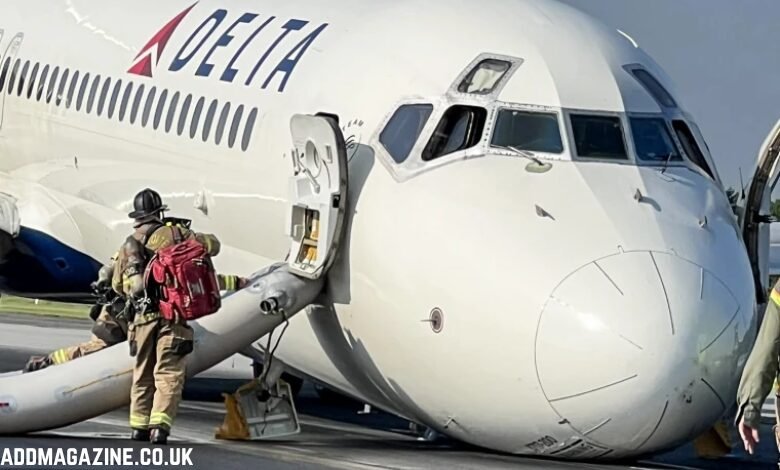
Delta Connection flight DL3543, a regional flight operated by Delta Air Lines’ regional partner, Endeavor Air, experienced an emergency landing shortly after takeoff on a scheduled flight from Journeying from Minneapolis-St. Paul International Airport (MSP) to Chicago Midway International Airport (MDW). The incident occurred on July 7, 2025, and, although it resulted in no injuries, it raised several important questions about the safety protocols, decision-making, and emergency response systems involved in modern aviation. This post provides a detailed look at the incident, offering a clear understanding of what happened, why it happened, and how the aviation industry responded.
In commercial aviation, it is rare but not unheard of for a flight to be forced to return shortly after takeoff. These events, though sometimes dramatic in their nature, often involve well-established safety measures designed to protect the passengers, crew, and aircraft. The DL3543 incident is one such example, and analyzing it can provide valuable insights into how airlines handle emergencies.
Background: Flight DL3543’s Normal Operations
Delta Connection DL3543 was part of a regular regional service connecting Minneapolis-St. Paul International Airport (MSP) with Chicago Midway International Airport (MDW). These regional flights, typically operated by smaller jets such as the Embraer E175, serve to connect passengers to Delta’s larger hubs, which in turn offer international and long-haul connections. The flight was not unusual in its purpose or operations, and everything was proceeding as expected until the aircraft had just taken off from MSP.
The Embraer E175, a small, efficient regional jet, is designed to transport passengers on shorter flights, typically under two hours. These aircraft are equipped with modern technology and redundant systems, designed to keep passengers safe and ensure reliability throughout the flight.
The Sequence of Events Leading to the Emergency
The flight took off from MSP at 10:00 AM on July 7, 2025, with clear skies and favorable weather conditions. However, shortly after takeoff, the aircraft’s flight crew detected an anomaly. While the specific nature of the issue was not immediately clear, it was likely related to a technical or mechanical malfunction that could potentially affect the aircraft’s ability to safely complete the flight.
In such scenarios, the first action taken by pilots is to refer to their standard operating procedures (SOPs). These procedures are carefully crafted to ensure that any issues are handled quickly and effectively to prevent further complications. The flight crew identified a potential system failure that required immediate attention and, as a result, they decided to declare an emergency. This is a standard procedure when an issue arises that might compromise safety.
Declaring an emergency in aviation is not an overreaction; rather, it ensures that the aircraft is given priority by air traffic control (ATC) and that emergency services are on standby in case they are needed. In this case, the pilot’s decision to return to MSP rather than continue to MDW was a precautionary measure aimed at addressing the problem while still in close proximity to the departure airport.
The Decision to Return: Emergency Procedures
Once an emergency is declared in aviation, air traffic control coordinates the return of the aircraft. The goal is to get the aircraft back to the airport quickly and safely while minimizing the risk of further complications. In the case of DL3543, the crew followed standard emergency procedures, which are designed to ensure the safety of the passengers and crew while maintaining the integrity of the aircraft.
The decision to return to Minneapolis was made because of a couple of key factors:
- Proximity to the Departure Airport: The aircraft had only been airborne for a short time, and it was still relatively close to MSP. The pilots were able to make a quick turn and head back to the airport without significant delay. This is always the preferred option in situations where it is safe to do so.
- Safety Protocols: In aviation, it is better to err on the side of caution. A decision to continue a flight with an unresolved technical issue could lead to more serious consequences down the line. By returning to MSP, the pilots ensured that they were in the best position to address the issue, whether it involved landing, inspecting the aircraft, or making further repairs.
- Availability of Emergency Services: Minneapolis-St. Paul International is a large airport with robust emergency services and maintenance crews. In the event that the situation worsened, having those resources immediately available greatly reduced any risks.
Air Traffic Control and Emergency Coordination
Once the crew made the decision to return, air traffic control (ATC) took over the responsibility of guiding the aircraft back to MSP. ATC has access to radar data and can make real-time adjustments to the aircraft’s flight path to ensure that it is flying safely and efficiently. Additionally, ATC ensures that other air traffic is cleared out of the way, giving the aircraft priority as it makes its way back to the airport.
As the aircraft approached MSP, emergency response vehicles were positioned along the runway. This is a standard precautionary measure for any aircraft that has declared an emergency, even if the situation is not life-threatening. The presence of fire trucks, ambulances, and other emergency vehicles does not necessarily mean that a fire or crash is imminent; rather, it is simply a precaution to ensure that the aircraft can be dealt with quickly if anything goes wrong during landing.
The Emergency Landing
The aircraft was able to safely land back at Minneapolis-St. Paul International Airport, and the passengers disembarked without any injuries. The emergency vehicles that had been standing by did not need to take any action, and the aircraft was able to taxi back to the gate normally.
Once on the ground, the passengers were likely briefed on what had happened. They may have been offered compensation for the inconvenience, depending on airline policy, and rebooked onto other flights if necessary. The experience, while unsettling for some passengers, ended without incident, thanks to the quick thinking of the flight crew and the coordinated efforts of ATC and emergency services.
Aircraft Inspections and Post-Incident Procedures
After an emergency landing, the aircraft undergoes thorough inspections by ground crews to determine the nature of the problem. In the case of DL3543, the issue was likely a technical malfunction that could have impacted one of the aircraft’s critical systems, such as its pressurization system, engines, or hydraulic systems. These systems are essential for the safe operation of the aircraft, and any anomalies are taken seriously.
Maintenance personnel conduct diagnostic tests, check the flight data recorder, and perform visual inspections of the aircraft to identify the root cause of the malfunction. If the issue is minor, it may be resolved quickly and the aircraft can return to service. If the problem is more serious, the aircraft may be grounded until it is fully repaired or replaced.
Once the cause of the issue is identified, the airline will report the incident to the Federal Aviation Administration (FAA) or other relevant regulatory bodies, depending on the severity of the issue. In many cases, this triggers an investigation into the cause of the malfunction and may result in recommendations for safety improvements.
How Passengers Were Affected
For the passengers aboard DL3543, the emergency landing would have caused some inconvenience, especially given that it was an unexpected turn of events. However, as mentioned earlier, the incident ended without any injuries or significant issues. In many cases like this, passengers are offered alternate flights or compensation, depending on the airline’s policies. Delta Air Lines would have worked to ensure that its passengers were taken care of, rebooking them onto other flights to Chicago or offering compensation for any delays caused by the emergency return.
It’s also important to note that passengers aboard such flights are frequently kept informed of the situation through announcements by the flight crew. Modern aircraft are equipped with communication systems that allow the pilot to relay important information to the cabin crew, who, in turn, communicate with passengers. This helps to maintain calm and provide reassurance in what might otherwise be a stressful situation.
Lessons Learned from the Delta Connection DL3543 Incident
While the Delta Connection DL3543 emergency landing was a precautionary measure, it is a useful reminder of how well the aviation industry has been designed to prioritize safety. This incident highlights several key lessons:
- The Importance of Pilot Training: The decision to return to MSP was made quickly and efficiently, thanks to the comprehensive training that pilots undergo. Aviation crews are prepared for a wide range of potential emergencies, and their swift action ensured that the situation did not escalate.
- The Role of Air Traffic Control: ATC’s role in this emergency cannot be understated. The coordination between the flight crew and ATC ensured that the aircraft was given priority and that the return to MSP was handled safely.
- Aircraft Safety Systems: Modern aircraft are equipped with a range of safety systems designed to detect issues early and allow for immediate corrective action. These systems provide pilots with the information they need to make informed decisions, which ultimately contributes to the overall safety of the flight.
- Emergency Response and Preparedness: The fact that emergency response vehicles were on standby at MSP demonstrates how thoroughly airports prepare for potential incidents. It also reinforces the idea that many emergency landings are precautionary rather than symptomatic of a major problem.
Conclusion
The emergency landing of Delta Connection flight DL3543 serves as a reminder of the importance of safety in aviation. While emergencies in the air are relatively rare, they are an essential aspect of aviation operations, and every flight crew is trained to handle such situations with the utmost professionalism. The actions taken by the crew, air traffic control, and ground personnel ensured that the passengers and crew of DL3543 were safe and that the aircraft was properly addressed upon landing. The event reinforces the industry’s commitment to safety, transparency, and effective crisis management.