Here’s the thing. The future of beauty doesn’t look like flying cars or chrome faces or whatever sci-fi promised us. It looks quieter. Smarter. A little unsettling at first, maybe. The first time I read about Innotox neuromodulator, I honestly thought it sounded fake. Like a startup buzzword. Turns out… not fake. Just very now.
And that’s kind of the theme. Technology isn’t bulldozing beauty treatments. It’s slipping in sideways. Softly. Updating things you already recognize, but changing how they feel, how long they last, and who even wants them.
You’re probably already part of it. Even if you don’t think you are.
Beauty Tech Isn’t About “More” Anymore. It’s About Control.
Not bigger lips. Not everything. Control.
You notice it when consultations feel different. Less “pick a package,” more data. Skin scans. Facial mapping. AI-powered imaging that shows you potential outcomes before a needle ever appears. The first time I saw one of those simulations, I felt… weirdly exposed? Like, wow, my asymmetry has asymmetry.
But also relieved.
According to Harvard Health Publishing, digital facial analysis tools can help practitioners deliver more precise, individualized treatments by identifying muscle movement patterns and skin quality variations that aren’t obvious to the naked eye. That’s not marketing fluff. That’s math meeting your face.
And honestly, that changes the relationship. You’re not chasing perfection anymore. You’re negotiating with your own features.
The Rise of Smarter Injectables
Let’s talk about injectables, because they’re evolving fast.
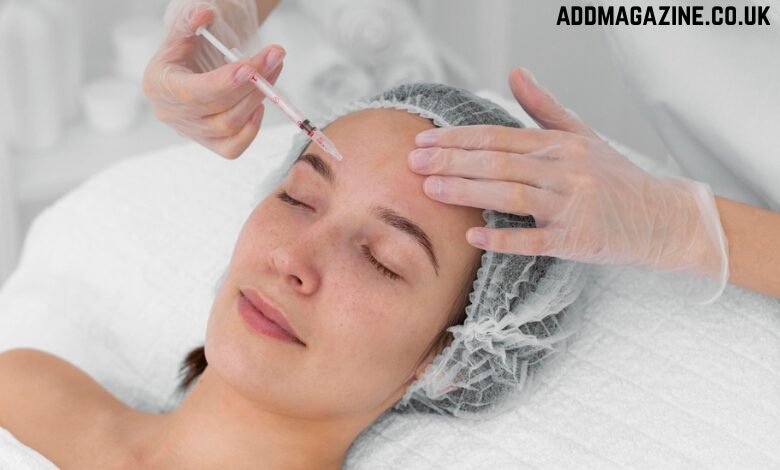
Traditional neuromodulators did their job. Freeze this, relax that, wait three months, repeat. But newer formulations—like Innotox neuromodulator—are designed to be more refined, more predictable, and in some cases, more stable because of how they’re manufactured and stored.
I remember a practitioner once saying (casually, over coffee, which somehow made it more credible): “The future is consistency. Patients don’t want surprises.”
And she’s right.
A review published in Aesthetic Surgery Journal notes that next-generation neuromodulators are being developed with improved diffusion control and purity, which may reduce variability in outcomes. Resulting in fewer moments of wondering, “Why does my eyebrow look off?”
Not zero. Just fewer.
Quick Comparison (Very Unofficial, But Helpful)
| Old-School Approach | Tech-Driven Approach |
| Standard dosing | Personalized dosing via facial mapping |
| Same product for everyone | Product selection based on muscle activity |
| Results assessed after | Results simulated before |
| Trial-and-error tweaks | Data-informed adjustments |
Is it perfect? No. But it’s… calmer. More intentional.
AI Is Quietly Running the Background
No one walks into a clinic saying, “Hi, I’d like some artificial intelligence with my cheekbones.” But AI is there anyway.
Scheduling algorithms reduce wait times. Imaging software tracks skin changes over months. Predictive analytics help practitioners adjust treatment plans before problems show up. It’s not glamorous. It’s just… effective.
The Journal of Cosmetic Dermatology published research showing that AI-assisted skin analysis can improve diagnostic accuracy for pigmentation, texture, and wrinkle depth compared to visual assessment alone. Which makes sense. Computers don’t get tired. Or distracted. Or overly optimistic.
Still, I’ll admit it feels strange knowing an algorithm might know your skin better than you do. Or better than your mirror does. But maybe that’s okay?
Maybe that’s the trade-off.
Devices Are Getting Less Scary
Remember when energy-based devices sounded like weapons? Lasers. Radiofrequency. Ultrasound. All very… intense.
They still are, technically. But they’re smarter now.
Devices can adjust energy levels in real time based on skin resistance. They can target specific depths. They can stop before damage happens. Which means treatments that used to require downtime now sometimes don’t.
I once watched a friend get a non-invasive skin tightening treatment on her lunch break. No redness. No drama. She returned to her routine as if nothing had changed. I kept staring at her face thinking, did I miss something?
According to the American Society for Dermatologic Surgery, advances in energy-based technology have significantly improved safety profiles while maintaining efficacy, leading to broader adoption among patients who previously avoided procedures due to fear or recovery time.
Fear matters. Technology is finally acknowledging that.
Pro Tip #1: Don’t Confuse “New” With “Better”
This one’s important.
Not every shiny device or app-backed treatment is an upgrade. Some are just… new. And expensive. And untested long-term.
Before you book anything tech-heavy:
- Ask how long the technology has been in use.
- Ask what happens if results aren’t ideal.
- Ask who shouldn’t get the treatment.
If a clinic can’t answer those comfortably, pause. Future-facing doesn’t mean consequence-free.
At-Home Beauty Tech Is Blurring the Lines
This part is wild. And a little controversial.
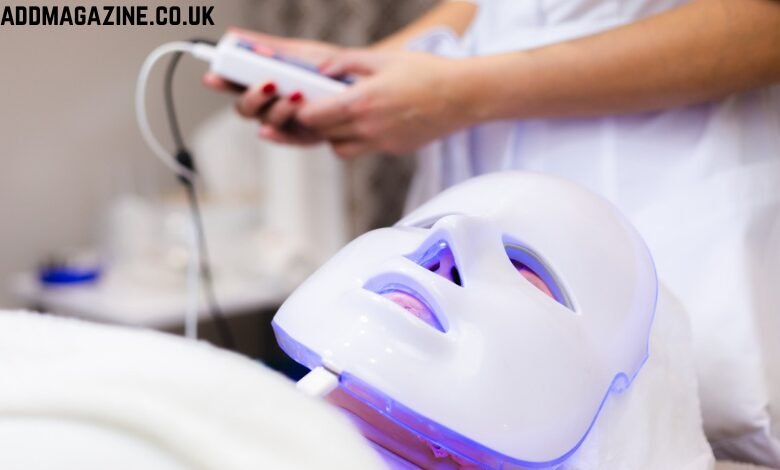
LED masks. Microcurrent tools. App-connected skincare devices that track usage and results. Some work. Some kind of work. Some are glorified nightlights.
But here’s the shift: you’re being invited into the process.
I’ll be honest. The first time I used an at-home device, I doubted it the entire time. Then… three weeks later… my skin looked different. Not dramatically. Just better. Which almost made it more convincing.
Data, Privacy, and the Slightly Awkward Questions
Okay. Let’s not pretend everything is rosy.
All this tech collects data. Facial scans. Skin metrics. Treatment histories. And while most clinics take privacy seriously, the system isn’t perfect.
You’re trading convenience and personalization for information sharing. That’s the deal.
Some experts, including researchers cited in The Lancet Digital Health, warn that medical aesthetic data should be held to the same privacy standards as other health information, especially as AI tools become more interconnected.
That part matters. A lot.
This might sound old-fashioned, but hear me out.
Technology doesn’t replace judgment. It supports it.
A skilled practitioner knows when not to use the latest tool. They know when subtlety beats innovation. They know when your face is saying “stop” even if the device says “go.”
If someone is selling you tech instead of explaining outcomes, that’s a red flag. Always has been.
Where This Is All Heading
So where does this leave you?
In a future where beauty treatments are:
- More personalized
- Less aggressive
- More data-informed
- Slightly more transparent (finally)
But also more complex. More choices. More decisions.
You’re not just saying yes or no to a treatment anymore. You’re choosing how it’s planned, what tech supports it, and who interprets the results.
That’s empowering. And a little exhausting.
I think the biggest shift isn’t technological at all. It’s psychological. You’re allowed to want small changes. You’re allowed to want maintenance instead of transformation. Technology is finally built for that mindset.
Final Thoughts
The future of beauty treatments isn’t about chasing youth or erasing yourself. It’s about refinement. Precision. Feeling like the choices are yours, not dictated by trends or pressure or fear of aging.
Technology—when used well—supports that. When used poorly, it complicates it.
So maybe the goal isn’t to ask, “What’s the newest treatment?” but “What actually fits me right now?”
That question feels more human than any algorithm. Even if the algorithm helps you answer it.