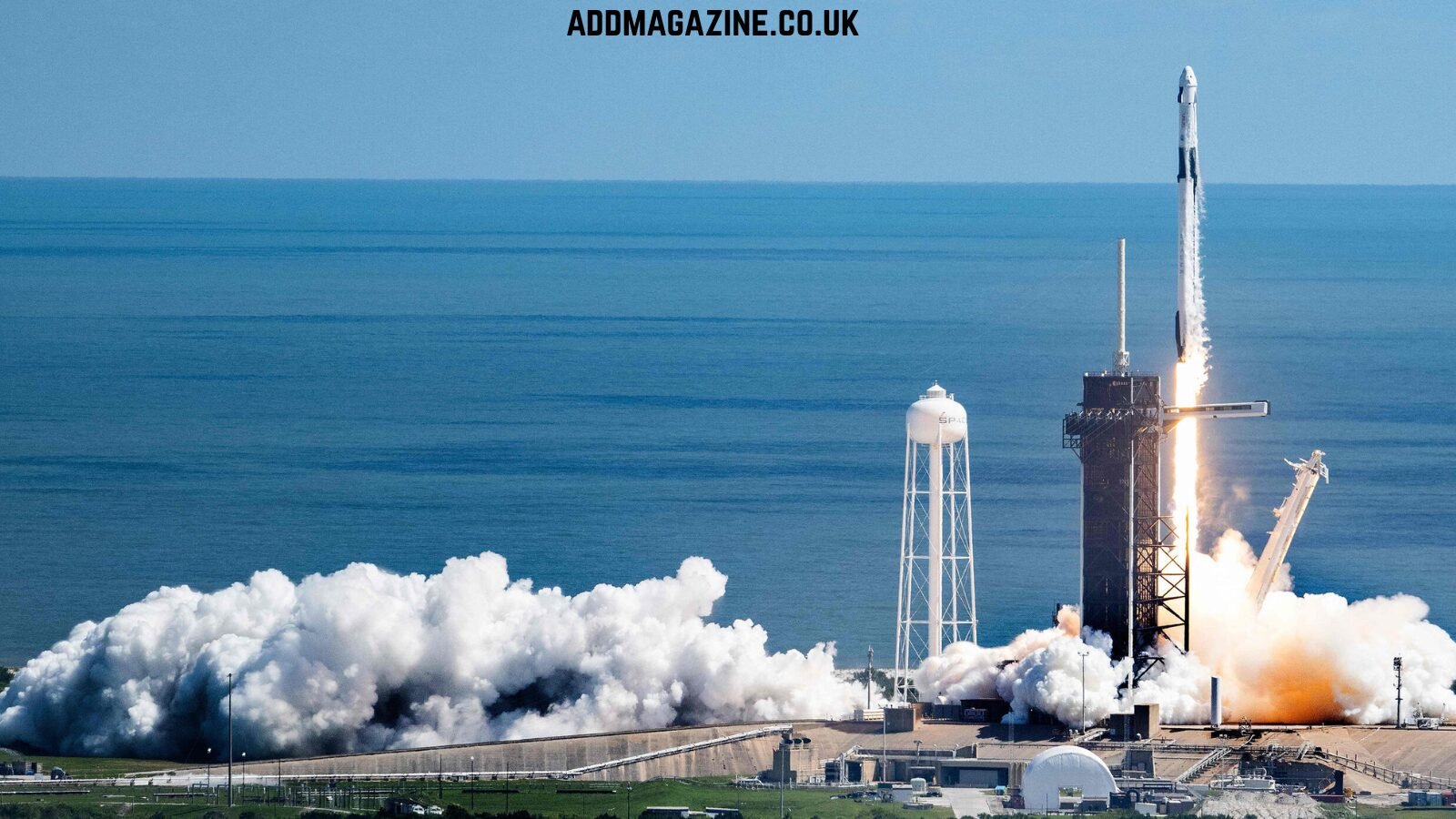
The space industry is no longer a government-only domain. Private companies are launching rockets, building satellite networks, and creating entirely new markets. Space industry business trends now reach well beyond aerospace.
The Numbers Behind the Boom
The global space economy is now valued at over $600 billion. Analysts expect it to pass $1 trillion before the end of the decade.
What changed? Launch costs dropped dramatically. Ten years ago, putting a kilogram of payload into orbit cost thousands of pounds. SpaceX’s reusable Falcon 9 rocket brought that figure down by more than half. Cheaper access to space means more companies can afford to build businesses there.
| Metric | 2015 | 2026 (Est.) |
| Global space economy value | ~$330 billion | ~$630 billion |
| Cost per kg to orbit | ~$5,000 | ~$1,500 |
| Active satellites in orbit | ~1,400 | ~12,000+ |
| Countries with space agencies | ~70 | ~90 |
These are not incremental changes. They represent a structural shift in who can participate in the space economy and how.
New Business Sectors Created by Space
Satellite Internet
SpaceX’s Starlink is the most visible example. It provides broadband internet to rural and underserved areas using a constellation of low-Earth orbit satellites. OneWeb, backed by the UK government, offers similar services. Amazon’s Project Kuiper is entering the market as well.
For businesses in remote locations, satellite internet removes one of the biggest barriers to digital participation. Farms, offshore platforms, and rural tourism operations now have access to reliable connectivity.
Earth Observation and Data
Satellites generate enormous volumes of data about the planet’s surface, atmosphere, and oceans. Companies are building businesses around this data.
- Insurance: Underwriters use satellite data to assess flood risk, wildfire exposure, and property conditions remotely.
- Logistics: Shipping companies track vessels, monitor supply chains, and optimise routes using satellite feeds.
This is not speculative technology. These applications are commercial today, used by paying customers across multiple industries.
In-Space Manufacturing
Microgravity enables the production of materials that are impossible to create on Earth. Fibre optics, specialised pharmaceuticals, and advanced alloys can all be manufactured more effectively in orbit. Several startups are building the first orbital manufacturing facilities, targeting commercial production within the next five years.
Space Tourism
Blue Origin, Virgin Galactic, and SpaceX have all carried paying passengers. Supporting industries such as training facilities, specialised insurance, and luxury travel logistics are emerging alongside it.
SpaceX and the Commercial Engine
No company has done more to accelerate space industry business trends than SpaceX. Founded by Elon Musk in 2002, the company has launched more rockets than any other commercial provider. Its Falcon 9 is the most frequently flown orbital rocket in history.
The financial scale of the business has attracted serious investor attention. The conversation around the spacex ipo reflects how valuable the market considers the company. For now, SpaceX remains private, but the speculation alone drives broader interest in the space sector.
The Data Layer Underneath It All
Behind every space business is a data operation. Satellites produce terabytes of information daily. That data needs to be processed, visualised, and turned into decisions.
This is where tools like Microsoft Power BI become relevant. Businesses working with satellite data, supply chain analytics, or environmental monitoring increasingly rely on dashboard platforms to make sense of what they collect. Working with a power bi consulting service allows companies to build reporting infrastructure tailored to their specific data streams, whether that data comes from orbit or from ground-level operations.
The businesses that win in this space will not necessarily be the ones building rockets. They will be the ones best at turning satellite-generated data into commercial value.
Opportunities for Non-Aerospace Companies
You do not need to build a rocket to benefit from the space boom.
Professional Services
Law firms are developing space law practices. Accounting firms are advising on satellite asset depreciation and government contract compliance. Management consultants help space startups scale operations. Insurance brokers are designing policies for launch failure, orbital debris, and satellite malfunction.
Manufacturing and Supply Chain
Rocket and satellite manufacturers need thousands of components. Precision engineering firms, materials suppliers, and electronics manufacturers all feed into the supply chain.
Software and Analytics
Every satellite operator needs software for mission planning, data processing, and ground station management. The demand for developers, data engineers, and cloud architects with space-sector experience is growing faster than the talent supply can match.
Finance and Investment
Financial analysts who understand orbital mechanics alongside balance sheets are becoming highly sought after.
Risks to Consider
The space industry is not without challenges.
| Risk | What It Means |
| Orbital debris | Increasing satellite numbers raise collision risk and regulatory scrutiny |
| Regulatory uncertainty | National and international space law is still evolving |
| Capital intensity | Launch and satellite development still require significant upfront investment |
| Market saturation | Satellite internet may face pricing pressure as competition grows |
| Geopolitical tensions | Space assets are increasingly tied to national security considerations |
Investors and business leaders entering this sector need to weigh these risks alongside the opportunity.
The UK’s Position
The UK has carved out a meaningful role in the global space economy. The UK Space Agency backs domestic innovation. Spaceport Cornwall has hosted launches. Scottish companies like Orbex and Skyrora are building launch vehicles for small satellites.
The UK satellite sector employs thousands and generates over £17 billion in annual revenue. Government policy continues to support growth through funding, tax incentives, and international partnerships. For UK-based businesses looking at where growth sectors are heading, space is not a fringe topic anymore. It is part of the broader landscape of emerging technology and business opportunity that will define the next decade.
Final Thought
The space industry is no longer about exploration alone. It is about commerce, data, connectivity, and infrastructure. The businesses being built today on the back of cheaper launch costs and satellite proliferation will shape industries for the next 30 years. You just need to see where the opportunities are landing.