LED sports lighting transforms how venues illuminate fields. These fixtures deliver brightness that metal halide systems cannot match. Modern facilities choose LED sports lighting for energy savings, durability, and superior performance.
What Is LED Sports Lighting?
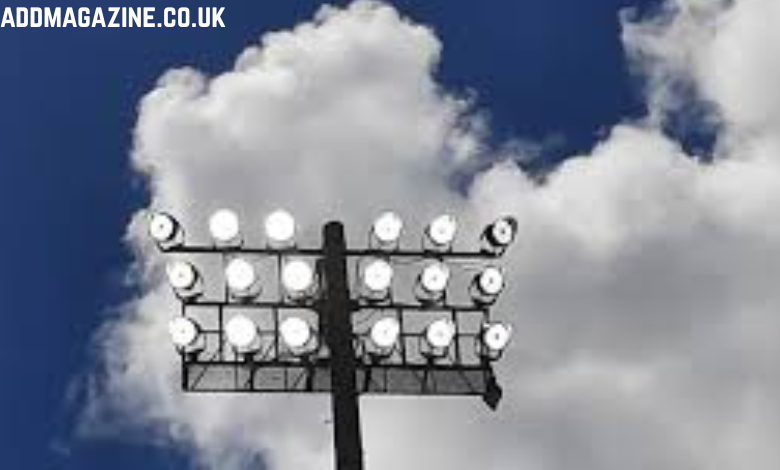
LED sports lighting are specialized fixtures designed for athletic venues. They use precision lenses to direct light across large distances. Most installations mount at 40 to 80 feet high. Installation height demands fixtures with stronger surge protection and durable paint finishes.
LED sports lighting comes in two shapes: round and square. Round fixtures create narrower light beams. They work well at greater heights. Square fixtures provide wider coverage. They suit lower mounting heights.
The difference matters for your venue type.
How Much Light Do LED Sports Lighting Systems Produce?
LED sports lighting output ranges from 60,000 to 150,000 lumens. Lumens measure light brightness from the fixture. Footcandles measure actual light reaching the playing surface. Installation height and beam angle determine footcandle levels.
A 1500-watt metal halide fixture needs replacement by 60,000-lumen LED sports lighting. Higher outputs handle professional stadiums. Smaller venues need lower outputs.
Calculate your exact requirements before purchasing.
Key Advantages of LED Sports Lighting Over Metal Halide
Metal halide fixtures require up to 30 minutes of warm-up time. LED sports lighting turns on instantly. This matters for scheduling flexibility and emergency situations.
Metal halide systems emit light in all directions (360 degrees). Much light gets wasted or redirected. LED sports lighting emits light at 180 degrees. This focused output reaches your playing surface directly.
Heat loss hurts metal halide efficiency. These systems lose 10-15 percent of energy as heat. LED sports lighting minimizes heat transfer. Lower heat means reduced cooling costs for indoor venues.
Mercury inside metal halide bulbs creates disposal problems. LED sports lighting contains no mercury. No special handling required when bulbs reach end of life.
The efficiency gains add up quickly:
- Energy costs drop by up to 75 percent with LED sports lighting
- Maintenance visits decrease significantly
- Bulb replacement frequency drops to once per decade
- Cooling system strain reduces in indoor facilities
- No hazardous material handling necessary
- Environmental compliance becomes automatic
- Return on investment happens within 3-5 years
Understanding Beam Angles in LED Sports Lighting
Beam angle controls where light travels from your fixture. It measures the spread of light in degrees. A wider angle does not always mean better lighting.
The correct beam angle depends on your mounting height and field size. Professional venues use multiple beam angles together. This combination creates uniform brightness everywhere.
Common beam angles in LED sports lighting serve different purposes:
- 20-degree beam: Narrow focus for high mounting heights (60+ feet)
- 30-degree beam: Standard choice for most stadium applications
- 40-degree beam: Balanced intensity and coverage
- 60-degree beam: Wider coverage for lower mounting heights
- 120-degree beam: Extreme width for specialty applications
Wrong beam angle selection creates dark spots or excessive glare. Narrow beams from low heights leave corners dark. Wide beams from high heights waste light upward.
Match your beam angle to mounting height and field dimensions. Professional lighting designers calculate this precisely. The math ensures every square foot gets adequate light.
Preventing Glare in LED Sports Lighting
Glare creates serious problems for players and spectators. Players lose sight of fast-moving objects. Baseballs disappear in bright patches. Spectators become uncomfortable and leave early.
Broadcasting demands glare control even more strictly. Cameras amplify any lighting inconsistencies. Glare creates dark shadows and bright spots in video. Viewers at home notice poor light quality immediately.
LED sports lighting addresses glare through optical design. Precision lenses direct light precisely. Anti-glare coatings reduce scattered light. Strategic fixture placement eliminates dark zones.
Quality LED sports lighting creates uniform brightness. Uniformity means consistent footcandles across the entire field. Players see equally well in all areas. Cameras capture clean video without compensation.
Test lighting uniformity before finalizing installation. Use a light meter to measure footcandles at multiple points. Adjust fixture positions until readings match.
Wattage and Lumen Options for LED Sports Lighting
LED sports lighting comes in standard wattages: 400, 500, 600, 750, 1000, and 1200 watts. Higher wattage produces more lumens. Your venue size determines the right choice.
Small baseball fields need 500-watt LED sports lighting. Medium stadiums typically use 1000-watt fixtures. Large professional venues employ 1200-watt LED sports lighting.
Mixing wattages creates better light distribution. Install high-wattage fixtures in difficult areas. Use lower wattage elsewhere. This approach saves money while improving results.
Count how many fixtures your venue needs. Calculate based on playing surface area and desired footcandles. Professional photometric calculations show exact fixture placement. Software models your specific venue layout.
Durability of LED Sports Lighting
LED sports lighting withstands harsh conditions. Extreme heat, cold, rain, and wind don’t damage quality fixtures. Weatherproof housing protects optical components. Sealed assemblies prevent water infiltration.
LED sports lighting lifespan reaches 100,000 hours at LM70 rating. This equals 11+ years of continuous operation. Most venues run lights 8-10 hours daily. Your fixtures last 25-30+ years.
Compare this to metal halide bulbs lasting 10,000-15,000 hours. Replacement happens every 1-2 years. Lift rental costs add up. Labor expenses multiply. LED sports lighting eliminates these ongoing expenses.
Quality fixtures carry extended warranties. Seven-year free warranties appear standard. This protection gives facility managers peace of mind. Replacement costs drop to nearly zero during the warranty period.
Installation Types for LED Sports Lighting
LED sports lighting mounting options include flood brackets, slip-fit mounts, yoke mounts, and arm mounts. Flood brackets provide standard mounting to horizontal surfaces. Slip-fit mounts attach to existing poles. Yoke mounts offer adjustable positioning. Arm mounts extend fixtures away from walls.
Your venue’s existing infrastructure determines the best choice. Retrofit projects often use slip-fit mounts on existing poles. New construction can use any mounting style. Flexibility in mounting options reduces installation costs.
Professional installation ensures proper alignment. Fixtures must point exactly at the playing surface. Small angle errors create noticeable dark spots. Laser alignment tools ensure accuracy.
Selecting LED Sports Lighting for Different Venue Types
Baseball fields need 50-75 footcandles of uniform light. Football stadiums require similar levels. Soccer fields need 50 footcandles minimum. Professional broadcasts demand 75+ footcandles.
Tennis courts need 50-100 footcandles depending on play level. Community courts use 50 footcandles. Professional tournaments need 100 footcandles. High footcandle levels prevent shadows that affect play.
Basketball courts require 50 footcandles. Arena ceiling heights allow concentrated beams. Half-court lights work differently than full-court systems. Overhead fixtures prevent shadows better.
Golf driving ranges use 30-50 footcandles. Fairway areas need less light than hitting bays. Hazard areas need brighter illumination for safety.
Each venue type has specific requirements. Know your footcandle target before shopping. Wrong light levels waste money and disappoint users.
Cost Savings From LED Sports Lighting
Energy consumption drops dramatically with LED sports lighting. Most facilities report 60-75 percent utility reductions. A 500-watt LED sports lighting fixture replaces 1500-watt metal halide systems. Math is simple: two-thirds less energy costs two-thirds less money.
Maintenance expenses disappear with LED sports lighting. Bulb replacements stop happening annually. Lift rentals vanish from the budget. Electrician visits become rare. These savings compound yearly.
Payback periods for LED sports lighting investment typically span 3-5 years. Energy savings alone cover the fixture cost. After payback, all savings drop to the bottom line. Additional 20+ years of operation generate pure profit.
Calculate your specific payback using current electric rates. Include maintenance cost reductions. Add extended lifespan value. Most facilities discover LED sports lighting costs nothing long-term.
Environmental Impact of LED Sports Lighting
LED sports lighting eliminates mercury from venues. No special disposal procedures needed. Waste management becomes simple. Environmental compliance happens automatically.
Reduced energy consumption lowers carbon footprints. Each kilowatt-hour saved prevents coal burning. A typical stadium saves 100+ tons of CO2 yearly with LED sports lighting. Over 20 years, that equals 2000+ tons prevented.
Manufacturing sustainability in LED sports lighting improves yearly. Many producers use recycled materials. Solar-powered factories build some LED sports lighting. Component recycling programs accept old fixtures.
Switching to LED sports lighting demonstrates environmental leadership. Communities appreciate reduced operating emissions. Sponsors support sustainable venues. Ticket buyers prefer environmentally responsible facilities.
Getting Started With LED Sports Lighting
Start by measuring your playing surface. Calculate mounting heights available. Determine your target footcandle level. These three factors define your LED sports lighting needs.
Contact lighting professionals for photometric analysis. They calculate fixture placement precisely. Software shows light distribution across your specific field. Recommendations emerge from actual data, not guesses.
Request sample photos of LED sports lighting in similar venues. See how fixtures perform at comparable heights. Check light uniformity in the images. Ask about reported maintenance experiences.
Request quotes from multiple suppliers. Compare fixture specifications, warranties, and pricing. Don’t choose based on cost alone. Quality differences significantly impact long-term results.
Plan installation during off-season. Scheduling around events prevents disruption. Professional installation takes 2-4 weeks typically. Budget additional time for utility work.
LED sports lighting improvements transform venue experiences. Players perform better in bright, uniform light. Spectators enjoy games without discomfort. Broadcasters capture superior video quality. Facility managers reduce operating expenses. Everyone benefits from this simple upgrade.