
Reloading your own ammunition is a rewarding pursuit, and RCBS handloading equipment is an invaluable tool that helps you squeeze the most performance from your favourite loads. It’s a level of accuracy, savings, and happiness you won’t find in factory-made ammunition. It is , however, also one that demands exacting attention to detail and a certain reverence for physics. You are, after all, turning a controlled explosion inches from your face.
All the numbers, graphs, and variables seem daunting. And this is where good data is your best friend. When it comes to any of these, Hornady is a brand that always gets my attention. Obviously famous for their groundbreaking bullet design and ballistic performance, the company provides some of the most comprehensive data on this list.
This guide helps you understand and use Hornady Reloading Data. We will also dissect the elements, teach you how to read the charts, and go through the vital safety rules every reloader should be aware of.
Decoding the Components
Before you analyse the data, you have to know what’s at stake. A reloading chart is more than a list of numbers; it is some form of matrix that shows how the different components interact.
Cartridge Specifics
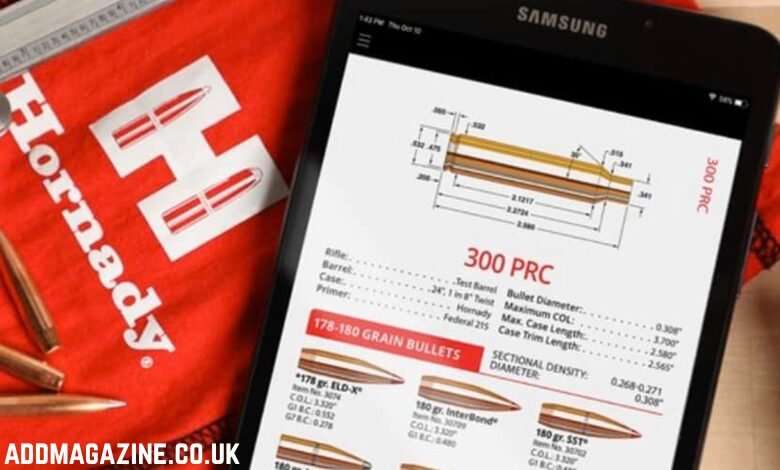
Again, the cartridge is always the first page of info. The calibre is included (e.g., 308 Winchester or 9mm Luger), as is the test gun. Note the posted COL for this cartridge. This is how far the bullet travels into the case. Seat a bullet too deep (below the recommended COL), and you reduce the case’s powder capacity, which can spike pressure dangerously high.
The Role of Powder (and Hodgdon Data)
Gunpowder is the “engine” of your cartridge, but not all engines are made equally. Powders have different “burn rates.” Powders that burn fast are generally used in pistols and light shotgun loads, while those that burn slowly are meant for rifles pushing heavy bullets down a long barrel.
If you check Hornady’s charts, you’ll see a list of powders they found to be accurate, by bullet weight. You will frequently see that Hodgdon Reloading Data overlaps with other brands. They are also desastrously difficult to check for accuracy, but such is life. Hodgdon is a major propellant manufacturer and supplies data for IMR and Winchester as well. Cross-referencing your Hornady manual with Hodgdon Reloading Data online can be a good way to check loads or substitute powder when your brand is out of stock.
Primer Selection
The primer is what creates the spark that lights the powder. Data will call out exactly which primer was used in testing (Small Rifle, Large Pistol Magnum, etc). It’s essential that you use the recommended primer. Then, going from a standard primer to a magnum primer without adjusting your powder charge can change the pressure curve of the round, which may result in unsafe feeding conditions.
Bullet Types and Weights
Hornady is known for its range of bullets, including the polymer-tipped V-MAX for varmint shooting and the ELD-X for long-range precision.
Reloading weights are tailored to the weight of your bullet in grains. A load that’s safe with a 150-grain bullet could be detonation-prone behind a heavier 180-grain bullet. Also, the shape of the bullet is important. This is because a round-nose and boat-tail spitzer of the same weight have different bearing surfaces (the part of the projectile that touches the barrel rifling), and so will generate different pressures. Always reference your data with the bullet you are loading.
Recipe Preparation Step-By-Step: How to Read the Recipe
If you have your parts ready, it’s time to check the manual. This is how you can efficiently follow the information.
- Locate Your Calibre and Bullet: Open the manual to the page for your particular cartridge. In that section, locate the table for the weight of your bullet.
- Choose Your Powder: Scroll through the list of powders. They are usually arranged in order of increasing burning rate or “energy output. Choose a powder you already have or can get the hang of.
- Locate the “Start” and “Max” loads: This is the 1st step. And the chart will probably list a variety of powder charges, ranging from a “minimum” load to a “maximum” load. You will notice the velocity (in feet per second) for each charge weight.
- The Golden Rule: Always, always start with the lowest recommended charge. You never want to go straight from nothing in the new barrel to full value, no matter what you think your rifle can handle.
Consult Online Resources
Great as the physical manual is, it’s good to have digital resources. The content may have changed since you last acquired your older printed edition of the book, and Hornady is constantly updating the data. Also, looking at Hodgdon Reloading Data online can help with powder ranges, which can help reconfirm and give you confidence with a starting point.
Safety Considerations
Thin margin for error in a reload. You really have to look out for yourself —treat it like safety first—that’s how you stay in this game.
Starting Low and Working Up
We talked about working from the minimum load , but that is only half of it. “Working up” refers to handloading a few rounds using the minimum charge weight, then working your way through a few more rounds loaded with progressively more powder (say, half of one grain more), being cautious never to exceed the maximum as listed in the Hornady Reloading Data.
Reading Pressure Signs
You need to examine the fired cases for excessive pressure as you shoot these test loads. Common indicators include:
- Squashed Primers: Primers that appear squished and no longer have a round outer edge.
- Cratered Primers: The firing pin mark appears to be a miniature volcano with a raised rim.
- Sticky Bolt Lift: For bolt-action shooters who find it difficult to open their bolt after firing, the brass is expanding too much.
- Case Head Separation: A shiny ring, just above the brass case head, is evidence the metal there has been stretched dangerously.
If you notice any of these signs, stop and rest. You are running a load too hot for your particular weapon, no matter what the data says.
Component Hygiene
Safety also occurs at the reloading bench. Keep your workspace clean. Only one can of powder is on the bench at a time. You could easily confuse a fast-burning pistol powder with a slower-burning rifle powder if both cans are on the bench. A mistake on something like that can ruin your gun and potentially hurt you in the process.
Start Your Journey with Confidence
It never ends; reloading is an adventure of continuous learning. It gives you the power to customise your ammo as needed, and make your rounds charge-friendly for a transcontinental hunting trip or weekend of plinking.
By using reliable sources- such as Hornady Reloading Data combined with cross-referencing from a well-known site like Hodgdon Reloading Data- you have established that base of safety and accuracy. Don’t rush; double-check your measurements and show some chemistry respect. The ideal shot doesn’t begin when you squeeze the trigger—it starts at the reloading bench.