When leaving a job, employees often hear terms like severance pay and final pay used interchangeably. However, these two are not the same, and misunderstanding them can lead to confusion or even financial loss. Many people rely on a calculadora de finiquito to estimate what they should receive, but understanding the difference between these payments is just as important as calculating them.
Knowing what each term means helps you ensure that you receive the correct amount and that your employer meets their legal obligations.
What Is Final Pay?
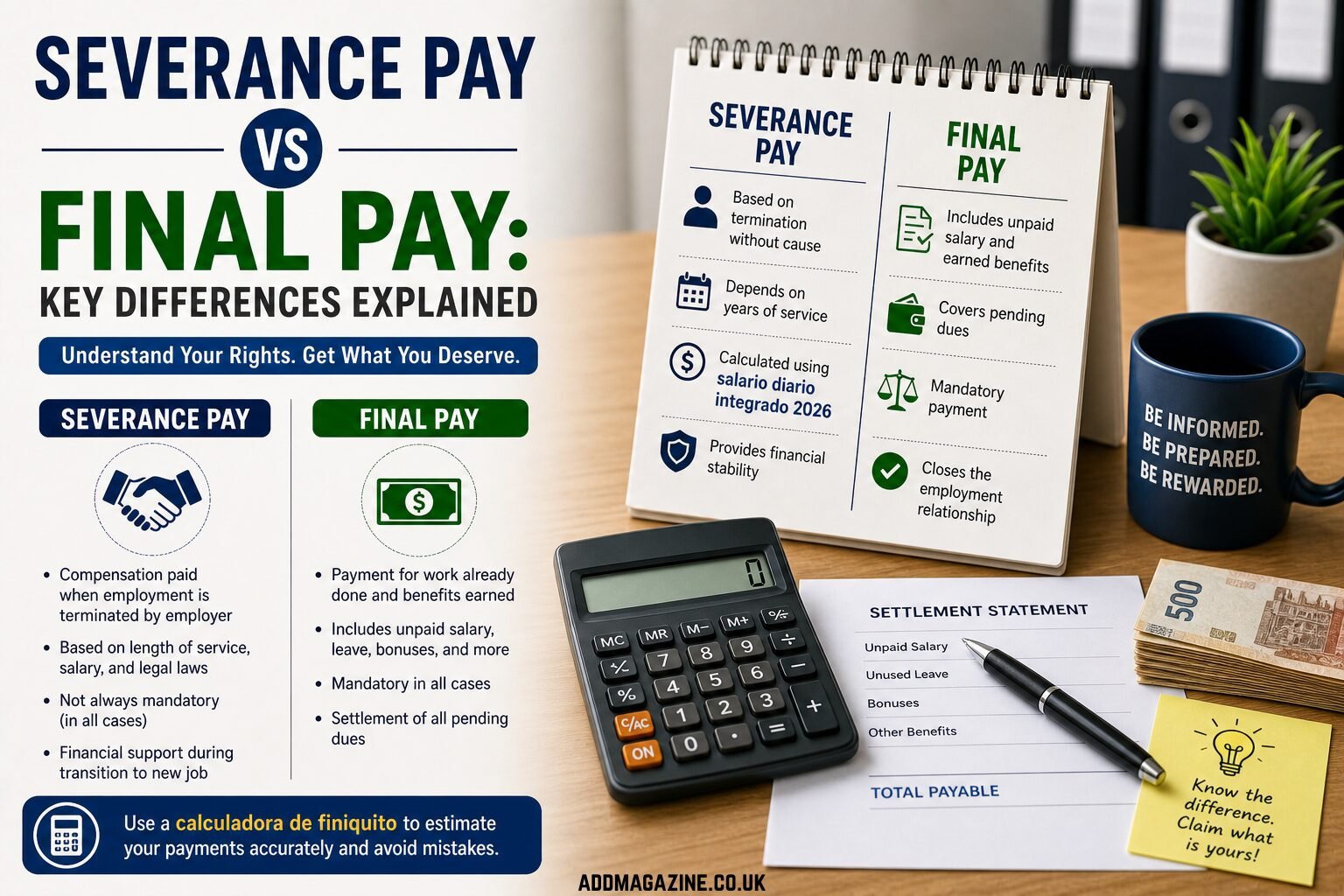
Final pay refers to the total amount an employee is entitled to receive when their employment ends. It includes all earnings that have already been worked for but not yet paid.
This typically includes unpaid salary, unused vacation days, bonuses, and any other pending compensation. Final pay is a legal requirement, meaning employers must provide it regardless of the reason for termination.
For example, if an employee resigns or completes a contract, they are still entitled to their final pay. It is not optional and must be calculated accurately.
What Is Severance Pay?
Severance pay, on the other hand, is compensation provided under specific circumstances, usually when an employee is terminated without cause.
Unlike final pay, severance is not always mandatory in every situation. It often depends on local labor laws, employment contracts, or company policies.
Severance pay is meant to support employees financially while they transition to a new job. It may include additional compensation based on years of service, salary level, and legal requirements.
The Core Difference Between Severance and Final Pay
The main difference lies in their purpose.
Final pay is compensation for work already completed. It is a right that every employee has when leaving a job.
Severance pay is compensation for the loss of employment. It is usually provided when the termination is initiated by the employer.
Understanding this distinction is crucial. Many employees mistakenly believe that severance is always included in their final payment, which is not the case.
What Does Each Payment Include?
Final pay focuses on what you have already earned. This includes your last salary, unused leave, and any pending bonuses.
Severance pay, however, is calculated differently. It often depends on factors such as length of employment, salary, and legal formulas.
In many regions, the calculation of severance involves the salario diario integrado 2026, which includes not only the base salary but also additional benefits and compensation. This makes the calculation more complex and highlights the importance of accuracy.
Why Misunderstanding These Terms Can Be Risky
Confusing severance pay with final pay can lead to serious issues.
Employees may accept lower payments because they do not fully understand what they are entitled to. Employers may also make errors if they do not follow proper calculation methods.
For example, failing to include certain benefits in the calculation or misunderstanding legal requirements can result in disputes.
Using tools like a calculadora de finiquito can help estimate payments, but it is still important to understand the underlying concepts.
How Calculations Are Done
Final pay calculations are usually straightforward. They involve adding up unpaid salary, unused leave, and other pending earnings.
Severance pay calculations are more complex. They often involve legal formulas and additional components such as the salario diario integrado 2026.
For instance, the daily integrated salary includes benefits like bonuses and allowances, which must be factored into the calculation. This ensures that the severance reflects the employee’s full compensation, not just their base salary.
Accuracy is critical because even small errors can significantly affect the final amount.
Real-World Example
Consider an employee who has worked for several years and is terminated without cause.
Their final pay would include their last salary and any unused vacation days.
In addition, they may receive severance pay based on their years of service and integrated salary. This is compensation for losing their job.
If the employee does not understand the difference, they might assume both payments are the same and miss out on additional compensation.
How to Protect Yourself
To ensure you receive the correct payments, it is important to stay informed.
First, understand your rights and local labor laws. These determine what you are entitled to receive.
Second, review your employment contract carefully. It may include details about severance policies and benefits.
Third, use reliable tools like a calculadora de finiquito to estimate your payments, but always verify the results.
Finally, keep records of your salary, benefits, and employment history.
Why Accuracy Matters
Accurate calculations protect both employees and employers.
For employees, it ensures fair compensation and prevents financial loss. For employers, it helps avoid legal disputes and penalties.
Understanding concepts like the salario diario integrado 2026 and how they affect calculations is key to achieving accuracy.
When both parties are clear about their responsibilities, the process becomes smoother and more transparent.
Final Thoughts
Severance pay and final pay serve different purposes, and understanding their differences is essential for anyone leaving a job.
Final pay is a guaranteed right that covers earnings already completed, while severance pay is additional compensation that depends on specific conditions.
By using tools like a calculadora de finiquito and understanding key factors such as the salario diario integrado 2026, you can ensure that your payments are calculated correctly.
In the end, knowledge is your best protection. The more you understand about these payments, the better prepared you will be to handle your financial transition with confidence.