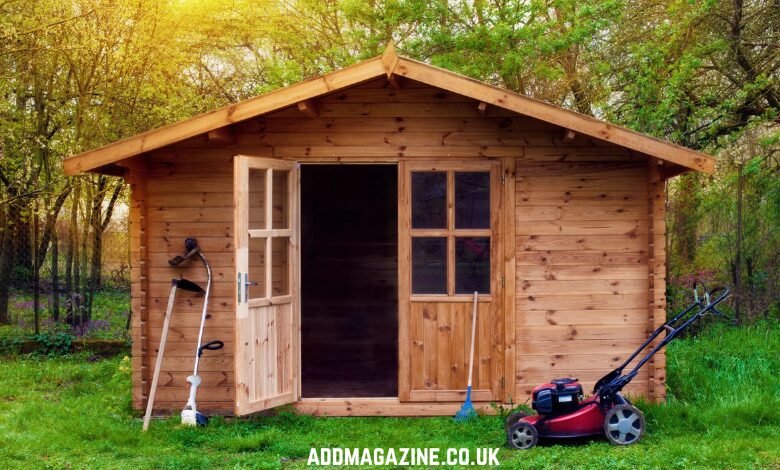
A well-built wooden garden shed, properly maintained, should last thirty years or more. This is not an exaggeration or a sales claim — it is simply the reality of what good timber, competently treated and sensibly installed, is capable of. I have seen Victorian-era wooden outbuildings still perfectly serviceable after a century of British weather, their survival owed to nothing more complicated than periodic treatment with preservative and prompt attention to any problems that developed.
And yet the average lifespan of a garden shed in the UK is considerably shorter than this. The reason is almost always the same: neglect. Sheds are treated as passive storage — doors opened and closed, contents put in and taken out — with no more maintenance attention than the lawnmower they shelter. Over years, untreated timber absorbs moisture, begins to soften, and eventually rots. Roofing felt lifts, splits, and allows water in. Joints work loose. What could have been a thirty-year building becomes a ten-year one through nothing more than inattention.
The following is a practical guide to avoiding that outcome. The time and money involved in keeping a wooden shed in good condition is genuinely modest; the return, in terms of extended useful life, is substantial.
Understanding How Timber Deteriorates
Before getting into treatment specifics, it is useful to understand the mechanisms by which timber sheds deteriorate, because this shapes the logic of maintenance. The primary enemy is moisture. Wood exposed to persistent wetting and drying cycles weakens over time even without visible rot; wood that stays wet long enough allows the growth of the fungi responsible for wood rot, which break down the cellular structure of the timber and rapidly reduce it to a soft, crumbling state.
Wet rot — the more common of the two — requires consistently moist conditions and tends to be confined to the area of persistent dampness. It causes timber to soften, darken, and eventually crack along the grain. Dry rot is less common in garden buildings but more serious when it occurs: a fungus that can spread through apparently dry timber and travel through masonry, requiring more drastic treatment when found.
UV radiation is the secondary enemy. Sunlight breaks down the lignin in timber, causing the characteristic silvering that untreated wood develops over time. This is primarily an aesthetic issue in most sheds but can, in the long term, compromise the surface of the wood and make it more susceptible to moisture penetration. Good exterior treatments contain UV inhibitors that slow this process significantly.
The First Treatment: Setting Up for Success
The single most important maintenance step for a wooden shed is the first treatment, applied before or immediately upon installation. Even pressure-treated timber benefits from an additional surface application of preservative, which supplements the factory treatment and provides surface-level protection that the pressure treatment alone does not fully address.
Before applying any treatment to a new shed, allow the timber to settle for a week or two if the structure has been erected in dry conditions — freshly milled or pressure-treated timber sometimes contains moisture that needs to escape before a surface treatment is applied. Then brush off any dirt or debris and apply a generous coat of a quality exterior wood preservative, working it well into all joints, end-grain, and the bases of vertical boards, which are the areas most vulnerable to moisture ingress.
Pay particular attention to end-grain surfaces: where boards have been cut, the cross-section of the wood is exposed and absorbs moisture far more readily than the longitudinal face. Seal all cut end-grain thoroughly, including around window and door openings. This is frequently overlooked and is the source of more early deterioration than almost any other single factor.
Choosing the Right Treatment Product
The market for exterior timber treatments is large and somewhat confusing, with a range of product types that serve different purposes and produce different results. Understanding the main categories helps in choosing the right product for a given situation.
Penetrating preservatives — water-based or solvent-based liquids that soak into the wood rather than forming a surface film — are the backbone of any shed maintenance programme. They work by impregnating the timber with fungicide and insecticide that prevent the establishment of the organisms responsible for rot and insect damage. They are generally colourless or lightly tinted and should be applied every two to three years as part of a routine maintenance schedule.
Exterior wood stains combine decorative colour with some degree of protective function. They penetrate the surface of the wood and provide good UV protection alongside a measure of moisture resistance, but they are not a substitute for preservative treatment — they should be applied on top of a preserved surface rather than instead of it. Available in a wide range of colours, they allow you to change the appearance of a shed and can considerably improve the look of a weathered or tired building.
Film-forming products — exterior paints and varnishes — create a surface layer rather than penetrating the wood, which means they provide good surface protection but can peel and crack as the timber moves with seasonal moisture changes. They are better suited to joinery (window frames, doors) than to cladding boards, and once a film-forming product has been applied to a surface it becomes the ongoing maintenance commitment for that surface.
The Annual Inspection
Once a year — ideally in late winter or early spring, before the growing season claims your attention — carry out a systematic inspection of the shed. Work from the roof downwards, looking for specific potential problems at each stage.
On the roof, check the roofing felt for tears, splits, lifting edges, and the condition of any fixings. A small split in roofing felt that is caught early can be repaired with roofing felt adhesive in ten minutes; the same split left unaddressed through a wet winter can allow water ingress that damages the roof boards, the interior contents, and potentially the walls beneath. If roofing felt is more than ten years old and showing multiple areas of wear, replacement is more cost-effective than repeated patching.
On the walls, pay close attention to the base of the cladding boards — typically the lowest 30cm — which are most exposed to splashback from rain, soil contact, and the moisture that rises from the ground around the shed. Any soft or discoloured timber in this zone needs prompt attention: at a minimum, thorough treatment with a proprietary wood hardener followed by preservative; at worst, replacement of the affected boards before the rot spreads to the structural frame.
Check all glazing if your shed has windows: putty or sealant around window glass deteriorates over time and when it fails allows water to track down the inside of the wall. Re-seal any gaps with an appropriate exterior sealant.
The Five-Year Deep Treatment
In addition to the annual inspection, every four to five years a wooden shed benefits from a more thorough treatment programme. This involves cleaning the exterior surface — a dilute solution of a proprietary wood cleaner and a stiff brush will remove algae, moss, lichen, and the grey surface weathering that accumulates over time — allowing it to dry completely, and then applying a full-coverage coat of penetrating preservative followed by a decorative stain if desired.
This five-year treatment is the moment to address any minor structural issues that have been noted during annual inspections: re-fixing loose boards, replacing cracked or split cladding, re-packing any gaps that have developed around door frames, and ensuring that all drainage around the base of the shed is still functioning correctly.
Homebuilding & Renovating offers comprehensive, guidance on maintaining exterior timber cladding, applicable to both garden sheds and larger buildings. It covers product choices, application methods, and the unique challenges of caring for timber in the British weather, with practical, technical insights.
When to Replace Rather Than Repair
Not every deteriorating shed is worth saving. If the main structural frame has been compromised by rot — if the corner posts are soft, if the floor joists are spongy, if the roof structure has lost its integrity — the cost of remediation will often exceed the cost of replacement. The tipping point is generally when structural timber rather than just cladding or roofing has been affected.
If you are at this point, it is worth approaching the replacement as an opportunity to do things better than before: a more substantial building, a better base, an earlier and more consistent maintenance programme from the outset. Dobbies has a solid range of wooden garden sheds at various sizes and specifications that is worth browsing if you are looking to replace an older building — comparing cladding thickness and construction details across models will quickly show you which represent genuine long-term value.
The Payoff
A wooden shed that is treated within the first month of installation, inspected annually, treated every two to three years with quality preservative, and given a full deep-clean and re-treatment every five years will last for a very long time. This is not an onerous programme — it amounts to perhaps two to three hours per year of direct maintenance effort, plus occasional specific interventions when the annual inspection reveals something that needs addressing.
Compare that to the cost and disruption of replacing a shed every eight to ten years through neglect, and the arithmetic of good maintenance becomes very clear indeed. Take care of the timber. The timber will take care of everything else.