Crowds do not think. Crowds feel, then move, then invent a story about why the movement makes sense. That is the awkward truth that polite management manuals keep trying to sandpaper into something more soothing. In a packed station during a delay, at a street festival when the weather turns, outside a venue when one gate suddenly closes, the public scans for cues with the hunger of a jury. Words matter less than timing. Posture matters more than volume. Calm leadership signals work because uncertainty breeds imitation. A single composed figure can reduce the emotional temperature of hundreds. A single frantic one can light the fuse.
Signals beat speeches
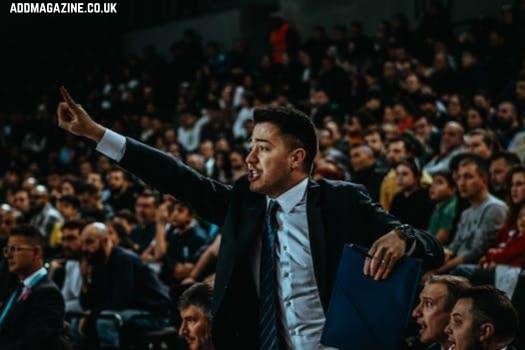
Public disorder rarely begins with violence. It begins with ambiguity, that sly little saboteur. In mass participation events, ambiguity multiplies because people arrive with different goals, tolerances, and private fears. Calm leadership signals cut through that fog. The most effective leaders show clean, readable behaviour. They stand still when others fidget. They point with an open hand, not a stabbing finger. They speak in short, landing phrases. They keep their face neutral, not blank, not theatrical. Dramatic reassurance often backfires because it advertises danger. Anxious repetition does the same. A calm signal says, ‘Someone sees the whole scene, someone owns the next step, and someone won’t panic just because the crowd has begun to wobble.’
The Physics of Attention
Attention behaves like water in a gutter. It runs downhill towards novelty, conflict, and noise. A chaotic setting offers all three in abundance, which explains why a minor argument near a barrier can hijack an entire queue. Calm leadership signals redirect attention by refusing to compete on those terms. A leader who shouts over the crowd joins the noise. A leader who moves with purpose and pauses at visible decision points creates a different kind of novelty, the useful kind. Eyelines matter. People follow what a leader looks at, not what a leader claims to care about. Hands matter too. Hands convey intent faster than any announcement. The cold fact is that humans read bodies before language. Civilisation likes to pretend otherwise. The Underground at rush hour disagrees.
Designing Calm in Advance
Peaceful leadership signals are not spontaneous. Organisations gamble or construct them. Training should emphasise pressurised behaviour, not scripts that fall apart in real life. Rehearses matter. Repeated short repetitions build adrenaline-resistant calm motions. Team layout is important. Leadership requires clear duties, lines of sight, and predictable handovers. Mixed messages cause chaos faster than external threats. Signage, sound, and barriers matter because the environment either promotes or opposes calm instruction. Sprinting between hotspots makes a leader appear unsteady. A visible, anchored leader can. Planning makes calm an operational standard.
Conclusion
Chaos makes public spaces strange. The familiar becomes puzzling. On a peaceful day, kind people can be selfish when stuck. Calm leadership signals establish the beat when the throng loses its way. They don’t need charisma or saintly patience. They need focus, discipline, and a resolute unwillingness to replicate the crowd’s worry. A steady voice, calm attitude, straightforward instruction, and visible plan unfolding step by step are the finest signals. That simplicity pays off when the alternative appears. Noise. Panic. A directionless swarm that follows the loudest urge.