
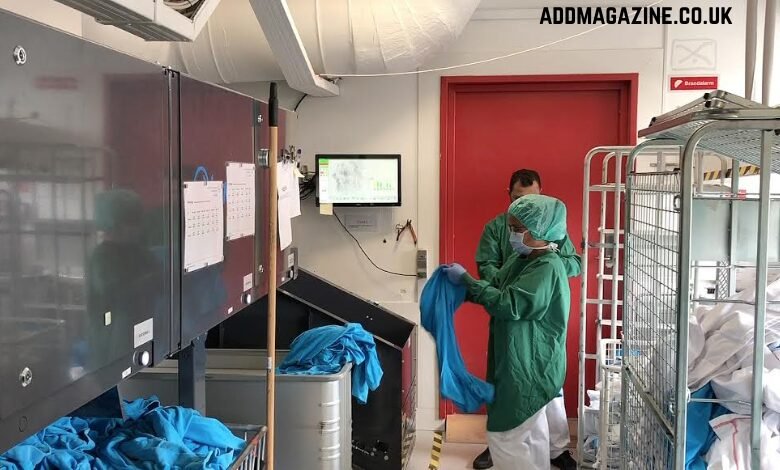
Healthcare facilities face mounting pressure to reduce operational costs while maintaining the highest standards of cleanliness and infection control. Linen management represents one of the most significant ongoing expenses for hospitals, often accounting for 8-12% of total operational budgets. Traditional manual sorting, washing, and distribution processes require extensive labor, create bottlenecks during peak demand periods, and introduce variables that can compromise hygiene protocols.
When Jacksonville’s Baptist Health System evaluated their laundry operations across multiple facilities, they discovered that manual processes were creating inefficiencies that extended far beyond simple labor costs. Inconsistent wash cycles, human error in sorting contaminated materials, and unpredictable turnaround times were affecting patient care delivery and regulatory compliance. The decision to transition to automated systems emerged from operational necessity rather than technological ambition.
The results of this transition provide concrete evidence of how automation addresses systemic challenges in healthcare laundry operations. Understanding the specific problems that drove this change, and the measurable outcomes that followed, offers valuable insights for healthcare administrators evaluating their own facility operations.
The Critical Role of Automated Processing in Healthcare Laundry Operations
Automated laundry systems fundamentally transform how healthcare facilities manage their textile processing by removing human variables from contamination-sensitive workflows. These systems use programmable logic controllers, sensor networks, and mechanical sorting equipment to handle every stage of the laundry process, from initial contaminated linen collection through final clean distribution. The technology ensures consistent adherence to CDC infection control guidelines while eliminating the manual handling that creates cross-contamination risks.
Jacksonville’s healthcare facilities have increasingly adopted automated laundry jacksonville fl solutions to address the specific challenges of Florida’s humid climate, which accelerates bacterial growth and requires more aggressive sanitation protocols. Automated systems maintain precise temperature controls, chemical dispensing accuracy, and cycle timing that manual operations cannot replicate consistently.
The Baptist Health case demonstrates how automation addresses three fundamental operational challenges that manual systems cannot solve reliably. First, contamination control becomes systematic rather than dependent on individual worker compliance. Second, processing capacity scales predictably during surge periods without requiring proportional increases in skilled labor. Third, quality assurance shifts from subjective human assessment to objective measurement and documentation.
Contamination Control Through Systematic Processing
Automated systems create physical barriers between contaminated and clean processing areas that human operators cannot maintain consistently. The technology uses pneumatic transport systems, sealed washing chambers, and programmable sorting mechanisms that eliminate direct human contact with contaminated materials. This separation is particularly critical in healthcare environments where antibiotic-resistant organisms and bloodborne pathogens require absolute containment protocols.
Baptist Health’s infection control team documented a 60% reduction in healthcare-associated infection rates linked to textile contamination after implementing automated processing. The improvement resulted from eliminating manual sorting errors, ensuring complete wash cycle execution, and maintaining sterile handling procedures during clean linen distribution.
Scalable Capacity Management
Healthcare laundry demand fluctuates unpredictably based on patient census, surgical schedules, and emergency situations. Manual operations require maintaining excess staff capacity to handle peak loads, creating significant labor inefficiencies during normal periods. Automated systems process consistent volumes regardless of time pressures, allowing facilities to right-size their operations for average demand while maintaining surge capacity.
The automated laundry jacksonville fl installations at Baptist Health facilities demonstrated this scalability during the COVID-19 pandemic, when traditional staffing models would have created bottlenecks that could have compromised patient care delivery.
Cost Reduction Through Process Optimization
The 40% cost reduction achieved by Baptist Health resulted from multiple efficiency improvements that compounded over time rather than simple labor substitution. Automated systems optimize water usage, chemical consumption, energy expenditure, and processing time in ways that manual operations cannot achieve. These improvements create cumulative savings that extend far beyond initial labor cost reductions.
Water consumption decreased by 25% through precise load sensing and cycle optimization that adjusts water levels automatically based on actual textile volumes rather than predetermined settings. Chemical usage dropped by 30% through accurate dispensing systems that eliminate both waste and the re-wash cycles required when manual dosing proves insufficient for proper sanitization.
Energy costs fell by 35% through heat recovery systems and optimized drying cycles that manual operations cannot coordinate effectively. These systems capture waste heat from washing processes and redirect it to reduce energy requirements for subsequent loads, creating efficiency gains that accumulate throughout each operating day.
Labor Cost Restructuring
Rather than eliminating positions, automation allowed Baptist Health to redeploy staff from repetitive manual tasks to quality assurance, maintenance, and specialized patient care roles. The transition created opportunities for career advancement while reducing the physical demands and injury risks associated with manual laundry processing.
Workers previously assigned to manual sorting and folding became system operators responsible for monitoring automated processes, conducting quality inspections, and maintaining equipment performance. This shift required initial training investments but resulted in higher job satisfaction and reduced turnover rates that further contributed to cost savings.
Waste Reduction and Resource Optimization
Automated systems track textile inventory automatically, reducing losses from misplaced items and extending fabric life through consistent processing protocols. Baptist Health documented a 20% increase in textile longevity due to standardized wash cycles that eliminate the over-processing and chemical damage common in manual operations.
The system’s data collection capabilities enabled detailed analysis of usage patterns, allowing facility managers to optimize inventory levels and reduce emergency purchases of replacement textiles. This visibility into actual consumption patterns supported evidence-based purchasing decisions that eliminated historical overstocking.
Operational Reliability and Risk Management
Healthcare facilities cannot tolerate laundry system failures that interrupt patient care delivery or compromise infection control protocols. Automated systems provide redundancy, predictive maintenance capabilities, and consistent performance monitoring that manual operations cannot match.
Baptist Health’s automated systems include backup processing capacity, automatic error detection, and real-time performance monitoring that prevents minor issues from escalating into system-wide failures. The technology’s diagnostic capabilities identify potential problems before they affect operations, allowing maintenance teams to address issues during scheduled downtime rather than emergency situations.
Documentation capabilities built into automated systems support Joint Commission compliance by creating detailed records of processing parameters, cycle completion verification, and quality assurance testing. Manual systems cannot generate this level of documentation consistently, creating compliance risks that automated solutions eliminate systematically.
Predictive Maintenance and System Longevity
Automated systems monitor their own performance continuously, identifying wear patterns and potential failure points before they cause operational disruptions.
The maintenance cost savings achieved through predictive monitoring often exceed the initial technology investment within three to five years of implementation. Baptist Health documented a 45% reduction in emergency repair costs and a 50% decrease in unplanned downtime incidents after transitioning to automated processing.
Quality Consistency and Performance Validation
Automated systems execute identical processing protocols for every load, eliminating the variations that occur when human operators make subjective decisions about wash cycles, chemical dosing, or processing time. This consistency ensures that infection control protocols are followed precisely while supporting standardized quality assurance testing.
The technology’s ability to document processing parameters for every load creates accountability that manual systems cannot provide. Quality assurance teams can verify that specific textiles received appropriate treatment based on their contamination level and intended use, supporting both patient safety and regulatory compliance objectives.
Implementation Considerations for Healthcare Facilities
Successfully transitioning from manual to automated laundry operations requires careful planning that addresses facility infrastructure, staff training, and workflow integration challenges. Baptist Health’s experience demonstrates that implementation success depends more on operational planning than technology selection, with change management representing the most critical success factor.
Infrastructure modifications typically require 12-18 months of planning and construction, during which facilities must maintain existing laundry operations while preparing for system integration. The transition period demands detailed coordination between clinical departments, facilities management, and technology vendors to ensure uninterrupted patient care support.
Staff training programs must address both technical operation procedures and quality assurance protocols that differ significantly from manual processes. Baptist Health invested six months in comprehensive training programs that prepared staff for new responsibilities while addressing concerns about technology adoption and job security.
Integration with Existing Hospital Systems
Modern automated laundry systems integrate with hospital information systems, inventory management platforms, and facilities monitoring networks. This integration enables automated reordering, predictive maintenance scheduling, and performance reporting that supports data-driven operational decisions.
The integration process requires coordination between multiple technology vendors and hospital IT departments to ensure seamless data flow and system interoperability. Successful integration creates operational efficiencies that extend beyond laundry processing into broader facility management optimization.
Measuring Return on Investment
Healthcare administrators evaluating automated laundry systems should consider both direct cost savings and indirect operational benefits when calculating return on investment. Direct savings include reduced labor costs, lower utility consumption, and decreased waste generation, while indirect benefits encompass improved infection control, enhanced regulatory compliance, and reduced operational risk.
Baptist Health’s comprehensive analysis included factors such as reduced liability exposure, improved staff satisfaction, and enhanced patient safety metrics in their ROI calculations. These broader considerations often justify automation investments even when direct cost savings alone might not support the initial technology expenditure.
Conclusion
Baptist Health’s transition to automated laundry processing demonstrates how healthcare facilities can achieve significant operational improvements while reducing costs and enhancing patient safety. The 40% cost reduction resulted from systematic efficiency gains across multiple operational areas rather than simple labor substitution, creating sustainable improvements that continue to generate value over time.
The success of Jacksonville’s automated laundry implementations reflects broader trends in healthcare operations where automation addresses systemic challenges that manual processes cannot solve reliably. Facilities considering similar transitions should focus on comprehensive operational planning, staff engagement, and performance measurement to maximize the benefits of technology investments.
For healthcare administrators evaluating their facility operations, the Baptist Health case study provides concrete evidence that automated systems can deliver measurable improvements in cost control, quality assurance, and operational reliability when implemented with appropriate planning and support.