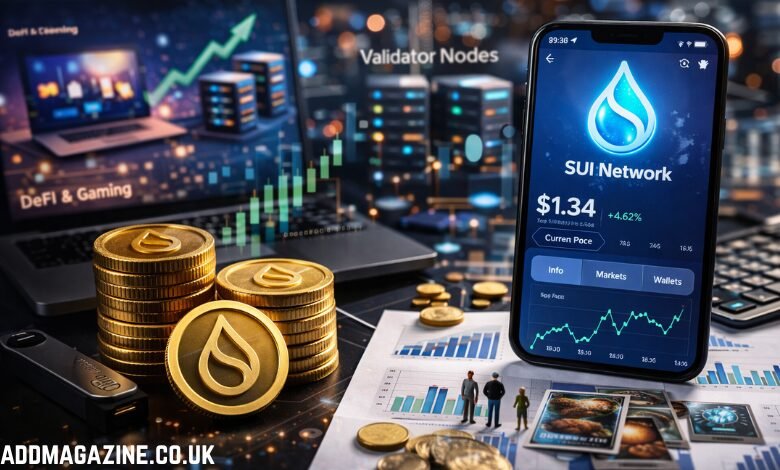
So I was chatting with a friend the other day about alternative Layer 1s, and SUI came up. Again. Honestly? I’ve been watching this blockchain since it launched in May 2023, and the more I dig into how their token economics work, the more impressed I get. Sure, we’ve all heard the “Solana killer” talk before — but SUI’s approach to tokenomics feels different. More thoughtful. And if you’re holding SUI or thinking about it, understanding how these mechanics work could seriously help your portfolio strategy.
Most people focus on the flashy stuff — transaction speeds, programming languages, ecosystem growth. All important, obviously. But the tokenomics? That’s where the real long-term value lives. And SUI’s setup is actually pretty fascinating once you break it down.
The SUI Token Model That’s Got Everyone Talking
Here’s what caught my attention first: SUI has a fixed supply cap of 10 billion tokens. Not inflationary like some chains, not deflationary burns happening every week. Just a clean, predictable maximum that everyone can work with. About 27% of those tokens were allocated to early investors and the team, with long vesting schedules that prevent massive dumps. Smart move.
But here’s where it gets interesting — the staking rewards come from new token emissions, but they’re balanced against storage fees that get redistributed to validators and stakers. It’s like they built in this economic flywheel where more network usage actually benefits token holders more directly than most other chains. I’ve been tracking this since last summer, and the correlation is pretty clear.
The storage fee mechanism is genuinely clever. When developers deploy smart contracts or store data on SUI, they pay fees that go into a pool. That pool gets redistributed to people who stake their SUI tokens. More activity equals more rewards for stakers. Simple concept, but the execution matters, and SUI seems to have nailed the balance so far.
What really sold me on the model was looking at how transaction fees work. Unlike Ethereum where you’re basically gambling on gas prices, SUI uses a more predictable fee structure. Users can even pay transaction fees with tokens other than SUI in many cases, which removes friction for adoption while still creating demand for the native token through the backend mechanics.
Staking Rewards and Validator Economics
I actually started staking some SUI back in October, and the returns have been pretty solid. Current staking rewards hover around 3-4% annually, which might not sound like much compared to some DeFi yields, but remember — this is relatively low-risk compared to liquidity pool farming or lending protocols.
The validator system works differently than many other chains too. SUI uses a delegated proof-of-stake model, but validators are selected based on both their stake and their performance metrics. Bad actors get penalized not just financially but through reduced delegation over time. It creates this natural selection pressure toward better network performance.
What’s cool is how delegation works for regular token holders. You can delegate your SUI to validators without giving up custody of your tokens, and you can switch validators whenever you want without lockup periods. I’ve moved my delegation twice now based on validator performance, and the flexibility is honestly refreshing after dealing with 21-day unbonding periods on other chains.
The math gets interesting when you factor in the storage fee redistribution I mentioned earlier. As more projects build on SUI, stakers earn more rewards beyond just the base emissions. I ran the numbers using a sui calculator last month, and even modest network growth assumptions show some compelling long-term return scenarios for stakers.
One thing that impressed me — SUI validators have maintained really high uptime rates, mostly above 99%. When validators perform well, everyone wins. Stakers get consistent rewards, the network stays fast and reliable, and that attracts more developers and users. It’s a positive feedback loop that seems to be working.
Token Utility Beyond Just Holding
Here’s where SUI gets more interesting than your typical Layer 1 token. Sure, you need SUI for transaction fees and staking, but the utility goes deeper. The upcoming governance features will give token holders voting rights on network upgrades and parameter changes. Real governance, not just the “should we change the logo color” type decisions you see elsewhere.
The ecosystem development has been accelerating too. I’ve been watching projects like Cetus, BlueMove, and Kriya build out DeFi infrastructure, and they’re all creating additional utility for SUI tokens. Liquidity mining programs, protocol governance tokens that require SUI for participation, yield farming opportunities — the usual DeFi playbook, but with SUI’s technical advantages underneath.
Gaming applications are particularly exciting on SUI. The blockchain’s object-oriented programming model makes it way easier to represent in-game assets as NFTs without the clunky user experience you get on other chains. Several gaming projects are already using SUI tokens for in-game economies, tournament prizes, and governance of gaming DAOs. Gaming crypto might finally be getting somewhere interesting.
Cross-chain bridge development has been solid too. You can move assets between SUI and other major chains pretty easily now, which creates arbitrage opportunities and lets you use SUI tokens in broader DeFi strategies across multiple ecosystems. I’ve used the Wormhole bridge a few times without issues, though obviously you want to stick to well-audited bridges.
Enterprise adoption is starting to pick up as well. A few companies are exploring SUI for supply chain tracking and digital identity applications, which could create steady demand for tokens to pay transaction fees at scale. Not as exciting as 1000x meme coin gains, but way more sustainable for long-term value.
Price Performance and Market Dynamics
Let’s talk numbers. SUI launched at around $1.50 and has had quite the journey since then. Like most crypto, it’s been volatile, but the underlying fundamentals keep improving while the price action sorts itself out. I picked up more during some of the dips in early 2024, and that’s worked out pretty well so far.
The token unlock schedule is worth understanding if you’re thinking about timing. Most of the early investor and team tokens unlock gradually over 2-4 years, which means selling pressure should be relatively predictable rather than sudden cliff events. The Foundation has been pretty transparent about their unlock timeline, which I appreciate.
Market cap comparisons get interesting when you look at SUI versus other Layer 1s. It’s still trading at a significant discount to chains with similar or worse technical capabilities, which suggests either the market hasn’t figured out SUI’s potential yet, or I’m missing something important. Given the rate of development activity and ecosystem growth, I’m betting on the former.
Trading volume has been consistently strong, usually ranking in the top 30-40 cryptocurrencies by daily volume. Good liquidity means you can get in and out of positions without too much slippage, which matters if you’re planning to take profits or add to positions based on market conditions.
The correlation with Bitcoin and broader crypto markets is there, obviously, but SUI has shown some independence during certain periods, especially when major ecosystem announcements happen or new partnerships get revealed. That’s actually healthy — you want some correlation for liquidity but not total dependence on BTC price action.
Final Thoughts
After diving deep into SUI’s tokenomics over the past year, I’m genuinely excited about where this project is heading. The economic model creates real utility and value accrual for token holders, the staking rewards provide steady yield opportunities, and the growing ecosystem keeps expanding use cases for the token itself. Sure, crypto markets are unpredictable and you should always do your own research, but SUI feels like one of the more thoughtfully designed token economies in the space right now. Whether you’re looking at staking rewards, participating in governance, or just betting on the long-term success of a technically superior blockchain, SUI’s tokenomics give you multiple ways to benefit from the network’s growth. The foundation is solid, the community is engaged, and the development momentum keeps accelerating. Worth keeping on your radar.