In the ever-evolving world of marketing, understanding the effectiveness of various marketing channels and touchpoints has become more crucial than ever. Traditional marketing measurement methods, which often rely on last-click attribution, no longer provide a complete or accurate picture of a customer’s journey. This is where the power of multi-touch attribution truly shines. MTA is a sophisticated methodology that offers a more nuanced and comprehensive way to measure the impact of different marketing channels and touchpoints on customer behavior.
Marketing performance analytics, on the other hand, encompasses the tools and strategies used to evaluate and optimize marketing campaigns. These analytics give businesses the insights needed to make data-driven decisions that can improve marketing outcomes. Together, multi-touch attribution and marketing performance analytics enable companies to move beyond simplistic metrics and adopt a more detailed approach to campaign measurement and optimization.
This blog post will explore multi-touch attribution in depth, discuss its importance, and examine how it ties into broader marketing performance analytics. By the end, you’ll have a solid understanding of these essential marketing concepts and how they can be used to improve your marketing strategies.
What is Multi-Touch Attribution (MTA)?
At its core, multi-touch attribution (MTA) is a technique used to assign value to each touchpoint in a customer’s journey toward conversion. Unlike traditional models that focus on a single touchpoint (often the last one), MTA considers all interactions a customer has with a brand across various channels and devices.
For example, a customer might first learn about a product through a social media ad, then visit the website through an email campaign, and finally make a purchase after receiving a remarketing ad. Traditional models might only give credit to the remarketing ad (the last touchpoint), but multi-touch attribution will assign value to each of the touchpoints—social media, email, and remarketing. This approach provides a much more holistic understanding of the customer journey.
Why is Multi-Touch Attribution Important?
Marketing has become far more complex; customers now engage with brands through numerous touchpoints, both digital and physical. From social media posts to email newsletters, from search engine ads to influencer collaborations, the possibilities for interaction are vast. As a result, businesses need a way to track and understand the effectiveness of each touchpoint in driving conversions.
Multi-touch attribution is crucial because it allows marketers to:
- Get a Complete View of the Customer Journey: Traditional attribution models fail to capture the complexity of the modern buyer’s journey. By tracking multiple touchpoints, MTA gives marketers a complete picture of how customers interact with their brand.
- Optimize Marketing Spend: By understanding the impact of each touchpoint, businesses can allocate their marketing budget more effectively, investing more in the channels that drive the most value.
- Improve Campaign Performance: With insights from MTA, marketers can refine their strategies and improve their campaigns, ensuring they are not wasting resources on ineffective channels or touchpoints.
Types of Multi-Touch Attribution Models
There are several models of multi-touch attribution, each with its approach to assigning value to touchpoints. The most common models include:
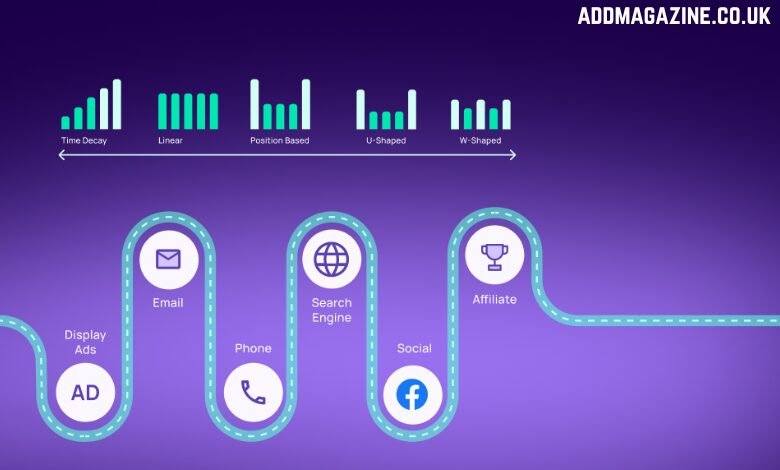
- Linear Attribution: This model gives equal weight to every touchpoint in the customer journey. If a customer interacts with three touchpoints, each one gets 33.3% of the total credit for the conversion.
- Time-Decay Attribution: In this model, touchpoints that happen closer to the conversion are given more credit. The further away a touchpoint is from the conversion event, the less credit it receives. This model reflects the idea that the last touchpoints are often the most influential.
- U-Shaped Attribution (Position-Based): This model assigns the most credit to the first and last touchpoints, while distributing the remaining credit among the other touchpoints. This model acknowledges the importance of both the initial interaction (which sparks interest) and the final one (which drives conversion).
- W-Shaped Attribution: Similar to U-shaped, but it also assigns significant credit to the middle touchpoint (often considered the lead conversion touchpoint, such as form submission or demo request).
- Custom Attribution: Businesses can also create a custom attribution model based on their specific needs and goals. This allows for the weighting of touchpoints in a way that makes sense for the unique customer journey.
Each model has its strengths and weaknesses, and the choice of model depends on the type of business and the customer journey.
How Multi-Touch Attribution Ties into Marketing Performance Analytics
Multi-touch attribution is an integral part of marketing performance analytics. By using MTA, businesses can gain a deeper understanding of their marketing efforts and assess the effectiveness of their campaigns across all touchpoints. However, MTA alone isn’t enough. To truly optimize marketing performance, businesses need to combine MTA with other forms of marketing analytics.
Marketing performance analytics involves collecting, analyzing, and interpreting data from various marketing campaigns to assess their effectiveness. The insights gained from these analytics enable businesses to:
- Understand Which Channels Drive Revenue: By looking at the data from MTA, businesses can determine which channels contribute the most to conversions. This helps in identifying high-performing channels and optimizing budgets accordingly.
- Track Key Performance Indicators (KPIs): KPIs such as customer acquisition cost (CAC), return on investment (ROI), and customer lifetime value (CLV) are essential for understanding the success of marketing efforts. By incorporating MTA into performance analytics, businesses can get more accurate measurements of these KPIs.
- Measure the Impact of Each Touchpoint: With multi-touch attribution, businesses can track the impact of each touchpoint in the customer journey. This is especially useful for understanding the role of early touchpoints, which may not directly result in a conversion but still influence the decision-making process.
- Refine Customer Segments: Analytics also allows businesses to segment their customers based on behavior, preferences, and interaction with different touchpoints. With multi-touch attribution, businesses can optimize their customer segmentation and personalize marketing efforts more effectively.
Leveraging Multi-Touch Attribution and Marketing Analytics for Revenue Optimization
One of the key benefits of integrating multi-touch attribution with marketing performance analytics is its ability to contribute to revenue optimization. When marketing efforts are analyzed holistically, businesses can ensure that every dollar spent is maximized.
Revenue optimization systems use a combination of data from multiple touchpoints, channels, and campaigns to predict and enhance revenue generation. By using multi-touch attribution data, businesses can identify which combinations of channels work best together and focus efforts on the strategies that produce the highest return.
For instance, if multi-touch attribution reveals that email campaigns and social media ads drive higher conversion rates when used together, businesses can prioritize these channels in future campaigns. This optimization is an ongoing process, as marketers continuously analyze touchpoint effectiveness and refine their strategies.
Best Practices for Implementing Multi-Touch Attribution
- Invest in the Right Tools: To get the most out of multi-touch attribution, businesses need the right software tools. Marketing performance platforms and attribution models can provide the insights needed to make data-driven decisions.
- Combine with Other Data Sources: MTA is most powerful when combined with other data, such as customer demographic data, purchase history, and web analytics. This allows for a more complete view of the customer and their interactions.
- Regularly Review Attribution Models: Attribution models should be reviewed and adjusted regularly based on evolving customer behavior and marketing strategies. As business goals evolve, the attribution models must adapt accordingly.
- Ensure synergy between marketing and sales: It’s crucial for both teams to work together seamlessly. Marketing teams should share insights from attribution models with sales teams to ensure that both departments are working towards the same goals.
Conclusion
Multi-touch attribution and marketing performance analytics are critical tools for modern marketers. They provide businesses with a comprehensive understanding of how customers interact with their brand and help optimize marketing strategies. By leveraging these insights, businesses can not only improve campaign performance but also ensure that every marketing dollar is spent effectively. Multi-touch attribution is no longer a luxury—it’s a necessity for businesses that want to stay competitive in a world where customer journeys are more complex than ever before.
By integrating multi-touch attribution into their marketing performance analytics, companies can better allocate their resources, refine their strategies, and ultimately drive higher revenue and better ROI. The future of marketing is data-driven, and adopting these tools will help marketers stay ahead in an increasingly competitive landscape.