You wake up after a full night of rest, yet your body still feels heavy and your mind keeps jumping around directionless.
Instead of thinking one thought at a time with clarity, your brain keeps switching between worries, tasks, or random ideas. You also find it hard to focus, make decisions, or stay present in what you are doing.
Besides that, your shoulders stay tight, your breathing feels uneven, and your energy drops before the day even begins.
Search results throw hundreds of options at you. Gym plans, intense routines, strict diets.
However, since your body already feels drained and your mind struggles to stay calm, you start to look for something that does not involve strenuous workouts or complicated routines.
Somewhere between all of that, a gentle discipline like Tai Chi catches your eye. It does not require speed, heavy lifting, or extreme stamina. Instead, it invites control, balance, and awareness. Even people who track health markers with tools like an ast to alt ratio calculator begin to explore it, when their stress and fatigue sneak their way into their lab reports.
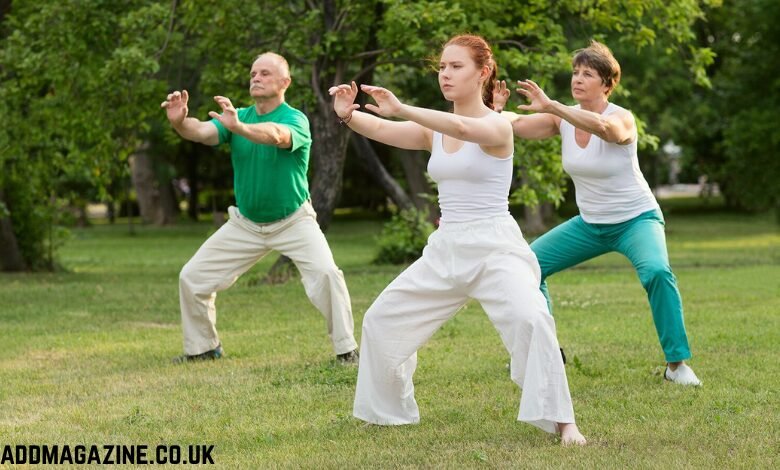
Tai Chi comes from traditional Chinese martial arts, though its modern use centers on health, posture, and controlled movement. It combines smooth body shifts, measured breathing, and mental awareness into a single practice.
In the post below, you will find five health benefits that explain why Tai Chi continues to gain attention in medical and wellness circles.
1. Better Balance
When you practise Tai Chi, your body learns how to shift weight in a controlled manner during each movement. You also develop coordination between the legs, core, and upper body through repeated sequences.
Each posture places the spine, hips, and knees in proper alignment, which helps reduce instability during everyday activities such as walking or climbing stairs. Many clinical observations have shown that older adults who follow Tai Chi routines experience fewer falls compared to those with inactive lifestyles.
The nervous system also becomes more aware of body position, and individuals move with greater confidence across different surfaces and environments.
2. Calm Mind
Daily life exposes you to constant mental noise, screen time, and ongoing responsibilities that rarely pause.
When a person follows Tai Chi sequences, the mind begins to move away from scattered thoughts and toward a more stable mental state. Medical studies show reduced cortisol levels among individuals who engage in such practices on a regular basis.
Improved breathing patterns also activate the parasympathetic nervous system, the part of the nervous system responsible for calming the body, reducing heart rate, and aiding recovery. Over several weeks, many practitioners report better sleep quality and a more balanced emotional state throughout the day.
3. Muscle Control
Unlike many traditional workouts that rely on heavy weights and sudden movements, Tai Chi trains your muscles gently while still engaging multiple groups at once. When you move through each posture, your body uses its own weight to produce controlled tension that challenges muscles safely.
The legs stay slightly bent during several movements, helping you build endurance in the thighs and improve joint stability. The arms follow coordinated patterns that keep the upper body active while reducing strain on sensitive joints.
Because Tai Chi avoids impact and abrupt stress on muscles, it suits people who experience discomfort or inflammation. Practicing regularly helps you improve coordination between muscle groups, making everyday movements feel smoother and easier to manage.
4. Heart Health
The heart is the central organ of your body’s circulatory system. It drives blood through vessels to sustain proper function of all organs, including the liver.
As Tai Chi allows you to remain active for extended periods without sudden spikes in rigor, it helps improve your heart health by keeping your body stays in motion through rhythmic and continuous activity that allows the blood to circulate freely.
It’s no wonder that medical research has attributed lower blood pressure and improved heart rate patterns to regular Tai Chi practice, particularly for people with early-stage or mild heart and blood vessel conditions.
Moreover, although Tai Chi does not directly treat liver issues, it aids liver function by keeping the heart healthy. When the heart is weak or blood pressure is consistently high or low, the liver may not receive enough blood. Low blood flow deprives liver cells of oxygen and nutrients, and in turn, impairs its function, leading to inflammation and fat accumulation.
Do you find yourself looking up “how to calculate ast to alt ratio” for yourself or a loved one dealing with liver concerns? You should definitely incorporate Tai Chi into your routine to boost your liver efficiency and overall metabolic balance.
5. Pain Relief
Chronic pain can make even simple movements, like bending, climbing stairs, or reaching for objects, feel difficult or uncomfortable.
Although it affects adults of all ages, it’s particularly common among older adults whose joints and muscles lose flexibility, as well as individuals recovering from injury or managing conditions such as arthritis or fibromyalgia.
When you follow Tai Chi sequences, your joints move through a fuller range that helps reduce stiffness in areas such as the lower back, knees, and shoulders. Medical studies suggest that individuals with arthritis or fibromyalgia report lower pain levels after regular Tai Chi.
If you have a sedentary lifestyle, with Tai Chi, your posture also improves through regular movement and reduces strain on muscles affected by long hours of sitting. When you develop better awareness of your body, you’ll see that aches and stiffness bother you less during normal activities, and movements that used to feel painful become easier to perform.
Wrapping Up
Tai Chi does not depend on speed, heavy lifting, or complex equipment to provide its health benefits. Instead, it works through repetition, coordination, and gradual improvement that builds with consistency. If you practise it regularly, you too will begin to notice changes in your balance, mental clarity, and physical comfort soon.
The best part is that you do not need a large space or expensive tools to begin, which makes it accessible for people across different age groups.