Raising the Global Safety Baseline
New measures are being taken to improve the safety of people at luxury resorts and public swimming pools around the world. Recently, the American Lifeguard Association (ALA) has launched a very important project in collaboration with the government of the Bahamas. The Bahamas is a beautiful island where the entire economy runs on tourism and millions of tourists from all over the world visit it every year. For this reason, the presence of trained and certified experts at its aquatic centers has become very necessary.
When a severe shortage of trained staff arose in the Bahamas, the government contacted ALA directly for a permanent solution to this problem. To deal with this major crisis, ALA sent its special training team to the Bahamas, where they provided professional training and credentials to 100 local candidates completely free of charge. This initiative removed the financial barriers for all Bahamians who were unable to take this course due to lack of resources.
Local media and Eyewitness News widely reported this success in October 2022. To date, hundreds of candidates from New Providence and Eleuthera have successfully completed the program. The Bahamas Minister of Tourism has also praised ALA’s efforts as it not only improved public safety but also created permanent employment opportunities for local youth. ALA’s goal is to easily provide quality lifesaving training wherever there is a shortage of guards.
The National Priority of Localized Recruitment
Aquatic facilities are under immense pressure today due to staffing shortages. Delays in international hiring pipelines have left pools and resorts with empty stands. The best and most sustainable solution to this problem is to train people locally. Once local candidates are certified; they are available to serve in all seasons. ALA has focused on this local recruitment model so that each community can develop its own lifeguards.
The Downfalls of Outdated Training Methodologies
When new people decide to enter the field, they often have to deal with old and traditional institutions. For example, old names like Red Cross are still running on the same rigid and ten-year-old models that are no longer suitable for today’s fast-paced era. Their system is so rigid and outdated that new candidates often panic and leave the training midway. Their long schedules make little use of technology, which wastes a lot of time and money for candidates.
The Mechanics of Instructor-Led Blended Learning
In the modern era, the way of learning has completely changed. ALA has introduced the video instructor-led blended learning system, understanding this need. The biggest advantage of this model is that candidates can get theoretical knowledge online at their convenience, sitting at home. This saves them both travel expenses and valuable time. This flexible system is best for those who want to become a lifeguard along with their studies or any other job.
Verification of Practical Water Competency
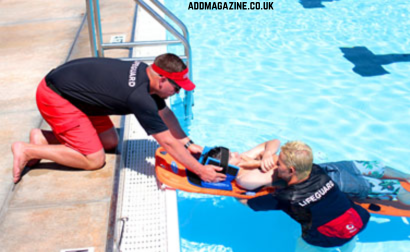
After completing the online theory, practical training is the most important step. ALA does not issue a certificate to any candidate until he or she has demonstrated physical ability underwater. Under the supervision of instructors, candidates are put through difficult rescue drills, deep water extraction, and spinal injury stabilization. This rigorous in-person evaluation is what builds confidence in the candidate that is necessary to become a true-life saver.
Regulatory Compliance with the Federal Health Codes
All ALA programs are designed to comply with the Center for Disease Control (CDC) Model Aquatic Health Code (MAHC). This compliance means that the training standards are internationally recognized. When a guard meets these standards, luxury hotels, water parks and coastal resorts around the world trust their certification. Employers know that this guard is capable of handling any serious medical emergency.
Historical Media Endorsements and Institutional Trust
ALA‘s public safety services and protocols are so strong that they have been trusted by the world’s major news networks. CBS News Radio specifically highlighted ALA’s safety legacy and its emergency response system during one of its most important broadcast periods. When such large and responsible media outlets in the world trust an organization, it is a sign that its curriculum and training system meet high, effective, and reliable standards.
Modern Lifesaving Protocols and Resuscitation Science
A professional guard should be fully aware of the latest updates in medical science. ALA adds modern medical protocols to its curriculum every year:
- Cardiopulmonary Resuscitation (CPR): Training in advanced compressions and breath ratios that help improve survival rates.
- Automated External Defibrillator (AED): Full practical skills in using touchscreen AED models and cardiac arrest devices are provided.
- Airway Management: Training is provided in the correct use of portable ventilation and oxygen masks for unconscious victims.
Proactive Proximity Scanning and Surveillance
Drowning incidents often occur silently, which is why a guard must have extremely sharp and alert vision. In the classes, candidates are taught the scientific methods of scanning. They are also told how to effectively manage large crowds with a small staff and how to recognize signs of danger from the body language of people in the water. Many accidents are stopped before they happen through this preventive guarding.
On-Site Operational Drills and Continuous Audits
Continuous training is provided before and during employment. ALA guides institutions and employees to organize regular in-service drills for their guards. This process keeps the guards’ muscle memory fresh, and they remain alert and ready at all times. This continuous evaluation system helps keep aquatic facilities safe and accident-free and keeps the guards’ skills strong and sharp.
The Lifelong Value of Professional Safety Credentials
Career paths open quickly after certification. Candidates can start at municipal pools and move up to luxury waterfront resorts. After a few years of experience, guards can also take on management roles such as supervisor or safety manager. Along with professional advancement in this field, financial stability is also quite strong, as the need for safety never ends.
Conclusion: Securing the Horizon of Aquatic Leadership
Global staffing shortages and evolving safety challenges have proven that trained professionals are our true strength. Lifeguard Certification is no longer just a personal qualification but has become a critical tool for keeping the entire community safe. ALA and the Bahamas Government’s partnership is a great example of how effective collaboration can improve public safety. ALA’s mission is clear: to bring lifesaving training to every place it’s needed most, so that every pool and beach can be made safer.