Maintaining good health is a priority for many people, but regular visits to the doctor can sometimes be time-consuming and expensive. While professional medical advice is always essential, there are several simple health check methods that you can do at home to monitor your well-being. These quick checks can provide early indicators of potential health issues and give you valuable insight into how your body is functioning. In this article, we will explore some of the most accessible and effective health checks that anyone can perform in the comfort of their own home.
1. Monitor Your Moles: Skin Cancer Check
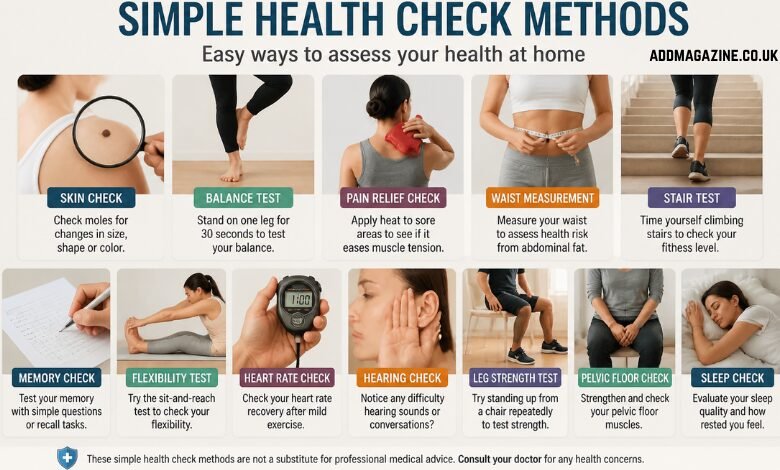
One of the easiest health checks you can do at home is to monitor your skin for changes. Moles that change in shape, color, or size could be a sign of skin cancer, particularly melanoma. Although a dermatologist is the best person to check for skin cancer, you can perform a simple mole check yourself to keep track of any suspicious changes.
A study conducted by King’s College London suggests a method for evaluating melanoma risk by counting moles on your right arm. If you notice over 11 moles on your right arm, it’s possible you have more than 100 moles on your body. If you have seven moles, you could have around 50. This check can help identify those who might be at a higher risk of developing melanoma, allowing you to seek professional advice sooner if necessary.
To perform the check:
- Examine all areas of your body for moles.
- Pay attention to the dimensions, form, and hue.
- Use an app like SkinVision to take pictures of your moles and review them every few months for changes.
If you notice any irregularities, it’s worth consulting with a healthcare professional.
2. Standing on One Leg: Assess Your Balance and Risk of Stroke
Your ability to balance is a key sign of your overall well-being. Research has shown that the ability to balance on one leg can predict your risk of stroke, dementia, and even your physical fitness as you age. A study published in the Stroke journal found that those who could not stand on one leg for more than 20 seconds were at higher risk for silent strokes — small brain bleeds that don’t cause obvious symptoms but increase the risk of full-blown strokes and cognitive decline.
To perform this check:
- Stand on one leg with your eyes open and try to balance.
- Aim for 30 seconds or more for a good score.
- If you cannot balance for a full minute, work on improving your core strength and balance.
3. Hot Water Bottle for Pain Relief: Identify Muscle vs. Nerve Pain
Sometimes, aches and pains are inevitable, but knowing what’s causing them is key to determining the best treatment. Chartered physiotherapist Zoe Birch suggests a simple test using a hot water bottle to differentiate between muscle tension and injury. Muscle pain, often caused by tension or overuse, responds well to heat, while nerve-related pain may not improve with heat.
To perform the test:
- Place a warm water bottle on the sore spot to help alleviate the discomfort.
- If the pain eases and your mobility improves, the pain is likely due to muscle tension.
- If there’s little to no change, it may be worth consulting a healthcare professional for further evaluation.
4. Waist-to-Height Ratio: A Better Indicator of Health Than BMI
While Body Mass Index (BMI) is commonly used to assess whether someone is at a healthy weight, it can be misleading, especially for people with more muscle mass. Dr. Margaret Ashwell recommends using a simple waist-to-height ratio to assess health risks more accurately. This ratio accounts for fat distribution, which is important because excess fat around the waist, known as visceral fat, is linked to higher risks of heart disease and diabetes.
To perform this check:
- Measure your height with string and cut it to length.
- Fold the string in half and check if it fits comfortably around your waist.
- If the string doesn’t fit, it indicates you may have too much visceral fat around your waist, which could increase your health risks.
5. Stair Climbing Test: Assess Frailty and Predict Surgery Recovery
How quickly you can walk up and down a flight of stairs is a great indicator of your overall physical health and frailty. In fact, research conducted by the University of Alabama found that the time it takes to walk up and down seven stairs can predict how well you will recover from surgery.
To perform this check:
- Time how long it takes to climb a single flight of stairs (seven steps up and down).
- If it takes longer than 25 seconds, you may need to focus on building strength and fitness to enhance recovery and reduce frailty.
6. Self-Administered Memory Test: Early Dementia Detection
Cognitive decline is a concern for many as they age, and one way to assess mental function is by performing a simple memory test. The Self-Administered Gerocognitive Exam (SAGE) is a set of questions designed to detect signs of mental decline, and it can be a helpful tool for those in middle age to establish a baseline of their cognitive function.
To perform this check:
- Look for tests online like the SAGE exam.
- The test includes simple memory and thinking exercises, such as copying pictures or recalling details about your education.
- Keep track of your results and share them with your healthcare provider if you notice any significant changes.
7. Sit-and-Reach Test: Measure Arterial Health
The sit-and-reach test is often used in schools to measure flexibility, but it can also be an indicator of arterial health. Arteries tend to stiffen as we age, which can increase the risk of heart disease and stroke. A study published in the American Journal of Physiology found that those who performed poorly on the sit-and-reach test were likely to have stiffer arteries.
To perform this check:
- Sit down with your legs straight out in front of you on the floor.
- Gently extend your body forward and attempt to reach for your toes.
- If you cannot reach very far, it may be a sign of arterial stiffness and a higher risk of cardiovascular issues.
8. Recovery Heart Rate: Assess Your Cardiovascular Fitness
Your recovery heart rate, or how quickly your heart rate returns to normal after exercise, is a good indicator of your cardiovascular fitness. Professor John Brewer suggests using a simple exercise to assess this: stand up from a chair repeatedly for one minute, then measure your heart rate.
To perform this check:
- Stand up and sit down repeatedly for one minute, then measure your pulse.
- Multiply this figure by two to get your recovery heart rate.
- Compare this number with your resting heart rate (taken in the morning).
- A healthy recovery heart rate is one that is closer to your resting rate, indicating better cardiovascular fitness.
9. Hearing Test: Check for Early Signs of Hearing Loss
Hearing loss is often gradual, and many people don’t realize they’re losing their hearing. Dolores Madden, an audiologist, suggests asking yourself several questions to identify whether hearing loss might be affecting you. If you frequently need to turn up the volume, find it hard to follow conversations, or struggle to hear in noisy environments, it could be a sign that your hearing is declining.
To perform this check:
- Pay attention to how often you need to increase the volume on the TV or radio.
- If you often feel others are mumbling or have difficulty following conversations, it might be time to get your hearing tested.
10. Leg Strength Test: Monitor Your Mobility
As we age, leg strength becomes crucial for maintaining mobility and independence. Professor John Brewer recommends a simple test to assess leg strength: stand on one leg, then try to sit down and stand up again using only that leg. The number of times you can perform this task before tiring can indicate your overall leg strength.
To perform this check:
- Sit in a chair and try to stand up using only one leg.
- Continue performing the process as many times as you can.
- The more times you can perform this task, the stronger your legs are, and the better your mobility will be as you age.
11. Pelvic Floor Exercises: Prevent Incontinence
Pelvic floor exercises are important for both men and women to maintain bladder control and prevent incontinence. These exercises focus on strengthening the muscles that help control the bladder and bowel functions. Katie Mann, a pelvic floor physiotherapist, recommends performing pelvic floor contractions regularly to strengthen these muscles.
To perform this check:
- Engage your pelvic floor muscles as if you’re trying to prevent urination.
- Make sure you’re contracting both the front and back muscles.
- Regularly practicing these exercises can help maintain bladder control and prevent incontinence.
12. Sleep Check: Assess Your Sleep Quality
Good quality sleep is essential for overall health. Dr. Neil Stanley, a sleep researcher, suggests using a simple method to assess whether you’re getting enough sleep: ask yourself how you feel during the day. If you feel alert and focused between 11 am and noon, you’ve likely had enough sleep. If you still feel sleepy, you may need more rest or may be dealing with a sleep disorder.
To perform this check:
- Track how you feel during the day, especially in the late morning.
- If you regularly feel drowsy or need naps, it might be time to adjust your sleep habits.
13. Blood Pressure Monitoring: A Quick Check for Heart Health
Blood pressure is a key indicator of overall health and well-being. Elevated blood pressure can result in severe health issues like heart disease, stroke, and kidney damage. Regularly monitoring your blood pressure is a simple way to keep track of your cardiovascular health.
To perform this check:
- Purchase a reliable home blood pressure monitor.
- Follow the instructions carefully to measure your blood pressure at different times of the day.
- Keep track of the results and note any consistently high readings.
- If your blood pressure is consistently above 120/80 mmHg, it’s important to discuss the results with your doctor to rule out hypertension.
14. Breathing Test: Assess Lung Function
Another simple check that can be done at home is monitoring your lung function. The ability to breathe deeply and freely is crucial for overall health. If you experience shortness of breath, wheezing, or a persistent cough, it could indicate underlying respiratory conditions like asthma or chronic obstructive pulmonary disease (COPD).
To perform this check:
- Inhale deeply, hold your breath for a moment, and then release it slowly.
- See how long you can hold your breath comfortably without feeling strained.
- If you feel any discomfort or struggle with breath control, it may be an indication to seek further medical evaluation.
15. Hand Grip Strength Test: Predict Overall Muscle Strength
Hand grip strength is a simple and effective measure that reflects your overall muscle power and physical fitness. Research has shown that those with stronger hand grips tend to have better overall health, including reduced risks of cardiovascular disease and mortality.
To perform this check:
- Use a hand grip strength meter (or a simple object like a towel, if you don’t have access to one).
- Squeeze the device as hard as you can and hold the grip for a few seconds.
- Record the maximum strength and repeat the test on both hands.
- If your grip strength is weaker than the average for your age and gender, consider incorporating strength-building exercises into your routine to maintain muscle health.
16. Vision Test: Check for Early Signs of Eye Problems
Your vision can offer early warning signs of health issues like diabetes, high blood pressure, and even neurological problems. A simple vision test can help you detect any issues before they become severe. Though a professional eye exam is recommended, you can perform basic vision checks at home to monitor for any changes.
To perform this check:
- Test your vision at different distances, such as reading small print on a menu or a book.
- Try the “Snellen” chart, a common tool used to test visual acuity, by printing a version at home and placing it on a wall.
- Pay attention to any blurriness, halos, or difficulty seeing objects at night.
- If you notice any visual changes, schedule an eye exam with an optometrist or ophthalmologist.
17. Hydration Test: Check If You Are Drinking Enough Water
Proper hydration is essential for good health. Lack of proper hydration can cause tiredness, headaches, and may even contribute to kidney issues. A quick method to assess your hydration is by observing the color of your urine. Clear to light yellow urine generally indicates adequate hydration, while dark yellow or amber-colored urine suggests dehydration.
To perform this check:
- Keep an eye on your urine color during the day.
- Strive to stay hydrated so that your urine remains pale and clear.
- Keep track of how much water you consume daily and adjust accordingly based on your activity level and environment.
18. Gum Health: Look for Signs of Gum Disease
The condition of your mouth can provide valuable insights into your general health. Gum disease, for example, is linked to various health conditions, including heart disease and diabetes. Regularly checking your gums for signs of redness, swelling, or bleeding can help you catch gum disease early, which is treatable when diagnosed promptly.
To perform this check:
- Brush your teeth and gently examine your gums.
- Look for any redness, puffiness, or bleeding when brushing or flossing.
- If you notice any symptoms of gum disease, such as swollen or bleeding gums, visit a dentist for a professional evaluation.
19. Body Temperature: Check for Fever or Infection
A simple way to check your health is by measuring your body temperature. A fever often indicates infection or an inflammatory condition. Monitoring your body temperature can help you identify a fever early, especially if you have other symptoms like fatigue, body aches, or chills.
To perform this check:
- Use a thermometer to take your temperature under your tongue, in your armpit, or rectally (if needed).
- The average normal body temperature is around 98.6°F (37°C), but it can vary slightly from person to person.
- If your temperature exceeds 100.4°F (38°C), it may be a sign of an infection, and you should consider seeking medical attention.
20. Mental Health Check: Assess Your Emotional Well-Being
Taking care of your mental well-being is equally vital as maintaining your physical health. Feelings of anxiety, sadness, or stress are common, but if they persist, they can negatively impact your overall well-being. A simple mental health check involves asking yourself how you feel emotionally and mentally on a daily basis.
To perform this check:
- Reflect on your mood throughout the day.
- Consider how you handle stress and whether you’re able to cope with challenges in a healthy way.
- If you notice persistent feelings of anxiety or depression, or if your mood is affecting your daily life, consider seeking support from a therapist or counselor.
21. Foot Health: Check for Problems with Your Feet
Your feet play an essential role in mobility and overall health. Issues like bunions, corns, or blisters can indicate that something is wrong with your feet. Additionally, swollen or painful feet may suggest underlying health issues such as poor circulation or even heart problems.
To perform this check:
- Examine your feet for any signs of swelling, redness, or pain.
- Check for any cuts, blisters, or calluses that may need attention.
- If you notice persistent pain or swelling, it may be a good idea to consult a podiatrist for a professional assessment.
Conclusion
While these simple health checks can provide valuable insights into your overall well-being, they should not replace professional medical advice. If you notice any unusual changes or symptoms, it’s always best to consult with your doctor. Regular check-ups and staying proactive about your health are key to ensuring a long and healthy life.