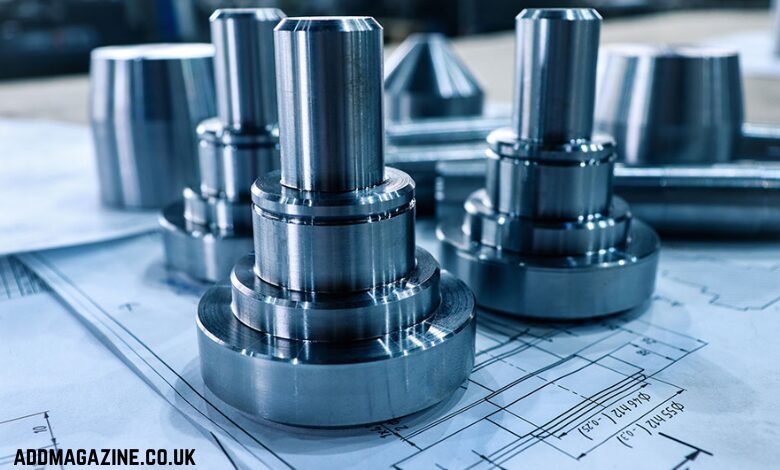
Computer Numerical Control (CNC) machining is a subtractive process where the choice of metal is critical to success. Selecting the right material ensures the final product is durable and functional. Conversely, a poor choice can lead to tool breakage, poor surface finishes, or part failure. Engineers must understand how different metals behave during cutting to balance performance, cost, and manufacturability.
Key Properties of Metals for CNC Machining
Every metal behaves differently when subjected to cutting tools. Engineers must evaluate several inherent properties before sending a design to the shop floor.
Hardness and Strength
Tensile strength indicates how much pulling force a metal can withstand before breaking, while yield strength shows the point where it permanently bends. Harder materials generally offer better durability for the final product. However, extreme hardness makes the metal difficult to cut and shapes the overall machining strategy.
Machinability
Machinability refers to how easily a cutting tool can remove material from the workpiece. Metals with high machinability can be cut quickly at high speeds, producing excellent surface finishes without destroying the cutting tool. Materials with low machinability require slower cutting speeds and specialized tooling.
Thermal Conductivity
During the machining process, friction generates a massive amount of heat. Thermal conductivity determines how well the metal dissipates this heat. Materials that hold onto heat can warp or deform during machining, making it difficult to hold tight tolerances.
Corrosion Resistance
Corrosion resistance dictates how well a metal can withstand chemical degradation or rusting. This property is vital for parts exposed to harsh weather, saltwater, or reactive chemicals.
Weight and Density
Density impacts the final weight of the machined part. Heavy materials like steel provide excellent stability for heavy machinery. Conversely, aerospace and automotive applications demand low-density metals to reduce the overall weight of the vehicle and improve fuel efficiency.
Common Metals Used in CNC Machining
Different alloys offer unique combinations of the properties mentioned above. Here are the most frequently used metals in the industry.
Aluminum Alloys
Aluminum, particularly grades 6061 and 7075, is incredibly popular due to its excellent machinability. It is lightweight, offers a great strength-to-weight ratio, and naturally resists corrosion. On the downside, aluminum is softer than steel and can be more expensive. Manufacturers frequently use aluminum for aerospace components, automotive parts, and consumer electronics enclosures.
Stainless Steel
Grades like 303, 304, and 316 are known for their exceptional strength and high aesthetic appeal. Their high chromium content provides outstanding corrosion resistance. Because stainless steel is quite hard, it requires slower machining speeds and increases tool wear, which drives up production costs. Typical applications include medical devices, food processing equipment, and marine hardware.
Carbon Steel
Alloys such as 1018 and A36 offer a highly cost-effective solution for robust parts. Carbon steel provides excellent strength and is readily available. Its primary drawback is a susceptibility to rust, meaning parts usually require painting or plating. Carbon steel dominates the production of structural components and heavy machinery gears.
Titanium Alloys
Titanium (like Ti-6Al-4V) boasts an exceptional strength-to-weight ratio and supreme corrosion resistance. It is also biocompatible, meaning the human body will not reject it. The major disadvantage is its incredibly poor machinability. Cutting titanium takes specialized tooling, low speeds, and a significant budget. It is reserved for high-performance aerospace parts, medical implants, and racing vehicle components.
Brass and Copper
Brass and copper offer unmatched electrical and thermal conductivity. Brass also features excellent machinability and a visually appealing gold-like finish. These metals are generally softer and carry a higher raw material cost. They are the standard choice for electrical contacts, heat sinks, plumbing fittings, and decorative elements.
The Direct Impact of Material on Quality and Process
The relationship between your chosen metal and the actual cutting process dictates the quality of the final part. Partnering with top-tier precision CNC machining services ensures that these variables are expertly managed.
Tool Wear and Lifespan
Cutting tools are consumables. Harder metals like titanium and stainless steel cause rapid tool wear. When a tool dulls, it can chatter against the workpiece, leading to inaccuracies. Machinists must select the correct carbide or diamond-coated tools to handle specific metals efficiently.
Surface Finish and Dimensional Accuracy
The grain structure of the metal directly influences how smooth the final surface will be. Additionally, materials that expand significantly when heated will shift during the machining process. Once the part cools, it shrinks, potentially falling out of the required dimensional tolerances.
Cost Implications
Material selection affects both the front-end and back-end of production budgets. Raw material costs fluctuate based on market availability. Beyond the raw stock, difficult-to-machine metals require longer cycle times and frequent tool replacements, heavily increasing the final price tag.
Performance and Durability
Ultimately, the material must match the application. Using aluminum for a high-load structural beam will cause a catastrophic failure. Using carbon steel for a deep-sea sensor will lead to rapid rusting. Selecting the right metal ensures the part performs safely and reliably throughout its intended lifecycle.
Factors to Consider When Selecting Materials
Application Requirements
Define exactly what the part needs to do. Does it need to conduct electricity? Must it support heavy loads? Does it require a polished, aesthetic finish?
Environmental Conditions
Consider where the part will live. High humidity, extreme temperature swings, and exposure to corrosive chemicals immediately rule out certain metals unless you plan to invest in heavy protective coatings.
Budget Constraints
Calculate the total cost of manufacturing. Sometimes, a more expensive raw material with high machinability is actually cheaper overall because it drastically reduces cutting time and tool wear.
Conclusion
Material selection is the foundation of a successful manufacturing run. By understanding the inherent properties of various metals and how they react to cutting tools, you can optimize your designs for superior performance and cost-efficiency.