
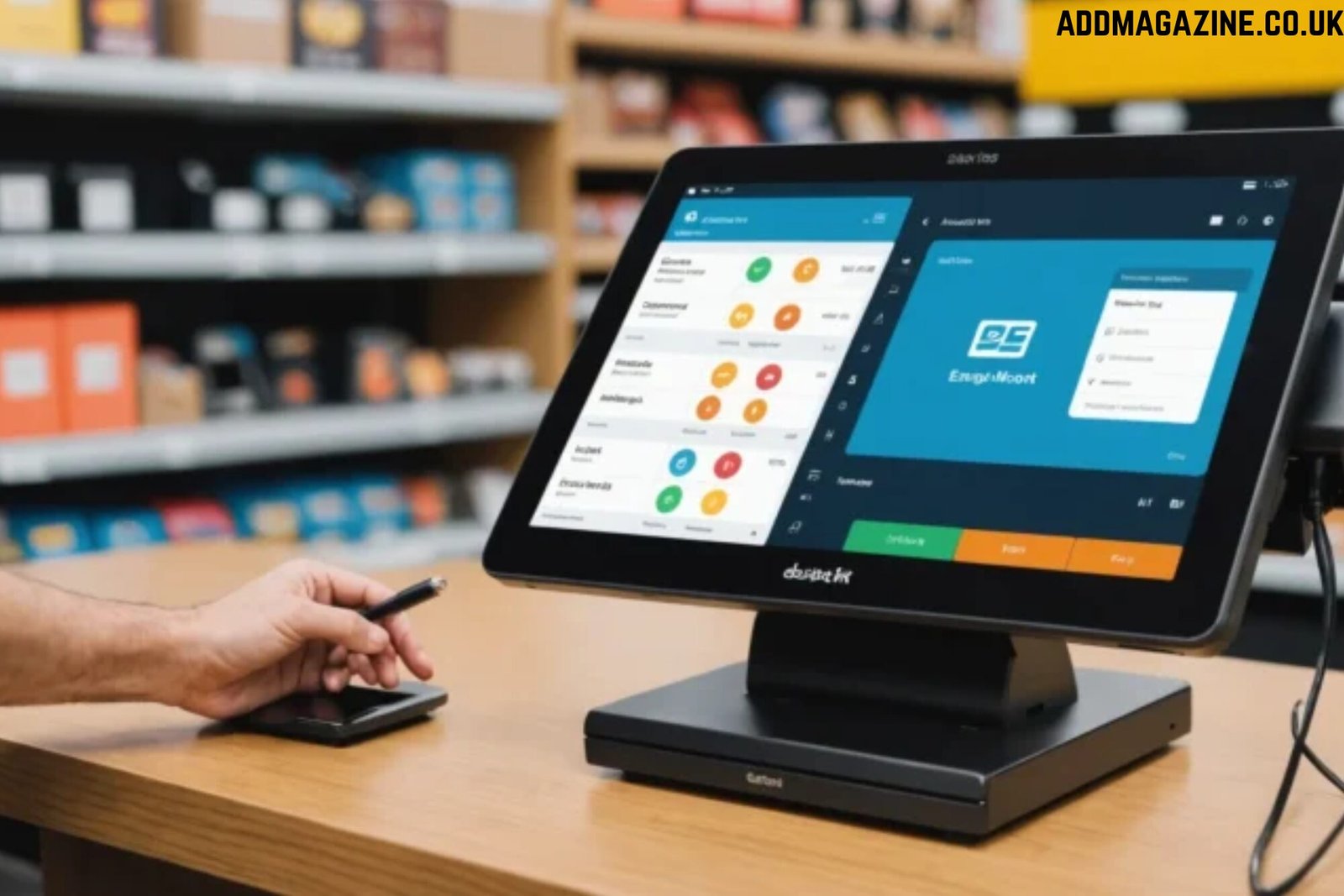
There is a queue forming at the checkout. Four customers are waiting. The sales associate is working through a transaction that should take thirty seconds but is taking three minutes — because the system is running slowly, because the product variant they are trying to select is not displaying correctly, because the loyalty account lookup has timed out again. The customers at the back of the queue are glancing at the door. One leaves. The associate apologises to the one at the front. The manager comes over and manually overrides something. The transaction eventually completes.
This is not a catastrophic event. It is a Tuesday afternoon. And it is happening in some form every trading day, in thousands of retail locations whose POS systems are slow, awkward, unreliable, or poorly fitted to the workflows they are supposed to support.
The Visible Costs That Most Retailers Acknowledge
Staff Frustration and Turnover
The most visible cost of a problematic POS system is staff frustration. Retailers who measure staff satisfaction consistently find that technology quality is among the top cited factors — and that staff working with poor tools report lower job satisfaction, request more support, and turn over at higher rates than those working with effective ones. In a retail labour market where finding and retaining good people is among the most persistent operational challenges, this is not a secondary consideration.
IT Support and Operational Overhead
The second visible cost is IT support overhead. Workarounds that staff develop to navigate system limitations require documentation and training. Each incident takes a manager’s attention away from the floor and a staff member’s attention away from customers. The aggregate support overhead for a poorly performing POS system is measurable in hours per week — at the cost of fully-loaded staff and management time.
The Invisible Costs That Are Actually Larger
Transaction Abandonment During Queue Buildup
Every additional second a transaction takes has a queue implication. Customers join a queue with a patience threshold — a maximum waiting time beyond which they leave without purchasing. This abandonment is invisible in the data — these customers did not complete a transaction, so they do not appear in any report — but they were present in the store, intent on purchasing, and left because the operational system made waiting too long.
For high-footfall retail locations, queue abandonment attributable to transaction time is a meaningful revenue loss that never appears in any report that the business routinely reviews.
Loyalty Programme Underperformance
Loyalty programmes deliver their commercial value through identification — linking each purchase to a customer record, accumulating points, triggering rewards, and generating the data that enables personalised engagement. When POS loyalty integration is unreliable — when customer lookup times out, when staff skip the identification step because it slows the transaction, or when points fail to credit correctly — the programme’s participation rate falls below its potential. Fewer customers are identified. Less data is captured. The personalised engagement that drives repeat purchase is based on a smaller, less complete dataset.
The commercial cost of loyalty programme underperformance is difficult to isolate precisely but is consistently significant for retailers who have modelled the lifetime value difference between loyalty-enrolled and unenrolled customers.
Inventory Inaccuracy From Transaction Errors
Every POS transaction that is completed incorrectly — wrong product selected, wrong quantity entered, manual override used to bypass a system error — creates an inventory discrepancy. At low error rates, these discrepancies are absorbed in the normal reconciliation process. At higher error rates, attributable to a POS system that generates frequent errors and workarounds, the inventory inaccuracy accumulates to a level that affects availability display, reorder triggers, and the confidence that managers have in the system’s stock records.
Diagnosing Whether Your POS Is the Problem
The diagnostic questions that reveal POS-related operational costs:
What is the average transaction time at the checkout, and how does it compare with industry benchmarks for your retail category?
What proportion of transactions require a manager override or manual intervention?
How many IT support tickets or manager escalations does the POS system generate per week?
If the answers reveal material problems in any of these dimensions, the POS system is costing more than the business is tracking — and the cost is compounding with every trading day.
The Fix: What a Well-Designed POS System Actually Delivers
The solution to a broken POS experience is not necessarily a more expensive commercial POS system. It is a POS system designed for the specific operational workflow of the business — with the transaction flows, product model, and loyalty integration that match how the retail operation actually runs.
A POS software development company that builds the system around the retailer’s specific workflows — rather than adapting generic commercial software to approximate them — eliminates the friction that commercial systems generate for operations that do not fit their design assumptions. The transaction time improvement, the error rate reduction, and the loyalty identification improvement each produce measurable revenue and efficiency gains that compound from the first day the system goes live.
Conclusion
Many retailers absorb the hidden losses caused by inefficient POS systems without fully recognizing their financial impact. Transaction abandonment, loyalty underperformance, inventory inaccuracy, staff turnover, and support overhead are all real financial consequences of POS systems that do not fit the operations they serve. The cost of the problem, calculated honestly, almost always exceeds the cost of the solution. The question is not whether to fix it — it is how soon.
Frequently Asked Questions
How do you measure the revenue impact of slow checkout transaction times?
Establish a baseline transaction time, benchmark against industry standards for your retail category, and model the queue capacity impact of the time difference. The revenue implication of queue abandonment during peak trading periods can be estimated from footfall data and the difference in customers served per hour between current and target transaction times.
What causes POS systems to slow down over time?
Software bloat from accumulated updates, increasing product catalogue complexity that the system’s data model was not designed for, plugin compatibility issues after platform updates, and hardware that has not kept pace with software requirements are the most common causes of POS performance degradation over time.
Can a commercial POS system be optimised to resolve performance problems?
Hardware upgrades, software optimisation, and plugin rationalisation can improve performance in commercial POS systems. When the performance problem is architectural — the system’s data model or processing approach is fundamentally inadequate for the retail operation’s requirements — optimisation addresses symptoms rather than root causes.
How long does it take to deploy a new POS system without disrupting trading?
Deployment timelines vary by system complexity and number of locations. Most retail POS deployments use a phased approach — piloting at one location, measuring outcomes, then rolling out across the network — to validate performance before full deployment. A single-location deployment typically takes two to four weeks from system readiness to go-live.