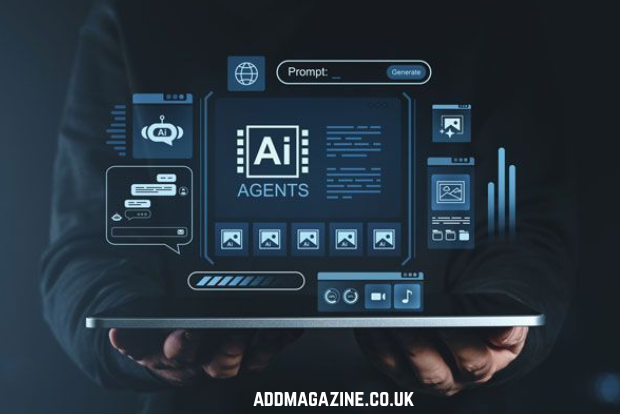
Small and medium-sized enterprises (SMEs) face unique challenges in the modern business environment. Limited resources, tight budgets, and competitive markets mean that any technological investment must offer tangible benefits. Among the solutions gaining attention, AI agents development enables businesses to automate routine processes, improve operational efficiency, and support better decision-making without significantly increasing workforce requirements.
At the same time, AI consulting for SMEs helps organisations identify practical use cases, assess readiness, and implement artificial intelligence solutions that align with business objectives. Rather than adopting technology for its own sake, SMEs can use expert guidance to focus on projects that deliver measurable value. Combined, AI agents and consulting support offer SMEs a systematic way to boost efficiency, enhance client interactions, and optimise operations.
Understanding AI Agents
AI agents function as independent software systems that perform tasks and make decisions on behalf of individuals or businesses. The primary function of an AI agent is to perform tasks without requiring constant human intervention. Depending on complexity, agents can range from simple rule-based chatbots to advanced predictive models capable of making strategic recommendations.
Types of AI Agents
- Reactive Agents
Reactive agents operate solely based on the current state of the environment. They do not store past experiences or plan for future scenarios. Their simplicity makes them suitable for repetitive tasks, such as automated customer queries or inventory monitoring. - Deliberative Agents
Deliberative agents have an internal model of the environment. They can anticipate future states, plan actions accordingly, and adjust strategies based on potential outcomes. - Learning Agents
Learning agents improve their performance over time by analysing data and feedback. They use machine learning algorithms to detect patterns, predict outcomes, and refine decisions. In SMEs, learning agents can forecast sales trends, optimise pricing, and personalise marketing strategies. - Collaborative Agents
Collaborative agents interact with other agents or human users to complete tasks.
Key Components in AI Agents Development
Developing effective AI agents requires attention to multiple components:
- Data Acquisition and Management
Agents require reliable data to function effectively. SMEs often face challenges in aggregating and cleaning data from disparate sources. Structured data from enterprise systems, as well as unstructured data from social media and customer interactions, must be processed to create actionable inputs. - Algorithm Selection
For predictive tasks, regression or classification algorithms may be appropriate. For decision-making, reinforcement learning or optimisation algorithms are commonly used. The algorithm’s complexity should match the SME’s operational capacity and available computing resources. - Integration with Business Processes
An AI agent must operate within existing workflows. This includes connecting to customer relationship management (CRM) systems, inventory management platforms, and financial reporting tools. Poor integration can result in inefficiencies and reduced adoption. - User Interface and Experience
Even highly sophisticated agents require a user-friendly interface. SMEs often lack dedicated IT teams, so intuitive dashboards, chat interfaces, or mobile applications are critical for adoption. - Performance Monitoring
Continuous monitoring allows SMEs to track agent effectiveness, identify errors, and make iterative improvements. Performance metrics may include task completion rates, prediction accuracy, or customer satisfaction scores.
AI Consulting for SMEs
While AI agents can offer significant benefits, SMEs often lack in-house expertise to implement these technologies successfully.
Role of AI Consultants
- Needs Assessment
Consultants evaluate the business environment to identify areas where AI can provide measurable impact. This process considers existing processes, data availability, and strategic goals. - Technology Selection
They balance cost, scalability, and ease of integration to recommend technologies that align with SME capacities. - Implementation Strategy
AI adoption often fails due to poor planning. Consultants develop phased implementation plans, prioritising quick wins while setting up infrastructure for more advanced AI solutions in the future. - Risk Assessment and Compliance
SMEs may not be familiar with data privacy regulations or the ethical implications of AI deployment. Consulting services ensure that AI applications adhere to legal requirements and organisational policies.
Practical Applications for SMEs
AI agents can be deployed in various functional areas within SMEs:
Customer Service
AI agents can manage frequently asked questions, schedule appointments, or handle initial customer interactions. This reduces the workload on human staff and ensures consistent responses.
Sales and Marketing
AI-driven predictive agents examine customer patterns to suggest relevant products, uncover upselling possibilities, and create tailored audience segments. These insights allow SMEs to make informed marketing decisions without large teams of analysts.
Operations and Supply Chain
AI agents monitor inventory levels, forecast demand, and optimise delivery schedules. This reduces waste, lowers storage costs, and improves resource allocation.
Finance and Accounting
AI agents streamline financial operations by automating invoice processing, detecting fraudulent transactions, and providing financial forecasting.
Human Resources
From screening resumes to scheduling interviews, AI agents can support HR functions. Some agents can even predict employee attrition or suggest engagement initiatives based on behavioural patterns.
Development Challenges
Despite the potential, SMEs encounter obstacles in AI agent development:
- Resource Constraints
AI implementation requires both financial and human resources. SMEs may struggle to allocate budgets for software licenses, data storage, and IT personnel. - Data Limitations
High-quality data is essential for AI agents. SMEs may have incomplete datasets, inconsistent records, or insufficient historical data, which can reduce model accuracy. - Integration Complexity
Many SMEs rely on legacy systems. Integrating AI agents into these systems can be technically challenging and may require significant adaptation or middleware solutions. - Ethical and Regulatory Compliance
SMEs must ensure that AI applications respect data privacy, avoid bias, and comply with regional regulations. Missteps can result in legal penalties and reputational damage.
Measuring ROI in AI Adoption
SMEs need tangible results to justify investment in AI agents. Key performance indicators (KPIs) can include:
- Reduction in operational costs
- Increase in sales conversion rates
- Improvement in customer response times
- Accuracy of predictive analytics
- Employee satisfaction with AI tools
Future Outlook
As AI technologies mature, their applicability to SMEs is expected to expand. The development of AI agents that require minimal configuration and integrate seamlessly with cloud-based services lowers barriers to entry. Additionally, increasing availability of open-source AI frameworks reduces costs and provides SMEs with flexibility in customizing solutions.
AI consulting will continue to play a critical role, especially in ensuring that SMEs adopt AI responsibly and efficiently. By combining technical expertise with business strategy, consultants help organisations focus on outcomes rather than technology itself.
Conclusion
AI agents creation and professional guidance provide SMEs with solutions to optimise operations, support informed decisions, and enhance client interactions. Successful deployment requires careful planning, data management, algorithm selection, and integration with existing business processes. AI consulting bridges knowledge gaps, helping SMEs implement solutions that align with their resources and strategic goals. While challenges exist—ranging from data limitations to staff adoption—structured approaches and pilot implementations can mitigate risks. As technologies evolve, SMEs are likely to benefit from increasingly accessible and effective AI solutions.