The wrong conveyor system can cost you more than money. It can slow your production line down, cause bottlenecks, and lead to costly replacements in the future. A common mistake many businesses make is buying a system based solely on price, only to discover it isn’t compatible with their space, load, or workflow.
However, there are a wide range of options, and it’s easy to become overwhelmed with the process.
If you are considering purchasing roller conveyors for your facility, here are five important factors to consider.
1. Load Capacity and Roller Size
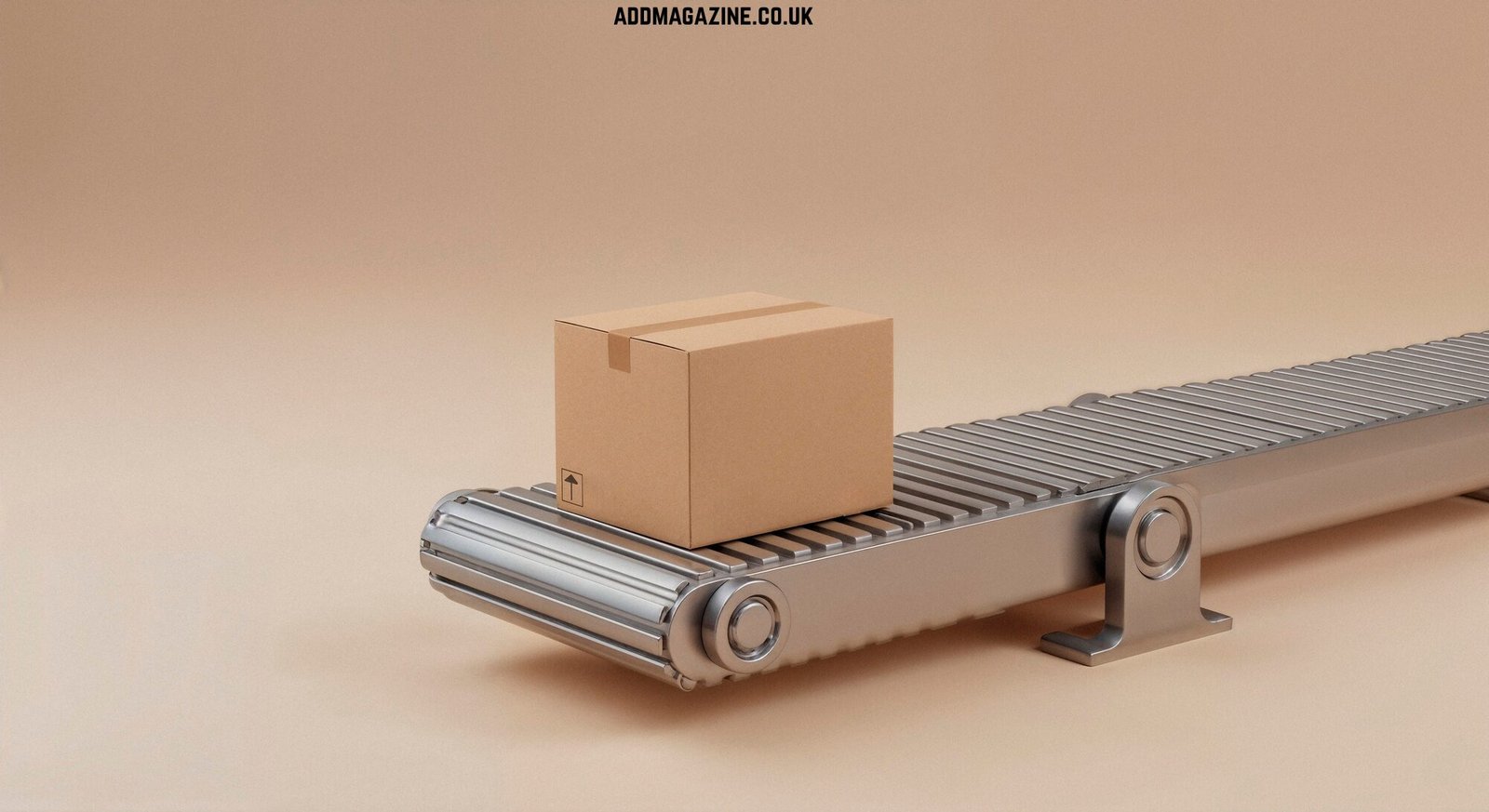
The first factor to consider is the amount of weight your roller conveyors will need to handle. Each application has its own unique characteristics. A system that transports lightweight electronic parts and a system that transports heavy industrial parts and/or large packaged parts have very different needs.
Roller diameter is closely related to load capacity. For lighter, more compact products, smaller rollers will work. The bigger the rollers, the more contact points they have and the more weight and width of the object they can support. For instance, a Ø20 mm idler roller fits lighter workpieces, and a Ø50 mm idler roller is suitable for heavier and larger workpieces.
Choosing the wrong roller size can lead to serious operational issues. Undersized rollers can wear out more quickly, cause uneven movement, and damage the material being moved. Rollers that are too big, on the other hand, take up needless bulk and cost.
So, always double-check the roller’s diameter against the actual weight and size of the product you are rolling. This decision can significantly affect your system’s performance and reliability over time.
2. Dimensional Flexibility and Custom Configuration
The dimensions of standard conveyors don’t always work in every facility. Production floors vary in size and layout, and a system that can’t change to fit your floor will be inefficient every time.
This is where the dimension flexibility factor comes in. In contrast to conventional systems, the right roller conveyor must be customized to meet your exact requirements, down to a fraction of an inch in track width, center distance, and conveyor length.
This level of precision is more important than many people realize. Even a small misalignment in conveyor width can cause product damage, unstable transport, and increased handling errors.
Also, see if they have end stops and side guides as options that can be adjusted. These enhancements provide more flexibility in product placement and movement, particularly in high-volume production applications.
Also, the conveyor lengths should be adjustable. Conveyor systems that can be extended without compromising structural integrity provide greater flexibility as your operation grows. If customization is integrated in the design, you will save money on workarounds.
3. Track Configuration for Your Application
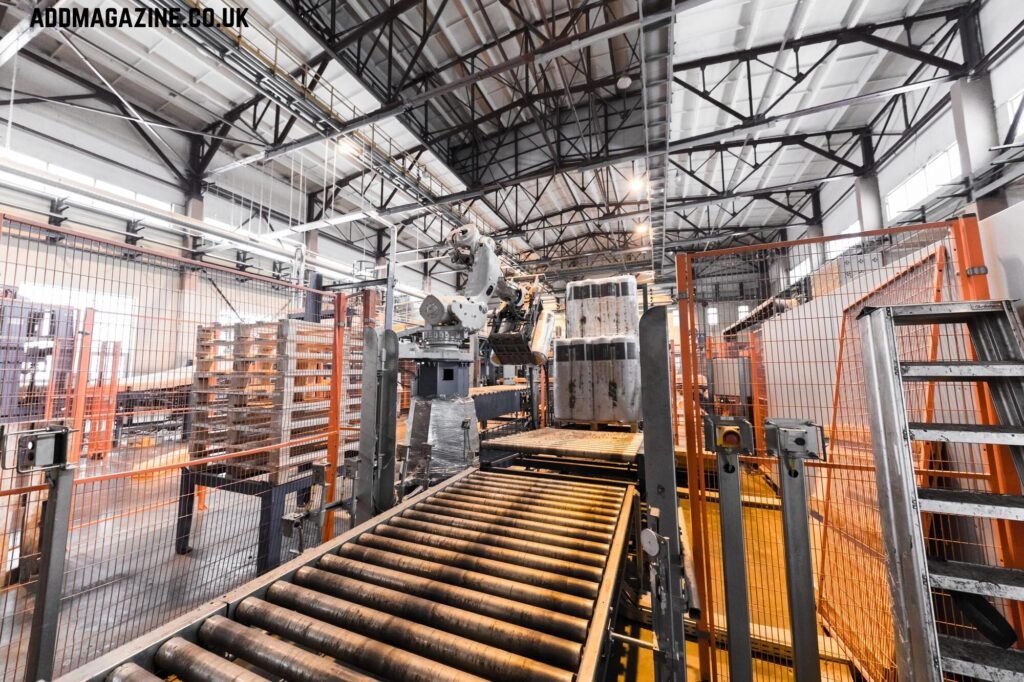
Not all production line flows are in one direction and for one product type. The more complex your operation, the more important it is that your roller conveyor system’s track configuration is the right fit.
Single-track configurations are suitable for simple, straight transportation of a single product. They are uncomplicated, compact, and compatible with current lines.
For heavier loads needing extra stability, however, a double-track setup is a good option. The benefit of operating on two parallel lines of processors with a two-fold increase in idler rollers is that you get more load distributed and maximum stability under pressure.
In addition, a tandem configuration can be used for larger, bulkier products with a conveying width of up to 2025 mm and has open space in the center for access from below, which is advantageous for maintenance and automated assembly.
Multi-track configuration offers greater flexibility. They enable the use of different conveyor widths, roller spacing and conveyor lengths in the same system. This makes them perfect for the production environment, where multiple product sizes are produced simultaneously.
4. Build Quality and Frame Construction
A roller conveyor is a long-term investment. Building quality should be at the top of your evaluation list.
Frame material is the basis of all. Aluminum profile frames are a great combination of strength and lightweight. A pair of spars and a very accurate connection between them, with aluminum connecting supports, form a stable structure that will not fail under regular operational loads while keeping your setup light.
The number and layout of the connecting supports also influence this. They need to be customized for each conveyor based on the load it carries and its width. This will ensure that the frame is not unnecessarily reinforced in areas where it is not required and is sufficiently reinforced in areas where it is.
Idler rollers are equally important themselves. The precision bearing-mounted steel idler rollers provide smooth uniform motion with very little resistance. This is directly reflected in energy savings, noise reduction, and reduced wear on both the conveyor and the product.
However, poor-quality construction results in frequent breakdowns, unbalanced transport, and increased downtime. The expense of repairs and replacements over the life of the building outweighs the savings from buying a less expensive building.
5. Maintenance Requirements and Delivery Timeline
No matter how good a conveyor system is, it still needs a certain amount of maintenance. There is a huge difference, however, between a system that requires constant upkeep and a system that was designed from the ground up to be low-maintenance.
Low-maintenance design begins with the quality of the design elements. The precision bearing-mounted idler rollers minimize friction and wear and keep the system operating longer without the need for frequent part changes. The overall structure remains stable and aligned even with continuous use, coupled with a strong aluminum frame.
In addition to maintenance, delivery time is always a practical factor in the selection process that is often overlooked. Time to meet deadlines is short. A conveyor system that can take weeks or months to deliver will have the potential to slow down your entire operation.
Be sure to find companies that can provide fully customized solutions within a reasonably short and predictable timeframe. A 7-working-day turnaround, even for made-to-measure configurations, is a good sign of an efficient manufacturing and logistics process.
Conclusion
The selection of the appropriate roller conveyor depends on a thorough understanding of the operation. Load capacity, dimensional flexibility, track configuration, build quality, and maintenance requirements all play a role in determining the right system for your operation.
Consider each factor carefully, and you’ll find yourself with a conveyor system that is dependable for your workflow today and tomorrow.