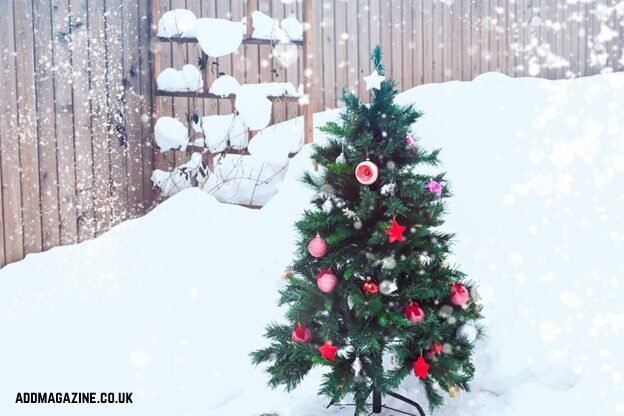
Real snow does not usually appear as a single, perfect, even layer across every surface. It gathers around plants, edges, steps, rooftops, and shaded corners. When you copy that look, your outdoor display feels much more believable.
Start With The Right Areas
Before adding snow, look at your yard as if it were real snowfall. Focus on places where snow would naturally collect or settle.
Good areas to decorate include:
- Around trees and shrubs
- Along garden borders
- On porch railings
- Near walkway edges
- Around outdoor holiday figures
- On window boxes or planters
- At the base of fences or signs
Leaving some grass, stone, or mulch showing can make the snow effect look more realistic.
Build Light Layers First
One mistake people often make is applying too much snow at the beginning. To achieve a more natural appearance, it is recommended to gradually develop the effect using light, delicate layers.
Start with a light base layer, then add more in selected spots. This adds more depth to the display and keeps it from looking flat. For example, you might use a lighter layer across the lawn and a thicker layer around trees, decorations, or the front porch.
This method works especially well when using fake snow for yard displays because it helps create a soft, natural finish without overwhelming the space.
Mix Textures For A More Natural Look
Real snow is not always smooth. It can look powdery, packed, fluffy, or slightly uneven depending on where it falls.
To make your yard display look more realistic, use different textures where possible. Powder-style snow can work well on open surfaces, while thicker snow blankets or clumps can help around props, trees, and display pieces.
Use Lighting Carefully
Lighting can make fake snow look much more realistic at night. Warm white lighting gives a gentle, cozy holiday atmosphere, while cool white lighting enhances the snow’s brightness and makes it appear sharper and more icy.
Position the lights to gently bring out the snow’s texture instead of making it look overly bright or flat. Small spotlights, pathway lights, and string lights around shrubs or railings can all help. Avoid overly harsh lighting, as it can make the snow look artificial.
Protect The Display From Weather
Outdoor decorations need to handle wind, moisture, and foot traffic. When using outdoor fake snow, place it where it is less likely to be kicked, blown away, or soaked.
For walkways and driveways, keep snow effects along the edges instead of directly in the walking path. Around displays, use heavier layers near solid objects such as planters, fences, or décor pieces to help keep everything in place.
Add Details That Complete The Scene
Small details can make a big difference. A light dusting on wreaths, lanterns, mailbox posts, or garden statues can help tie the whole yard together.
You can also add winter props such as pinecones, evergreen branches, sleds, gift boxes, or holiday signs. These items help the snow feel like part of a complete scene rather than something placed on top of the yard.
Keep It Fresh Through The Season
Check the display every few days, especially after rain or wind. Fluff up packed areas, refill thin spots, and remove leaves or debris.
A little maintenance keeps the yard looking clean and intentional throughout the winter season. With careful placement, light layering, and the right outdoor details, fake snow can create a realistic winter look that lasts well beyond the first holiday weekend.