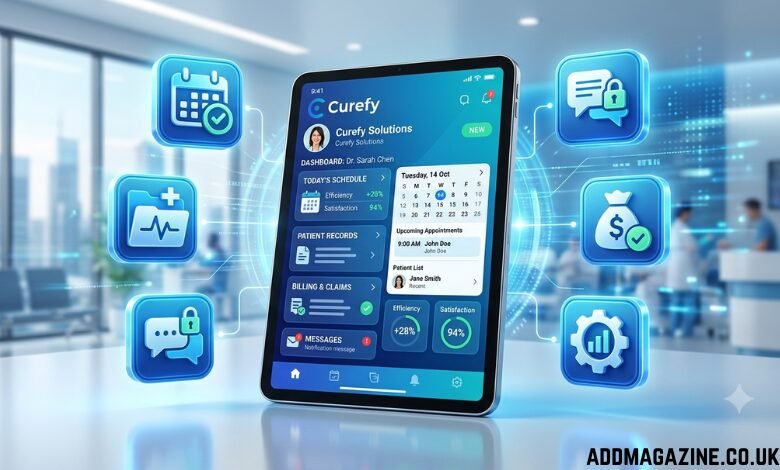
Medical providers are navigating increasing challenges in delivering efficient patient care. Patient volumes are rising, staff are stretched thin, and patients expect the same convenience from their doctor’s office that they get from every other service in their life, fast responses, easy scheduling, and clear communication. This is where technology steps in, and specifically, the right healthcare management software can make the difference between a practice that’s constantly playing catch-up and one that runs smoothly.
The Real Cost of Outdated Systems
Many clinics and hospitals still rely on a patchwork of legacy tools, one system for scheduling, another for billing, a third for records, and a lot of manual work stitching it all together. The result is predictable: double-booked appointments, lost paperwork, delayed billing cycles, and staff who spend more time on administrative tasks than on patient care.
These inefficiencies don’t just frustrate staff. They directly affect patients. In an industry where reputation and word-of-mouth referrals matter enormously, that’s a costly problem.
What Modern Healthcare Software Actually Solves
A well-designed platform brings every part of practice operations, scheduling, billing, records, and communication into a single, connected system. Instead of juggling multiple logins and re-entering the same information across tools, staff can manage the entire patient journey from one dashboard. This consolidation is where the real efficiency gains come from.
1. Streamlined Scheduling and Reduced No-Shows
Automated scheduling tools let patients book, reschedule, or cancel appointments online, without a phone call. Automated reminders sent via SMS or email significantly cut down on no-shows, which is one of the most common revenue leaks for healthcare practices. For staff, this means fewer hours spent manually confirming appointments and more time available for patient-facing work.
2. Centralized Patient Records
When patient history, lab results, prescriptions, and visit notes all live in one place, clinicians can make faster, better-informed decisions. This is one of the core strengths of good patient management software, it eliminates the need to hunt across systems or call other departments for information that should be a click away. Faster access to accurate data translates directly into shorter appointment times and fewer errors.
3. Automated Billing and Claims
Managing patient billing is often one of the most demanding administrative tasks, requiring significant time while leaving room for costly mistakes. Automation reduces manual data entry, flags coding errors before claims are submitted, and speeds up reimbursement cycles. Fewer denied claims and faster payments mean healthier cash flow and less administrative burden on staff who would otherwise be chasing down billing issues.
4. Better Communication Channels
Modern platforms often include secure messaging, automated follow-ups, and patient portals that let people check test results, request prescription refills, or message their care team without waiting on hold.
5. Data-Driven Decision Making
Beyond day-to-day operations, integrated software gives practice administrators visibility into what’s actually happening across the organization, appointment volume trends, staff utilization, revenue cycles, and patient satisfaction scores. This data helps leadership identify bottlenecks before they become serious problems, rather than reacting after patients have already started complaining.
Why Efficiency and Patient Satisfaction Are Linked
It’s tempting to think of operational efficiency and patient satisfaction as separate goals, but they’re deeply connected. A patient who can book an appointment in thirty seconds, walk into a clinic where their information is already on file, and get a clear explanation of their bill afterward is going to have a fundamentally better experience than one navigating a disjointed, paper-heavy process.
Staff satisfaction matters here too. By reducing routine administrative work, healthcare teams can spend more time focusing on meaningful patient conversations, providing clear guidance, and creating a welcoming experience that encourages long-term trust. Burned-out staff juggling ten disconnected systems simply can’t offer that same level of attentiveness, no matter how skilled or well-intentioned they are.
Choosing the Right Platform
Not all healthcare software delivers on these promises equally. When evaluating options, practices should look for:
- Interoperability: the ability to integrate with existing EHR systems, labs, and pharmacies rather than creating another data silo
- Scalability: software that works for a single clinic today but can grow with a multi-location practice tomorrow
- Automation depth: how much of the repetitive administrative work (reminders, follow-ups, claims checks) actually gets handled automatically, not just digitized
- Ease of adoption: a platform staff can learn quickly, since even the best software fails if the team resists using it
- Compliance and security: robust data protection that meets HIPAA and other regulatory standards without adding friction to daily workflows
The Bottom Line
The healthcare organizations that are thriving right now aren’t necessarily the ones with the most staff or the biggest budgets, they’re the ones that have removed friction from their operations. Investing in the right software isn’t just a back-office upgrade; it’s a direct investment in the patient experience. In an industry where trust and time are everything, that combination of efficiency and satisfaction is what sets modern healthcare practices apart. Platforms like Curefy are built around exactly this idea, bringing scheduling, records, billing, and communication together so practices can focus less on administrative friction and more on patient care.