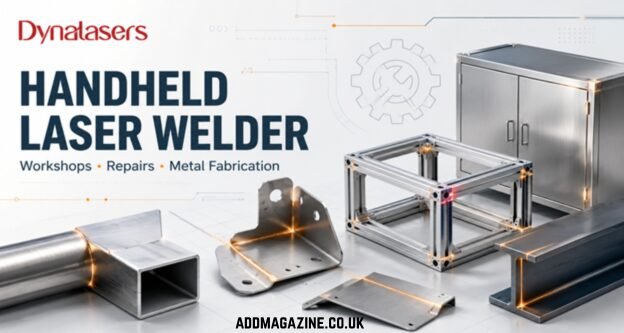
If you run a workshop, you’ve probably noticed more people asking about the handheld laser welder. And for good reason—it can cut welding time, leave cleaner seams, and reduce the hours spent on grinding and polishing. But let’s be clear: it’s not a magic box that makes TIG, MIG, or fixed laser systems obsolete. Each process has its place.
Where the handheld unit shines is repair work, sheet metal, cabinet frames, and custom jobs where parts vary day to day. And picking the right one isn’t just about wattage—it’s about your materials, fit-up quality, operator skill, and how you actually work.
Handheld Laser Welder Comparison Table
| Welding Option | Portability | Heat Input | Finish Quality | Learning Curve | Best Use Case |
| Handheld Laser Welder | High | Low | Clean, narrow seams, less finishing | Moderate | Varied parts, repair-heavy work, visible welds |
| TIG | Medium | Low to medium | Excellent, very clean | High | Fine manual work, precision repair, thin materials |
| MIG | Medium | Medium to high | Good, some spatter | Low to moderate | General fabrication, structural welding, thicker sections |
| Fixed Laser Welding System | Low | Low | Excellent, automated consistency | High (setup) | High-volume batch production, repeatable parts |
TIG is still the king for delicate, high-quality manual work—but it’s slow and demands a steady hand. MIG gets the job done fast, especially on heavier sections, but you’ll often deal with spatter and extra cleanup afterward. Fixed laser systems? Great for repetitive production runs, but they’re not exactly mobile, and integrating them takes planning.
A handheld laser welding machine sits right in the middle. It gives you laser-quality welds without tying you to a stationary table. That’s a big deal when you’re handling a mix of jobs, doing repairs, or working on parts that are awkward to move. For high-volume, identical parts every day, a fixed system may still win. But for mixed tasks, repairs, and short runs, a portable laser welder fits more naturally into the daily flow.
Why Handheld Laser Welders Are Becoming Common in Workshops
Walk into any fab shop these days, and you’ll see at least one person eyeing a handheld laser. The main driver? Time. Everyone wants to weld faster, but they also want to spend less time on grinding, straightening, and fixing distortion. TIG gives you a beautiful bead, but it’s painstaking. MIG is quick, but on visible parts, the spatter and cleanup can be a headache.
A handheld fiber laser welder delivers concentrated energy to a precise point, creating clean, uniform welds while keeping surrounding heat to a minimum. When your parameters are dialed in, the heat-affected zone shrinks, distortion drops, and rework becomes less frequent. That’s why you see these machines on stainless steel cabinets, aluminum frames, machine covers, and custom sheet metal—anywhere appearance and fit matter. It doesn’t eliminate finishing entirely, but it sure cuts down the time you spend with a grinder.
Why Dynalasers Handheld Laser Solutions Fit Real Shop Use
Dynalasers builds handheld laser welding tool systems that actually make sense for shops like yours—where materials change, jobs come in unexpected, repairs pop up, and floor space is tight. These aren’t showpieces for trade fairs. If you’re moving from TIG or MIG to laser, a Dynalasers handheld metal laser welder can help your team get consistent results faster—but only if you train your operators properly and set up the process with care.
Lightweight Welding Gun for Operator Comfort
Especially on long seams, awkward corners, or field repairs where you’re not standing comfortably. Dynalasers kept the gun under 0.48 kg. That doesn’t sound like much until you’ve been welding cabinets for a few hours—it makes a real difference. Less fatigue means better control and fewer mistakes. It’s not a cure-all, but it helps.
Cleaner Welds with Controlled Heat Input
Laser welding puts heat exactly where you want it—no wandering arc, no excessive soak. Optimized Welding Adjustments Reduce Cleanup and Improve Bead Quality. For stainless products, aluminum frames, kitchen gear, elevator components, or any visible sheet metal, that’s a huge plus. Thermal distortion is also reduced, so you spend less time tweaking alignment. Again, it won’t eliminate post-weld work, but it definitely reduces it.
Multi-Material Welding Capability
An effective laser welder must adapt to different fabrication jobs, delivering consistent results on stainless steel, carbon steel, aluminum, brass, copper, and galvanized surfaces. Dynalasers systems can manage these common shop materials, but the results depend on more than just the machine. Thickness, surface cleanliness, joint design, shielding gas, wire feed, focus, travel speed, and technique all play a role. The hardware gives you the potential; you still have to dial it in for each job.
Multi-Function Design for Welding, Cleaning, and Cutting
In real workshops, welding is rarely a one-step affair. You often need to clean oxide off before welding, remove rust during repairs, or trim parts to fit. The Dynalasers M Series covers welding, cutting, and cleaning. The D Series adds spot welding and rust removal to that list. For small to medium shops, having a single fiber laser welding system that handles multiple tasks means less swapping between machines and more space on the floor.
Dynalasers Handheld Laser Welder Series
Dynalasers offers three main handheld series, each aimed at a different kind of user: flexible shop work, heavier repair, or mobile jobs. The ideal option comes down to the materials you handle most often, the amount of work you complete, and whether mobility or built-in cleaning and cutting functions matter to you.
M Series: Flexible Workshop Handheld Laser Welder
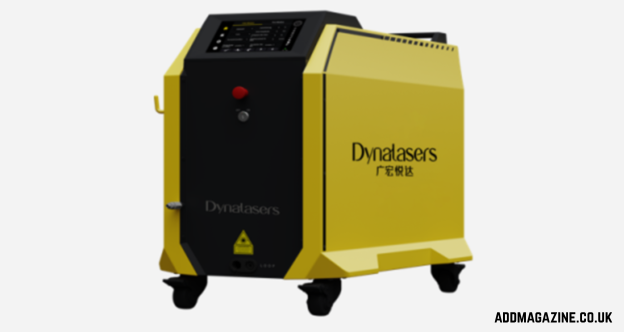
The M Series comes in three power levels—M30 (800 W), M50 (1200 W), and M70 (1800 W). They do welding, cutting, and cleaning. These are workhorses for daily shop use on sheet metal, precision parts, repairs, medium-thickness components, and small-batch production. Under good conditions, the M70 can handle stainless and carbon steel up to about 7.0 mm. That covers a lot of typical jobs.
D Series: Higher-Performance Welding and Repair System
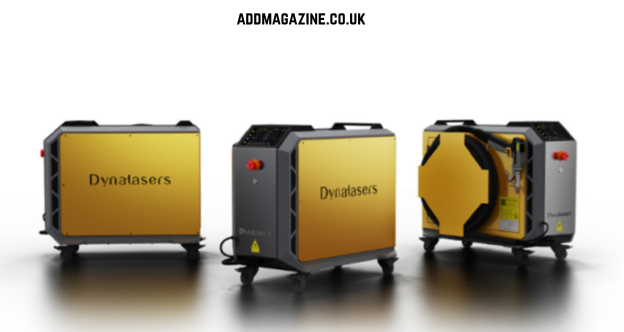
Step up to the D Series—D50 (1200 W) and D70 (1800 W). They’re built for heavier industrial repair, thicker stainless and carbon steel structures, aluminum parts, and machinery maintenance. If your day swings between fabrication and repair work, this series gives you extra flexibility.
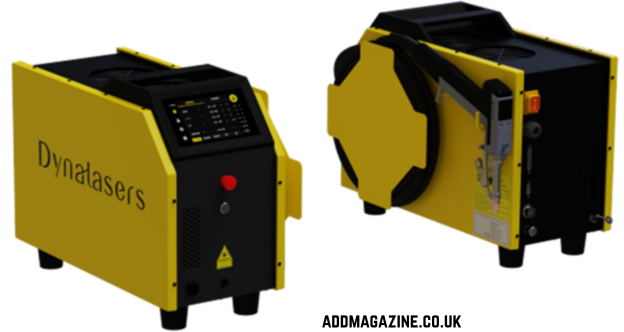
The S30 weighs under 21 kg, the S40 under 22 kg. Both have a gun under 0.48 kg and offer continuous, pulse, and burst modes. The S30 gives you about 2.5 mm penetration, and the S40 about 3.5 mm—enough for light to medium repairs on site. They’re easy to move around, which is a big plus if you do field maintenance or have limited bench space.
Common Applications
You’ll find handheld metal laser welders on stainless cabinets, aluminum frames, carbon steel structures, machinery repairs, custom metalwork, kitchen equipment, elevator parts, metal furniture, and OEM components. They excel at thin-to-medium materials, especially where the weld will be visible and you want to keep heat input low. Less finishing, less distortion, and quicker turnaround on small batches or repair jobs.
That said, always test on actual parts before committing to production. Check fit-up, choose the right shielding gas, set your focus, and keep records of what works. Even the best machine won’t fix poor joint prep or bad parameters.
FAQs
Q1. What is a handheld laser welder used for?
Handheld laser welding machines are widely used in fabrication workshops, industrial maintenance, repair services, and custom manufacturing. From fabricating aluminum and stainless steel components to building sheet metal structures, frames, and equipment cabinets, these machines provide a practical solution for one-off jobs and limited manufacturing runs.
Q2. Can it replace TIG or MIG welding?
In certain jobs—where clean seams, speed, and less finishing matter—a handheld laser welding machine can replace TIG or MIG. But for heavy structural work, poor fit-up, or thick sections, traditional processes often stay the better choice. They coexist, not replace.
Q3. What materials can a handheld laser welder process?
Under suitable conditions, a handheld fiber laser welder handles stainless, carbon steel, aluminum, brass, copper, and galvanized. But results depend on thickness, surface prep, shielding gas, wire feed, and your parameter settings.
Q4. What affects laser welding quality?
Material type, thickness, joint design, surface cleanliness, power, shielding gas, wire feed, focus, travel speed, wobble, and operator skill all matter. A stable machine helps, but good setup and technique are equally critical.
Conclusion
A handheld laser welder fits workshops that want cleaner welds, more flexibility, and less post-weld grinding. It’s a tool that works alongside TIG, MIG, and fixed lasers—not a replacement for them. Dynalasers M, D, and S Series offer options for shop welding, repairs, mobile work, and multi-process fabrication. The right one depends on your materials, your workflow, and the realities of your shop floor. Make informed decisions, evaluate every option carefully, and equip your team with the right knowledge to achieve lasting results.