Millipedes (Class Diplopoda) are becoming increasingly popular as peaceful, space-saving, and non-biting invertebrate pets. In contrast to regular exotic animals, their care involves an understanding of the basic biology principle that the substrate in which they live is not only their floor but also their food and water source and shedding place.
While looking for healthy millipedes for sale, you can make sure of having a ready bioactive environment before you bring your pet home.
Building the Perfect Substrate: Food and Shelter Combined
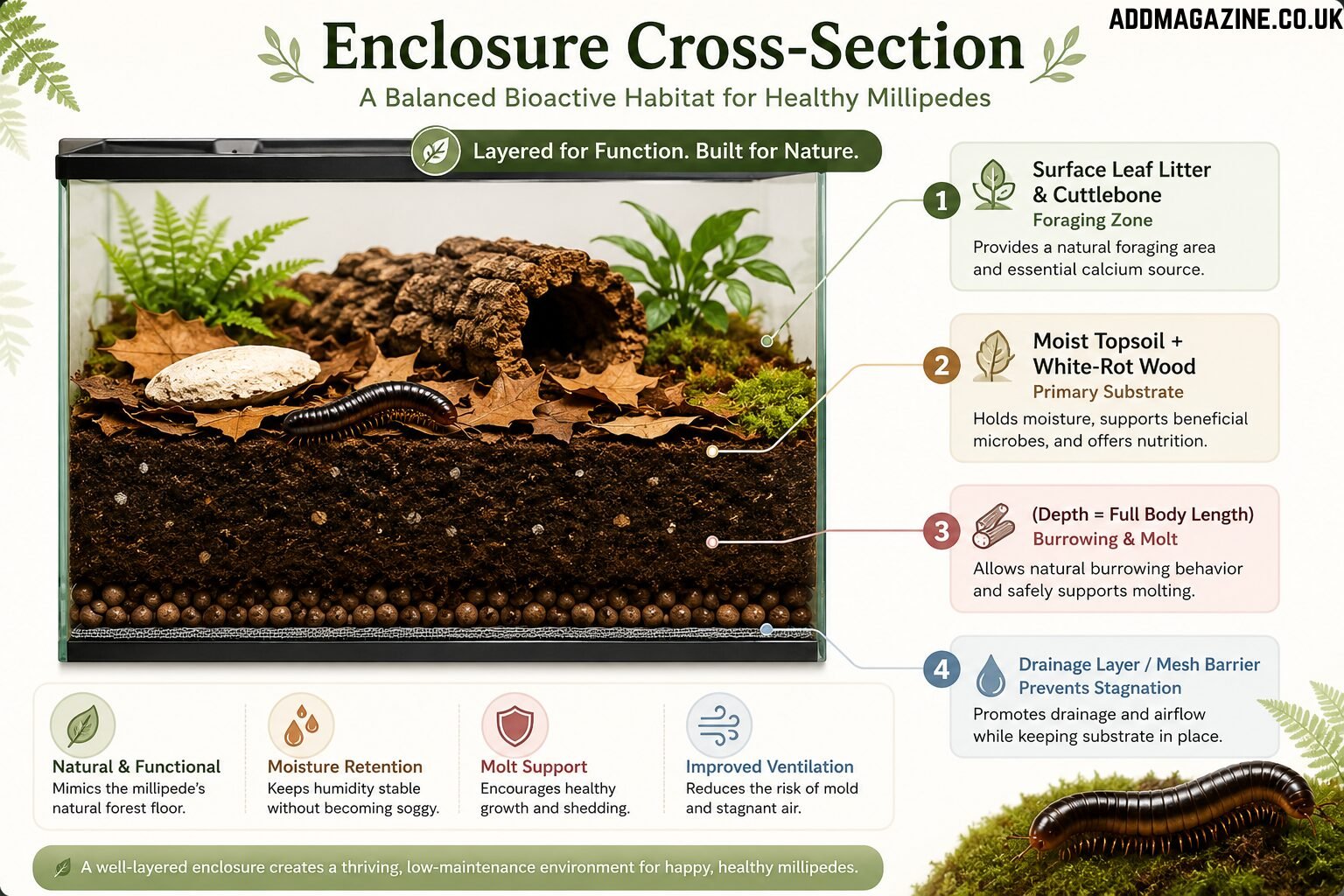
In millipede care, the substrate represents about 80% of the animal’s daily food intake. Millipedes feed on decomposed plants since they are detritivores, which means they derive nutrients from the gut microbes of their body.
The Master Substrate Blend
A balanced mixture of the substrate consists of the following layers, which are mixed well together:
- Organic Topsoil: Fertilizer-free, pesticide-free soil which holds water but doesn’t get compacted.
- Soft White-Rot Hardwood: Oak, beech, or maple wood that has been finely shredded and biologically broken down, making its cellulose more accessible and easier to digest.
- Aged Leaf Litter: Dry oak or beech leaves which are ground up to supply surface nutrition.
- Calcium Powder: Powdered calcium carbonate mixed directly in the substrate mixture for formation of exoskeleton.
Mandatory Substrate Rule: The substrate needs to be as deep as or deeper than the adult body length of your millipede species (about 10-15 cm minimum). Millipedes thrive in enclosures with a thick, spacious layer of substrate that allows natural digging, supports temperature control, and provides a protected place for molting.
Safety Warning: Coconut coir (coco fiber) should not be used as bedding or substrate, as its long, fibrous strands may be swallowed and create a severe or potentially life-threatening intestinal obstruction. Also, avoid using soft woods like pine and cedar due to their toxic resins.
Environmental Controls: Temperature, Humidity, and Ventilation
Millipedes need constant tropical or temperate microclimates depending on where they come from. Consistent microclimate control preserves sufficient moisture while reducing conditions that encourage unwanted fungal proliferation.
Temperature Management
The temperature inside the enclosure needs to be kept at 21°C-26°C (70°F-78°F). In case additional heating is required, it can be provided by a heating mat that needs to be applied only to the side of the tank and controlled by a thermostat. Never use a heating mat beneath the enclosure, as millipedes dig down trying to escape from the surrounding heat.
Humidity & Ventilation Balance
The environment requires a relative humidity level of approximately 70–80%. The substrate in the cage should be damp but not saturated since this condition favors the growth of anaerobic bacteria. In order to regulate humidity and ventilation, it is necessary to cover 50-75% of the mesh lid with acrylic or plastic sheets.
Diet and Calcium: Feeding Your Detritivore
Although the basis of the diet is composed of decaying wood and leaves, additional feeding serves as a source of necessary vitamins and minerals.
Provide fresh food 1–2 times per week in moderate amounts, taking away the remnants after 24 hours to avoid mold infections:
- Fresh Vegetables: Cucumber, zucchini, sweet potato, butternut squash, and carrot.
- Protein: Offer occasional protein-rich foods such as dried freshwater shrimp, premium fish flakes, or spirulina, approximately once every two weeks.
- Calcium Requirement: Provide permanent access to cuttlebone on top of the substrate. Calcium is required for hardening of their chitin outer shell.
Substrate Component Breakdown & Beginner Species Selection
The utilization of captive-reared millipedes for sale available from trusted sources that provide millipedes in good condition guarantees that you will have tough and disease-free millipedes. For beginner millipedes, you need to have the Ivory Millipede (Chicobolus spinigerus), Bumblebee Millipede (Anadenobolus monilicornis), and Ghana Olive Millipede (Telodeinopus aoutii).
Molting Safety, Handling, and Long-Term Care
The millipedes grow by shedding their tough outer covering called the exoskeleton. Prior to the molting process, the millipede creates an earthen burrow for itself underground and stays there for weeks or months.
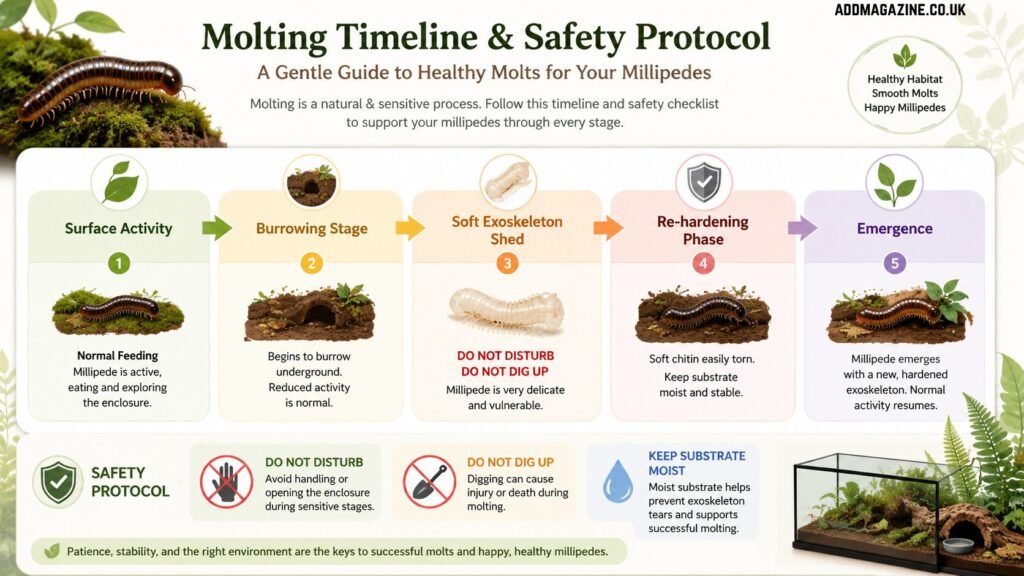
Do not excavate millipedes from underground. The recently molted millipede possesses highly fragile body parts; hence, digging it up when it is in such a fragile state would definitely result in physical damage.
The millipede should never be restricted to move only within one spot on your hand, but allow it to move freely over your palm. Although the millipede will not bite, the animal tends to defend itself by forming a ball and secreting a fluid called benzoquinone. The non-toxic secretion of the animal will have an odor and stain your skin yellow or brown in color. Create the right balance of moisture and a nutrient-rich substrate, and your millipede can remain healthy, active, and comfortable for many years.