Event production in the United States operates on tight margins and tighter timelines. Whether you are coordinating a 500-person corporate gala, managing recurring wedding weekends across a venue portfolio, or running a floral wholesale operation that serves dozens of planners, the decisions you make about glassware procurement carry real operational weight. A single inconsistency in a centerpiece component — a mismatched height, a different glass clarity, a shipment that arrives short — can unravel hours of setup work and put client relationships at risk.
Hurricane vases sit at the center of this pressure. They are one of the most requested centerpiece formats in the US event market, valued for their versatility across candle arrangements, floral installations, and decorative displays. But the gap between knowing which style works and knowing how to procure it reliably at volume is where many professionals lose time and money. This guide addresses that gap directly — covering what to evaluate, what tends to go wrong, and how to structure your procurement approach so that volume buying supports your operation rather than complicates it.
Understanding What You Are Actually Buying When You Order in Volume
When event professionals source bulk hurricane vases, the transaction is rarely as simple as selecting a style and placing a quantity order. What you are actually purchasing is a production commitment — glass produced to a specific mold, finished to a specific standard, and packed to survive freight across a supply chain that may span continents. The distinction matters because the variables that affect one unit are multiplied across hundreds or thousands when you order at scale.
Glass consistency is the most critical factor in bulk purchasing that is consistently underestimated at the inquiry stage. Two units from the same product listing can differ in wall thickness, base weight, and optical clarity if they were produced across different manufacturing runs. For event professionals who use centerpieces as a visual system — where uniformity is part of the design — these variations are not cosmetic issues. They are presentation failures that require last-minute replacement or rearrangement during setup.
Sourcing bulk hurricane vases from a supplier that maintains consistent production standards and documented quality controls reduces this risk substantially. The right supplier relationship means you are not re-evaluating product quality every time you reorder — you are working from a known baseline.
The Difference Between Catalog Availability and Reliable Stock
A product appearing in a supplier’s catalog does not mean it is held in sufficient inventory for your order size, your timeline, or future reorders. Many event professionals discover this only after committing to a design concept and then finding that the product ships from overseas on a six-to-eight week lead time, or that the style is seasonal and not restocked predictably.
This creates a real operational vulnerability. If you build a signature centerpiece style around a specific hurricane vase format and that product becomes unavailable mid-season, you face either a design change, an emergency sourcing effort. Establishing which products a supplier holds domestically versus imports to order is an essential due diligence step before committing to any volume program.
Weight, Freight, and Hidden Cost Structures
Glass is heavy, and freight costs for bulk glassware orders are significant. This is one area where event professionals frequently underestimate total landed cost when comparing supplier pricing. A lower per-unit price that carries a higher freight rate per pound may ultimately cost more than a slightly higher unit price with consolidated domestic shipping. Understanding the full cost structure — unit price, freight, packaging, and any minimum order thresholds — is what allows for accurate budget planning rather than cost surprises at invoice.
How Hurricane Vase Formats Translate Across Different Event Types
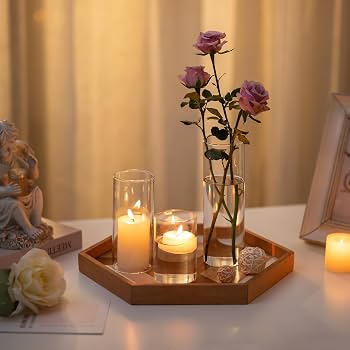
Hurricane vases are not a single product. The term describes a broad category of cylindrical or tapered glass vessels designed to house candles or floral arrangements while providing a visual enclosure that shapes and concentrates light. The format exists across a wide range of heights, diameters, wall profiles, and base treatments, and each variation serves a different functional purpose in an event environment.
Understanding which format serves which application is not about aesthetics alone. It is about operational compatibility — how the vessel interacts with the florals or candles you are placing inside it, how it performs on the table format you are working with, and how it stores and transports between events without breakage.
Tall Cylinder Formats and Their Centerpiece Role
Tall hurricane cylinders — typically used for pillar candles or elevated floral arrangements — create strong vertical presence on dining tables. They are effective in ballroom environments where ceiling height allows for dramatic scale and where table spacing is generous enough to accommodate a taller centerpiece without obstructing sightlines. Their value for event professionals lies in their visual impact relative to their cost, but they carry higher breakage risk during transport due to their height-to-diameter ratio. Packing methodology and crate design matter significantly when moving these at volume.
Wide-Mouth and Tapered Designs for Floral Integration
Wider-mouth hurricane formats are increasingly common in floral-forward event design because they allow for the kind of loose, abundant arrangements that have become central to current wedding and hospitality aesthetics. The interior diameter determines which floral mechanics are compatible — foam, frogs, or free-floating stems — and influences how much product a florist needs to fill the arrangement convincingly. When ordering at volume, ensuring that mouth diameter is consistent across all units is as important as height consistency, because variation here directly affects floral build time and material cost.
Low-Profile Formats for Intimate and Non-Ballroom Settings
Not every event calls for height. Corporate breakfasts, rehearsal dinners, and seated luncheon formats often work better with lower centerpiece profiles that keep conversation unobstructed. Low-profile hurricane formats — shorter cylinders or bowl-shaped vessels — serve this need while still providing the light-diffusing quality that makes hurricane glassware appealing. For venue operators managing a diverse event calendar, having both tall and low-profile formats in inventory provides the flexibility to adapt without needing to source new product for every event type.
Evaluating Supplier Relationships Before You Commit to Volume
Volume purchasing requires a different kind of supplier evaluation than one-off procurement. When you are ordering hundreds of units that will be used repeatedly across client events, the supplier’s operational reliability becomes as important as the product itself. Delivery consistency, order accuracy, responsiveness to issues, and reorder availability are all factors that determine whether a supplier relationship adds value or introduces friction into your workflow.
The event industry’s procurement landscape is not standardized in the way that, for example, food service or commercial construction supply chains are. According to industry guidance from organizations like the Events Industry Council, professional buyers in this sector benefit from building structured supplier relationships with clear documentation of product specifications, lead times, and quality expectations — rather than treating each procurement as a transactional event.
What to Ask Before Placing a Large Order
Before committing to a volume purchase, there are several operational questions worth raising with any supplier. These are not about negotiating price — they are about understanding whether the supplier can support your business sustainably.
• Does the supplier hold domestic inventory of this product, or is it imported to order with extended lead times that may not align with your event calendar?
• How are products packaged for freight, and what breakage rate does the supplier consider acceptable for a standard shipment?
• Can the supplier fulfill reorders of the same product from the same production run, or does inventory turn over in ways that affect consistency?
• What is the process for handling damaged units or short shipments, and how quickly can replacements be sourced?
• Is there a minimum order quantity that affects your ability to test a product before committing to a full volume purchase?
The Case for Testing Before Scaling
The most reliable way to evaluate a hurricane vase supplier is to place a smaller test order before scaling to full volume. This allows you to assess glass quality, packaging integrity, shipping timeline accuracy, and order documentation in a low-risk context. Event professionals who skip this step in the interest of speed often find themselves managing quality issues mid-season when there is no bandwidth to find alternatives. A test order is an investment in operational certainty, not a delay.
Inventory Management for Recurring Event Programs
For professionals running venue operations, rental companies, or large-scale event programs with recurring formats, inventory management of hurricane vases is a logistical function that deserves structured attention. Glass inventory depreciates through breakage, chips, and clarity degradation over time, and the rate of loss depends heavily on how pieces are stored, transported, and handled during setup and breakdown.
Building a replacement cycle into your procurement planning — rather than reacting to breakage as it occurs — keeps inventory levels predictable and prevents the situation where a large event is approached with an unknown quantity of usable pieces. Tracking units by cohort, noting when a batch was purchased, and scheduling periodic inventory audits gives you the data to order replenishment stock at a pace that matches your loss rate rather than your panic response.
Storage Conditions That Affect Glass Longevity
Glass clarity and structural integrity can be affected by storage conditions over time. Glassware stored in humid environments without adequate air circulation is susceptible to mineral deposits that dull surface finish. Pieces stored without adequate cushioning between units accumulate micro-scratches that become visible under event lighting. These are not inevitable outcomes — they are preventable with appropriate shelving, spacing, and wrapping protocols. Investing in proper storage infrastructure for a glassware inventory is a cost that typically pays for itself in reduced replacement frequency.
Closing Perspective: Building a Procurement Framework That Works Across Seasons
Sourcing glassware at volume for the event industry is a procurement discipline, not a shopping task. The professionals who manage it most effectively treat it as an ongoing operational system — with defined supplier relationships, documented product specifications, structured inventory tracking, and planned replenishment cycles — rather than a series of one-off purchasing decisions made under deadline pressure.
Hurricane vases, given their central role in contemporary event design and their physical fragility as a product category, are a good place to build this discipline. The decisions you make about which formats to stock, which suppliers to work with, and how you manage the inventory you hold will determine whether your glassware program supports your business or quietly drains it through hidden costs, inconsistencies, and avoidable last-minute scrambles.
Start with clarity about your actual volume needs across a full event season. Evaluate suppliers on operational reliability, not just unit price. Test before scaling. And build your inventory management approach around your real loss rate rather than optimistic assumptions. Those steps, applied consistently, are what separate a procurement program that works from one that merely functions.