A garage door plays an important role in the daily routine of a household. It protects vehicles, provides another entry point into the home, and helps keep stored belongings secure. Since the door may open and close several times each day, its springs, rollers, panels, tracks, and opener naturally experience wear over time.
When a problem appears, homeowners often wonder whether a garage door repair will be enough or whether replacing the complete system would make more sense. The answer usually depends on the age of the door, the type of damage, repair costs, safety concerns, and its overall condition. Understanding these factors can help you avoid unnecessary spending while keeping your garage safe and reliable.
Small Dents and Surface Damage Usually Need Repair
Not every visible problem means your garage door has reached the end of its life. Minor dents, scratches, chipped paint, fading, and light surface rust are normally considered cosmetic issues. In many situations, they can be corrected without removing the entire garage door.
For example, a dent caused by a ball, bicycle, or other light impact may affect only one section. If the remaining panels are still straight and the operating system works correctly, a technician may be able to repair the area or replace a single panel. Repainting or treating small areas of rust can also improve the appearance while preventing further deterioration.
Professional garage door specialists such as A. Parkers can inspect the affected section and determine whether repairing one component is practical. A careful assessment is useful because replacing a complete door for a small cosmetic problem may not be financially necessary.
Broken Parts and Unusual Sounds Can Often Be Fixed
Strange sounds are among the first warning signs that a garage door needs attention. Grinding, squeaking, popping, scraping, or rattling may indicate worn rollers, loose hardware, dry moving parts, damaged cables, or problems with the spring system.
A broken component does not automatically mean you need a brand-new garage door. Many mechanical parts are designed to be replaced individually. Garage door springs, cables, rollers, hinges, tracks, and opener components can often be repaired or replaced while the main door remains in place.
The important point is to deal with these problems early. Continuing to use a door with a damaged cable or worn spring can place extra pressure on other parts of the system and may eventually lead to more expensive damage.
Some repairs also carry serious safety risks. Garage door springs operate under considerable tension, and attempting to remove or install them without suitable training and equipment can cause injury. These jobs should therefore be handled by an experienced technician.
Major Structural Damage May Make Replacement Necessary
There are situations where repairing individual parts is no longer the best solution. Significant structural damage can affect the strength, movement, and safety of the entire door.
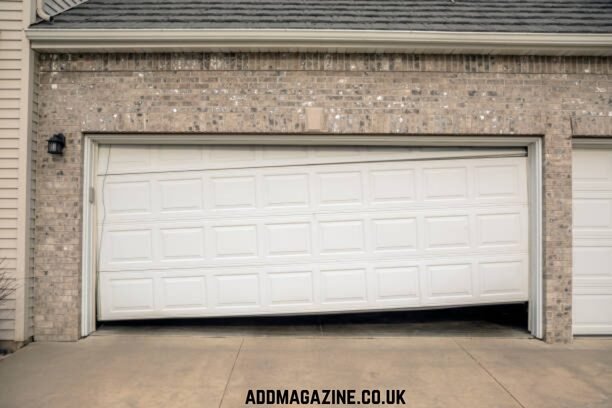
A strong vehicle impact, falling tree branch, severe weather event, or repeated deterioration may leave several panels bent or the frame badly distorted. You may also notice that the door hangs unevenly, struggles to move along the tracks, develops large gaps, or appears to sag when closed.
When damage affects several important sections, repair costs can quickly add up. Even after multiple repairs, the door may still fail to operate correctly. In these cases, garage door replacement is often a more sensible long-term investment.
A replacement may also be worth considering when the existing door is already very old and several components are beginning to fail at the same time. Spending money repeatedly on an aging system can eventually cost more than installing a dependable new one.
Safety Features Should Influence Your Decision
Safety should be one of the strongest factors when deciding whether to repair or replace a garage door. Modern garage systems include features that help reduce the risk of injuries and accidental damage.
For instance, properly functioning garage doors should be able to detect an obstruction and reverse before closing completely. If your older system lacks reliable safety sensors or its reversing mechanism no longer works as intended, continuing to use it may create an unnecessary risk.
Problems such as a door suddenly dropping, failing to remain open, moving unpredictably, or coming off its tracks also need immediate professional attention. A minor component replacement may solve the problem in some cases, but an outdated or badly worn system may be safer to replace entirely.
The decision should not be based only on appearance or cost. If a garage door cannot operate safely and consistently, upgrading the system may provide greater peace of mind for everyone using the property.
An Older Garage Door Can Reduce Energy Efficiency
Energy efficiency is another reason homeowners sometimes choose replacement instead of continuing to repair an older garage door. Many traditional garage doors were built with limited insulation, particularly older single-layer metal doors.
This can become more noticeable when the garage is attached directly to the house. Outdoor temperatures may enter through the garage more easily, especially when the door has poor insulation, damaged weather seals, or gaps around the edges.
Modern insulated garage doors are designed to provide better thermal performance. They can help create a more stable environment inside the garage and may reduce the amount of outside heat or cold reaching nearby living spaces.
Replacing an older door purely for energy savings may not always be necessary, but insulation is worth considering when several other problems already make replacement likely.
A garage door often covers a large section of the front exterior of a property. Because of its size, its condition can strongly influence how the home looks from the street.
A faded, heavily dented, rusted, or outdated garage door may make an otherwise well-maintained property appear older. Installing a newer design can quickly improve curb appeal without requiring major changes to the rest of the exterior.
Homeowners can also choose from different panel designs, finishes, materials, windows, and colors to better match the architectural style of the property. This improvement may be particularly valuable for people preparing to sell their home, since buyers often notice the condition of prominent exterior features immediately.
However, appearance alone does not always justify replacement. If your existing door works properly and has only minor cosmetic problems, refinishing or repairing it could still be the more economical option.
Consider the Age of the Existing Door
Age is an important part of the repair-versus-replace decision. A relatively new garage door with one damaged component is usually worth repairing. An older door that regularly experiences new problems may tell a different story.
Repeated service visits for springs, rollers, panels, seals, and opener problems can become expensive over time. If several components are approaching the end of their useful life, replacing one part may only delay the next repair.
Before making a decision, compare the estimated repair expense with the expected condition of the door after the work is completed. Paying for a repair makes sense when it gives you several more years of dependable performance. If expensive repairs are only likely to provide a short-term solution, replacement may offer better value.
Compare Repair Costs With Long-Term Value
Cost naturally plays a major role for most homeowners. A simple repair will generally cost less than installing an entirely new garage door, but the cheapest immediate option is not always the least expensive choice over several years.
Consider how often the door has needed repairs recently. If this is the first issue and the rest of the system remains in good shape, fixing the damaged component is usually reasonable. On the other hand, frequent breakdowns may indicate that the system is becoming unreliable.
A professional inspection can provide useful information about the condition of the panels, tracks, springs, cables, rollers, opener, seals, and safety equipment. With that information, you can make a decision based on the complete condition of the system instead of focusing on one visible problem.
Conclusion
Deciding whether to repair or replace a garage door depends on more than one factor. Small dents, surface damage, worn rollers, broken springs, damaged cables, and similar isolated problems can often be repaired without replacing the entire door.
Replacement becomes more practical when the structure is badly damaged, several major components are failing, important safety features are outdated, or the door has become expensive to maintain. A newer garage door can also provide better insulation, improved security, quieter operation, and a refreshed appearance.
Before spending money on either option, have the complete system inspected by a qualified garage door professional. A proper evaluation can help you choose the solution that offers the best balance of safety, cost, reliability, and long-term value.