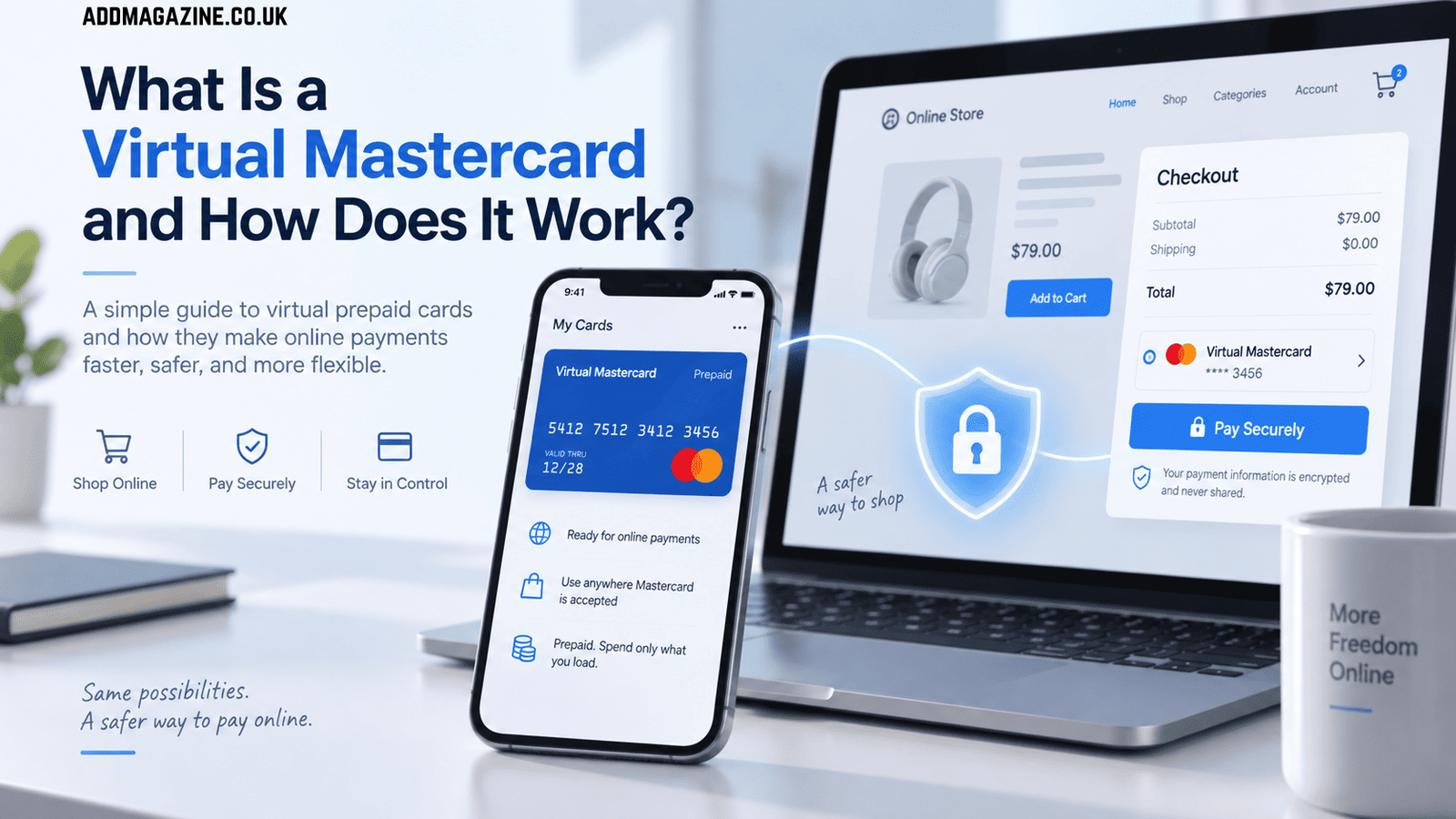
Virtual payment cards have become a practical option for people who want to make online purchases without using a physical plastic card. A virtual Mastercard card provides digital payment details that can be entered at checkout in much the same way as the information from a traditional payment card, making it suitable for a wide range of online transactions.
A Virtual Mastercard can also be issued as a prepaid product with a fixed balance loaded in advance. Instead of drawing money directly from a bank account or credit line, purchases are deducted from the available prepaid balance. Baxity Store is one of the platforms where users can find Virtual Mastercard prepaid cards for online payments. Such cards can be used for online shopping, digital services, gaming purchases, and other internet transactions where the specific card is accepted.
What Is a Virtual Mastercard?
A Virtual Mastercard is a payment card that exists entirely in digital form. Instead of receiving a physical plastic card, the user gets the card details needed to make online payments. These usually include a 16-digit card number, an expiration date, and a CVV security code.
From the point of view of an online checkout, a virtual card can work in a similar way to a traditional Mastercard. The user selects card payment, enters the required details, and the merchant sends the transaction for authorisation. The main difference is that there is no physical card to insert into a terminal or carry in a wallet.
Virtual Mastercards can be issued in several formats. Some are linked to a bank account or credit line, while others are prepaid. This article focuses mainly on virtual prepaid Mastercards, where a specific amount of money is assigned to the card in advance.
With a prepaid version, the available spending amount is determined by the card balance. If a card has a balance of $50, for example, the user can make eligible purchases until that balance is used, subject to the card’s own terms, transaction limits, merchant restrictions, and validity period.
This makes a virtual prepaid Mastercard different from a virtual credit card. A virtual credit card usually gives the cardholder access to credit provided by a bank or another financial institution. A prepaid card does not create a credit line. It uses money that has already been loaded or assigned to the card.
The distinction is important because the rules may differ significantly. A virtual credit card may have different funding, billing, and usage rules depending on the issuer, while a prepaid virtual Mastercard uses funds assigned to the card in advance and may have a limited validity period or a non-reloadable balance.
How Does a Virtual Mastercard Work?
Although the exact process depends on the issuer and card provider, the basic idea is relatively simple. The user obtains a digital card, activates it if activation is required, receives the card details, and then uses those details when paying online.
A typical process looks like this:
- The user chooses a card with a suitable denomination or balance.
- The card is purchased through an available payment method.
- The user receives an activation link, activation instructions, or access to a card portal.
- The required activation process is completed.
- The user receives access to the card number, expiration date, CVV, and other available information.
- These details are entered at an online checkout in the same way as standard card details.
- If the transaction is approved, the purchase amount is deducted from the available prepaid balance.
The activation stage is particularly important because not every virtual prepaid card becomes usable immediately after purchase. Some products require the user to complete additional steps before the card details are fully available.
Depending on the card, the activation process may request information such as:
- full name;
- email address;
- billing address;
- phone number;
- acceptance of the cardholder agreement.
These requirements should not be assumed to be identical for every Virtual Mastercard. They depend on the issuer, card programme, country, and compliance rules that apply to the specific product.
After activation, users may be given access to an online card portal. Such a portal can make it easier to check the current balance, review previous transactions, and confirm whether the card is still valid.
When making a payment, the user usually enters the Virtual Mastercard details in the same fields that would be used for a regular physical card. The merchant then processes the payment through the normal Mastercard payment infrastructure.
However, a valid card number and sufficient balance do not automatically guarantee that a transaction will succeed. The payment can still be affected by merchant rules, regional restrictions, authentication requirements, transaction limits, or the type of purchase being made.
What Information Does a Virtual Mastercard Include?
A Virtual Mastercard normally provides the core information required for online card payments. Depending on the specific product and platform, this may include:
- a 16-digit card number;
- an expiration date;
- a CVV security code;
- the current available balance;
- transaction history;
- the option to set or reset a PIN, where supported.
The first three items are the most important for making an online payment. They correspond to the same basic details commonly found on a physical payment card.
The balance is especially relevant for prepaid cards because spending is limited to the funds available on the card. Before making a purchase, users should check that the balance is high enough to cover the entire transaction, including any extra charges that may be added by the merchant.
Transaction history can also be useful because it allows the user to see how the prepaid balance has been used. Not every virtual card provider offers the same level of account management, so the exact information available should always be checked in advance.
Virtual Mastercard vs Physical Mastercard
A Virtual Mastercard and a physical Mastercard may use the same payment network, but the products are not necessarily identical in how they are issued, managed, or accepted.
The table below focuses mainly on virtual prepaid Mastercards rather than every possible type of virtual card.
| Feature | Virtual Mastercard | Physical Mastercard |
| Card format | Digital | Plastic card |
| 16-digit card number | Yes | Yes |
| Expiration date | Yes | Yes |
| CVV | Yes | Yes |
| Online payments | Yes | Yes |
| Physical card required | No | Yes |
| In-store use | Depends on the specific product | Usually available |
| Predefined balance | Common with prepaid versions | Depends on card type |
| Reloading | Depends on the product | Depends on the product |
| Activation requirements | May apply | May apply |
| Delivery | Digital | Physical delivery or bank issuance |
| Recurring payments | May be limited | Often supported, depending on card type |
One of the clearest differences is the card format. A virtual card does not need to be manufactured or delivered as plastic, while a physical card must be issued and received before it can be used in the traditional way.
Virtual cards are therefore especially relevant to online payments. Physical cards, by contrast, are usually designed for both online and in-person transactions.
It is also important not to assume that all Virtual Mastercards are single-use, prepaid, or non-reloadable. The prepaid cards discussed in this article are one specific category within the broader market for virtual payment cards.
Where Can You Use a Virtual Mastercard?
The prepaid Virtual Mastercard discussed in this article is primarily intended for online payments. In practical terms, they may be used on websites and digital platforms that accept Mastercard payments and permit the specific type of card being used.
Typical use cases can include:
- online shops and marketplaces;
- gaming platforms;
- digital game stores;
- app stores;
- online software and digital services;
- travel and accommodation booking websites;
- digital entertainment services;
- one-time online purchases.
For example, a user may want a separate prepaid card for purchasing a digital product, paying for a game, placing an online retail order, or completing another transaction without entering the details of a main bank card.
The prepaid structure can be useful in such situations because the amount available on the virtual card is limited to the existing balance. This makes the card separate from the user’s primary debit or credit account.
At the same time, acceptance should never be taken for granted. A merchant displaying the Mastercard logo may still decline a specific virtual prepaid card.
- the country where the card is issued;
- the user’s location;
- the merchant’s own payment policy;
- regional restrictions;
- fraud prevention rules;
- 3D Secure requirements;
- recurring payment rules;
- the transaction amount;
- the available card balance.
Some merchants may apply additional restrictions to prepaid cards or require authentication methods that a particular prepaid card does not support.
For that reason, a Virtual Mastercard is better understood as a payment option rather than a guarantee of acceptance on every website that supports Mastercard.
What Are the Main Benefits of a Virtual Prepaid Mastercard?
A virtual prepaid Mastercard can be useful for people who want a separate payment method for online spending. Its advantages mainly come from the combination of digital access and a limited prepaid balance.
One benefit is that no physical card needs to be delivered. Once the required purchase and activation steps are complete, the user can access the card details digitally.
Another benefit is greater separation from a primary bank card. Instead of entering the details of a personal debit or credit card at checkout, the user enters the virtual card information.
The main practical benefits include:
- no physical plastic card is required;
- digital card details can be accessed online;
- spending is limited by the prepaid balance;
- the card can be used separately from a main bank card;
- users may choose a denomination that matches the planned purchase;
- the card can be practical for individual or occasional online transactions;
- there is no need to rely on a credit line when using a prepaid version.
The fixed balance can also make spending easier to control. A user who wants to spend only a certain amount can choose a prepaid card close to the required value rather than use a card linked to a larger bank account balance or credit limit.
This does not mean that virtual prepaid cards are automatically safer in every situation. Users still need to protect the card number, expiration date, CVV, activation link, and account credentials. Anyone who gains access to these details may be able to attempt transactions with the remaining balance.
A Virtual Mastercard should therefore be treated with the same care as any other payment card.
What Are the Limitations of Virtual Mastercard Prepaid Cards?
The advantages of virtual prepaid cards are accompanied by several limitations. Understanding them before purchase is important because some restrictions can directly determine whether the card will work for the intended transaction.
One of the most important issues is reloadability. Some Virtual Mastercard prepaid cards are non-reloadable. This means that the initial balance cannot be increased after purchase.
Once the funds have been used, the card cannot simply be topped up with more money. A new card may be required for future spending.
Other limitations can include:
- a fixed expiration period;
- a limited activation window;
- restrictions in certain countries;
- merchant-specific acceptance rules;
- unsupported transaction types;
- 3D Secure limitations;
- problems with recurring billing;
- possible additional merchant charges.
3D Secure is particularly important for online purchases. Mastercard uses Mastercard Identity Check as part of its authentication infrastructure, and some merchants require this additional verification before approving a transaction.
Certain non-reloadable prepaid cards may not support the authentication process required by a particular merchant. In that case, the payment can be declined even if the card details are correct and the balance is sufficient.
This is why a failed transaction does not always mean that the card has no funds. The problem may instead relate to how the merchant processes payments or which authentication methods it requires.
Recurring payments are another important limitation.
A non-reloadable prepaid card is generally not an ideal payment method for subscriptions or services that automatically charge the same card repeatedly. The first payment may work, but future charges can fail once the remaining balance becomes too low.
There may also be cases where the service requires a payment card capable of supporting ongoing billing or additional verification. A prepaid card designed mainly for individual transactions may not meet those requirements.
For this reason, non-reloadable virtual prepaid Mastercards are generally more suitable for planned one-time purchases than for services that depend on continuous automatic billing.
How Long Does a Virtual Mastercard Last?
A Virtual Mastercard does not necessarily remain active indefinitely. Both the activation window and the card validity period can be limited.
These limits depend on the issuer and specific card programme, so users should always check the conditions of the card they intend to purchase.
For example, one virtual prepaid Mastercard product may provide an activation link that remains valid for 30 days after purchase. If the user does not activate the card during that period, the link may no longer be usable.
After activation, the card itself may have a separate validity period. In one example, the activated card remains valid for six months.
These figures should not be treated as universal Mastercard rules. Other virtual cards can have different activation deadlines, expiration periods, or usage conditions.
It is therefore useful to distinguish between three different dates:
- the date the card is purchased;
- the deadline for activation;
- the expiration date of the activated card.
Users should also check what happens to any unused balance when the card expires. The relevant rules are determined by the card issuer and the terms attached to the specific product.
Planning the timing of a purchase can be especially important when the card is bought in advance for future use. There may be little benefit in activating a short-validity prepaid card long before it is actually needed.
What Should You Check Before Getting a Virtual Mastercard?
Virtual prepaid cards may look similar at first glance, but their conditions can differ significantly. Before purchasing one, it is worth checking both the basic card features and the restrictions that could affect the intended payment.
Key points to review include:
- supported countries and territories;
- available denominations;
- currency of the card;
- activation requirements;
- activation deadline;
- validity period after activation;
- whether the card can be reloaded;
- 3D Secure or Mastercard Identity Check support;
- recurring payment support;
- merchant restrictions;
- transaction limits;
- possible merchant or processing fees;
- refund conditions;
- what happens to unused funds after expiration.
A card that works well for a one-time digital purchase may not be appropriate for a hotel booking, recurring subscription, or transaction that requires additional identity verification.
It is useful to compare the planned purchase amount with the card denomination as well. If the card balance is too low, the transaction may fail. If the denomination is much higher than required, the user may be left with a small remaining balance that is difficult to spend before expiration.
Providers may offer different denominations, activation procedures, usage limits, and regional restrictions, so it is worth checking the terms of a specific Virtual Mastercard before purchasing it.
Reviewing these details in advance helps users understand whether a particular card matches the transaction they want to make. A Virtual Mastercard can be a practical tool for online payments, but its usefulness depends on choosing a product whose balance, validity period, authentication support, and regional rules fit the intended purpose.
Is a Virtual Mastercard Right for Online Payments?
A Virtual Mastercard can be a practical option for individual online purchases, especially when you want a digital payment method with a predefined balance. It can help separate specific online spending from a primary bank card and is well suited to planned, one-time transactions.
Before using one, check the supported countries, card validity, merchant restrictions, 3D Secure compatibility, and whether recurring payments are supported. Baxity Store offers Virtual Mastercard prepaid cards with clearly stated activation, validity, and usage conditions, so users can review these requirements before choosing a card for a particular online payment.