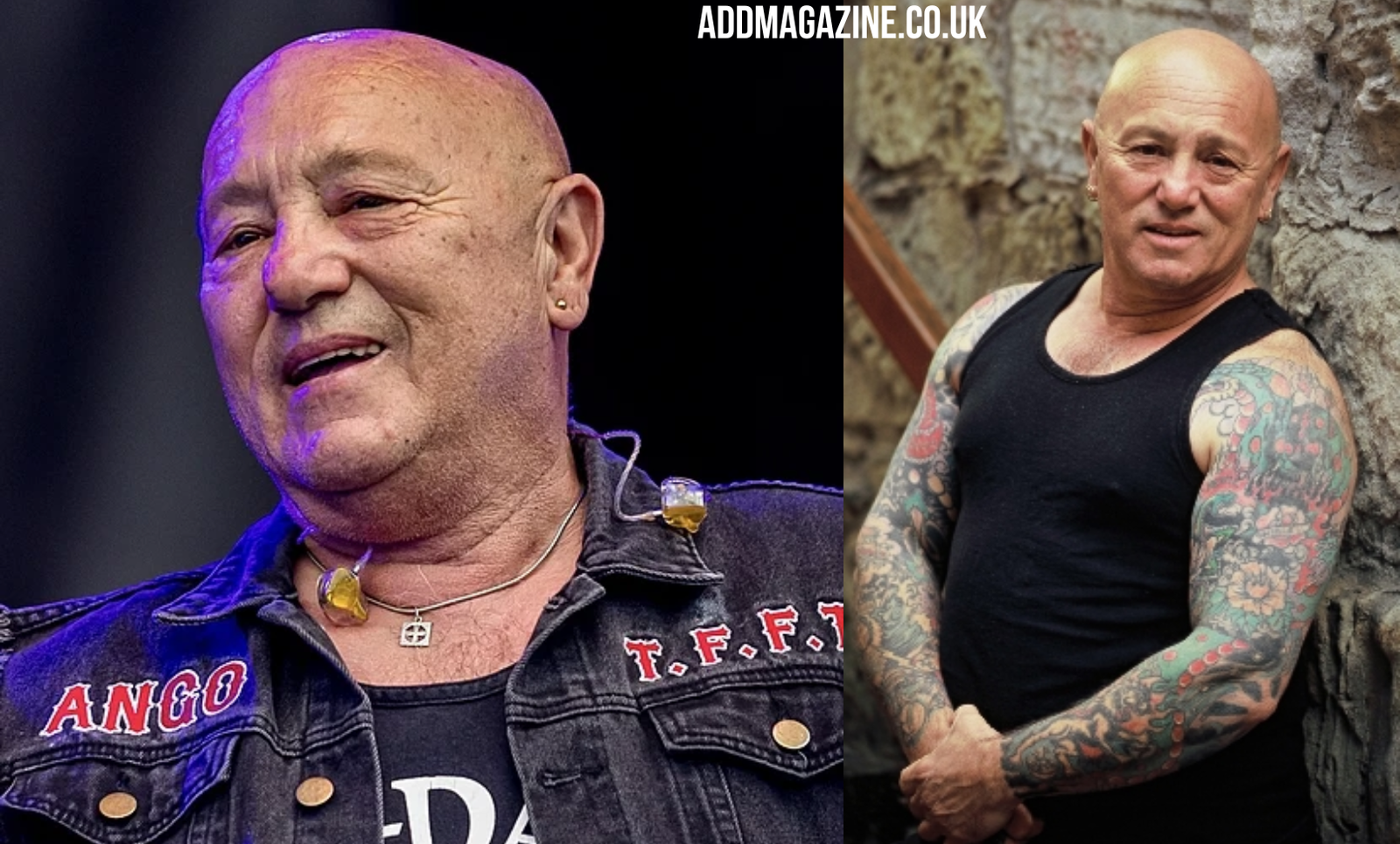
Angry Anderson was an Australian rock singer whose career reached far beyond the stage. Born Gary Stephen Anderson in Melbourne on August 5, 1947, he spent decades working in music, television, film and community projects. His strongest musical connection was with Rose Tattoo, the hard-rock band he joined during the 1970s and continued to represent through different periods of its history.
Anderson became easy to recognise because of his shaved head, tattoos, rough singing voice and intense performance style. However, that image represented only one part of his career. He also recorded successful solo material, acted in a major Australian film franchise and became involved in projects supporting young and disadvantaged people. Anderson died on September 21, 2026, aged 79.
Growing Up Before Music Became a Career
Anderson grew up in Coburg, a suburb of Melbourne. His early home life had difficult periods, and he later discussed how anger affected him while he was young. The nickname “Angry” developed from that temperament and remained with him long after he entered professional music.
He attended Coburg Technical School and later worked in a trade as a fitter and turner. Music gradually offered him another direction. His first ambition was to play guitar, particularly because he was interested in blues music and major songwriters of the period. Singing eventually proved to be the role that suited him most. His naturally coarse voice was different from a conventional pop vocal, but that difference became an advantage once he entered Australia’s hard-rock scene.
Learning the Job in Early Australian Bands
Before Rose Tattoo, Anderson spent several years developing as a live performer. He sang with Peace Power and Purity in the early 1970s before becoming the frontman of Buster Brown. The latter gave him more substantial experience in the Australian rock circuit and included musicians who would later build notable careers of their own.
Buster Brown released Something to Say in 1975 but did not remain together for long. Its breakup could have ended that stage of Anderson’s musical ambitions, but instead it opened the way to his most important professional move. After relocating to Sydney, he joined a developing hard-rock group called Rose Tattoo.
How Rose Tattoo Changed His Career
Anderson entered Rose Tattoo in 1976, replacing the band’s earlier vocalist. The partnership worked because his voice matched the group’s musical direction. Rose Tattoo relied on forceful guitar playing, blues influences and songs that rarely sounded overly polished. Anderson could deliver that material with the weight and urgency it required.
Tracks such as “Bad Boy for Love,” “Rock ’n’ Roll Outlaw,” “Nice Boys” and “We Can’t Be Beaten” became closely connected with the band’s identity. Rose Tattoo also developed its reputation through live shows rather than depending only on studio recordings. Anderson’s physical approach to performing made him a natural focal point, while his appearance gave the band a frontman audiences could immediately remember.
Taking Australian Hard Rock Overseas
Rose Tattoo eventually found listeners outside Australia. European touring introduced the group to audiences already interested in harder forms of rock music, while appearances at major events gave the band wider exposure. Their recordings also reached musicians who later became part of another generation of international hard rock.
Guns N’ Roses were among the acts influenced by Rose Tattoo and later recorded “Nice Boys.” That connection became particularly visible when Rose Tattoo reunited in the early 1990s and supported Guns N’ Roses during Australian shows. By then, Anderson’s original band had gained a level of respect that went beyond its early chart performance.
Angry Anderson Became an Actor
Anderson’s appearance and personality also created opportunities outside recording studios. After taking a smaller film role in the early 1980s, he received his best-known acting part in Mad Max Beyond Thunderdome in 1985. He played Ironbar Bassey, a character whose physical presence fitted naturally into the film’s harsh fictional setting.
The role exposed Anderson to movie audiences who might have known little about Rose Tattoo. Acting never replaced music as his primary occupation, although he continued appearing occasionally in screen and stage productions. His later credits included Australian films and a theatrical production of Jesus Christ Superstar, in which he played Herod.
“Suddenly” Took His Voice Somewhere Unexpected
The biggest solo recording associated with Anderson sounded very different from the music that had established his reputation. “Suddenly” was a melodic ballad rather than a hard-rock anthem. Its softer arrangement allowed audiences to hear his familiar rough voice in an entirely different setting.
The song received a major boost when it was used during the wedding of Scott and Charlene on the Australian television drama Neighbours. The characters, played by Jason Donovan and Kylie Minogue, were enormously popular with viewers. As the episode reached overseas audiences, the song travelled with it. “Suddenly” consequently became one of Anderson’s most widely recognised recordings and achieved strong chart results outside Australia, including the United Kingdom.
Building a Solo Identity
When the original long-running phase of Rose Tattoo ended, Anderson continued recording music independently. His 1990 album Blood from Stone produced “Bound for Glory,” another song that gained significant attention in Australia.
The track later became tied to a famous television moment when Anderson performed during the 1991 AFL Grand Final. He entered the stadium in an unusual vehicle before beginning the performance. Sound problems and the scale of the venue made the appearance difficult, and it remained a frequently recalled moment in Australian sporting entertainment. Anderson later explained that the circumstances made it hard for him to hear properly while performing.
A Public Figure Outside Rock Music
By this stage, Anderson was no longer known exclusively as a singer. Television gave him opportunities to discuss human-interest subjects and participate in mainstream entertainment. His media work presented audiences with a different personality from the hard-edged performer they saw with Rose Tattoo.
He continued appearing on Australian television and in entertainment productions during later decades. These appearances helped maintain his public profile during periods when Rose Tattoo was less active. They also made Anderson familiar to generations who had not experienced the band’s original rise during the 1970s.
Community Work Became an Important Part of His Life
Another side of Anderson’s public career involved charity and community projects. He supported initiatives aimed at children, young people and families facing difficult circumstances. Some projects focused on practical outcomes, bringing together volunteers, businesses and community organisations to provide facilities or assistance.
His public service was formally recognised in 1993 when he became a Member of the Order of Australia for community service, particularly his contribution as a youth advocate. Anderson continued participating in charitable activities afterward, including fundraising connected with people affected by the Bali bombings and other community causes. This work became a substantial part of his public record rather than a brief celebrity involvement.
Returning to Rose Tattoo
Rose Tattoo reunited more than once, and Anderson remained the person most strongly associated with the band’s later years. The group continued performing despite the deaths of several musicians who had contributed to its earlier history. Those losses gradually left Anderson carrying much of the connection between the original era and later versions of the band.
Recognition of Rose Tattoo’s contribution to Australian music came formally in 2006 when the group entered the ARIA Hall of Fame. By then, the band’s importance could be measured not simply through old chart positions but through its influence on other musicians and its ability to retain a following decades after its formation.
The Different Sides of Angry Anderson
Anderson’s public image contained an unusual mixture. On stage, he represented loud and uncompromising Australian rock. On record, he was also capable of turning a romantic ballad into an international success. Film audiences knew him as a threatening character from Mad Max, while community organisations encountered him through advocacy and charity projects.
Those different roles explain why his career lasted beyond the normal life cycle of a rock band. He did not depend on a single hit, acting role or television appearance. Instead, he repeatedly moved between music and other areas of public life while keeping Rose Tattoo as the central thread running through his career.
Final Years and Death
Music remained part of Anderson’s life into his late seventies. Rose Tattoo continued performing and celebrating a history that had begun approximately half a century earlier. During a European tour in 2026, Anderson experienced a serious health emergency and received hospital treatment before returning to Australia.
Angry Anderson passed away on September 21, 2026, aged 79. His death closed a career that had started in Melbourne’s local rock scene before developing into something much broader. Anderson had spent around five decades as a recording artist, performer and familiar figure in Australian popular culture.
Angry Anderson’s Lasting Career
Angry Anderson’s story cannot be explained only through Rose Tattoo, although the band remained his most important musical achievement. He helped give the group a recognisable voice and image while its recordings became part of Australia’s hard-rock history. Songs such as “Bad Boy for Love” and “Rock ’n’ Roll Outlaw” represented one side of his work, while “Suddenly” showed how far his voice could travel outside that style.
His life also included acting, broadcasting and extensive community involvement. From a Melbourne tradesman learning where he fitted into a band, Anderson developed into a performer whose name remained familiar across several generations. That combination of hard rock, solo success and work outside music made his career difficult to place in only one category.