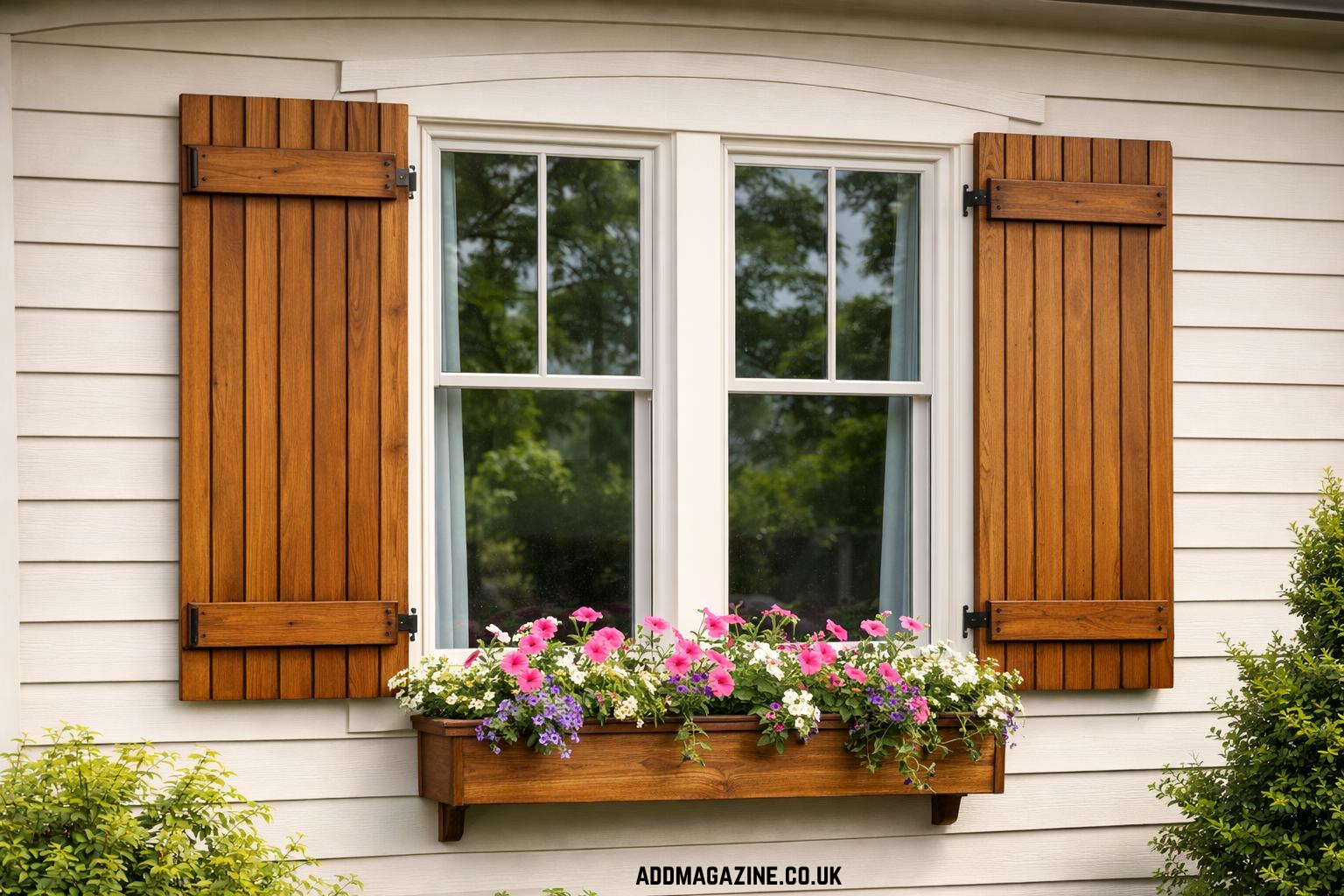
The price of custom exterior shutters depends on more than their height and width. Material, design, construction method, finish, hardware, shipping, and installation can all change the final amount.
Understanding these factors makes it easier to compare quotes and decide where spending more provides practical value. A lower initial price may not be the best choice if the shutters require frequent maintenance or need replacement after a few seasons.
Material Has a Major Impact
The selected material is one of the largest cost factors. Wood prices vary by species, availability, durability, and the amount of preparation required before finishing.
Cedar is widely used because it handles outdoor exposure well and has an attractive grain. Mahogany and other premium woods generally cost more but offer greater density and a refined appearance. Composite and synthetic shutters may cost more upfront than basic wood options, but they often require less maintenance.
When comparing materials, consider:
- Expected service life
- Resistance to moisture and insects
- Painting or staining requirements
- Suitability for the local climate
- Repair and replacement costs
Size and Quantity Affect Material Use
Larger shutters require more material, stronger construction, and additional labor. An unusually tall or wide panel may also need internal reinforcement to prevent sagging or warping.
The number of windows matters, too. Although ordering several matching pairs may create some production efficiency, the overall price will still rise with each additional shutter.
Measure every opening separately before you order exterior shutters. Small differences between windows can affect dimensions, especially on older homes where openings are not perfectly uniform.
Design Complexity Adds Labor
Simple board-and-batten shutters are often less labor-intensive than designs with raised panels, movable louvers, arches, cutouts, or detailed trim. Every added component requires accurate cutting, assembly, sanding, and inspection.
Historical reproductions can cost more because they may require unusual profiles, traditional joinery, or a close match to an existing shutter. The price reflects the time needed to reproduce those details, not simply the amount of material used.
Custom Dimensions Require Individual Work
Standard sizes can be produced repeatedly with the same setup. Custom measurements require separate planning, cutting, and quality checks for each opening.
Well-proportioned custom house shutters can be worthwhile when standard products would look too narrow, too short, or poorly aligned with the window. Accurate sizing matters most for arched windows, dormers, paired openings, and historic facades.
Finishes Change the Final Price
Unfinished shutters usually cost less at purchase, but the homeowner or contractor must apply a suitable exterior finish. This adds materials, labor, and preparation time.
Factory-applied paint or stain increases the initial cost but provides a controlled finish before installation. Multiple coats, custom colors, distressed treatments, or hand-applied stains may add further expense.
Ask whether the quoted finish includes primer, sealed edges, ultraviolet protection, and coverage on all sides.
Hardware and Installation Are Separate Costs
Functional shutters need appropriate hinges, holdbacks, fasteners, and sometimes locking bars. Decorative shutters may use simpler mounting systems, but the hardware should still suit the shutter’s weight and the wall material.
Installation costs depend on window height, accessibility, siding type, masonry, and whether you must remove old shutters. Upper-story work may require scaffolding or a lift, which can significantly increase labor charges.
Shipping Depends on Size and Distance
Shutters are large items, even when they are not especially heavy. Protective packaging, oversized freight charges, residential delivery fees, and shipping distance can affect the total.
Before approving a quote, confirm whether it includes crating, delivery, hardware, taxes, and installation. Comparing complete project costs gives a more accurate picture than comparing product prices alone.