Getting an offer on your jewelry can feel mysterious. Two buyers can look at the same ring and quote noticeably different numbers. While every buyer has its own approach, most offers are built from the same core factors. Knowing what those factors are makes it easier to understand a quote and compare one offer against another.
Gold and Other Precious Metals
For gold, the starting point is usually the metal itself. Buyers look at three things:
- Purity: Gold is measured in karats. 24k is pure gold, while 18k, 14k, and 10k contain progressively less gold mixed with other metals.
- Weight: Buyers weigh the metal, typically in grams or pennyweight, after accounting for any stones.
- Market price: The daily spot price of gold sets the baseline for what the metal is worth.
A buyer combines these to estimate the melt value, then applies its own margin to cover testing, refining, and business costs. If you own common pieces like chains or class rings, it helps to learn what it means to sell 14k gold so you understand how purity affects the number you see.
Diamonds
Diamond offers are more involved. Beyond the stone’s grading characteristics, buyers weigh practical resale questions. Is the stone a popular shape? Does it come with a report from a respected lab? Are there chips or visible flaws? Small accent diamonds often add relatively little to an offer, while a larger, well-cut center stone can make up most of a piece’s value. Buyers also think about how easily they could resell a stone, which can influence the quote.
Designer and Fine Jewelry
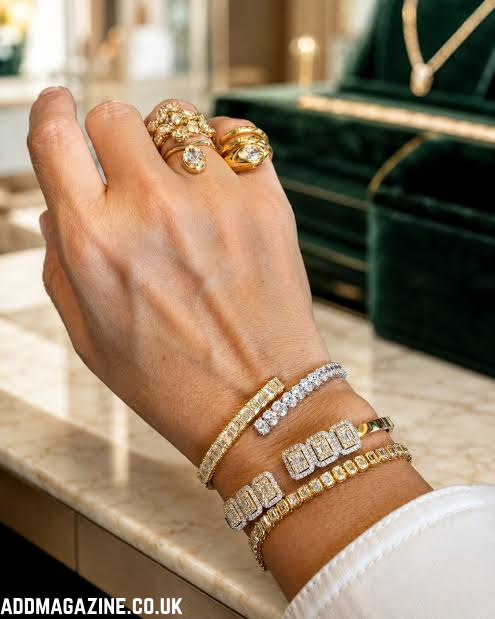
Some pieces are worth more than their materials. Signed jewelry from well-known houses, distinctive designs, and high-quality craftsmanship can push an offer above melt value. In these cases, buyers look for maker’s marks, serial numbers, original packaging, and paperwork that supports authenticity. Without those details, a designer piece may be valued closer to its materials alone.
Market Demand and Resale Plans
Even when the materials are identical, demand plays a role. Styles that are currently popular tend to be easier for a buyer to move, so they may earn a stronger offer. Dated designs are more likely to be priced with refining in mind. Jewelry buyers assess pieces according to their business models, with some focusing on resale appeal and others prioritizing precious metal content. These judgments vary from buyer to buyer, which is one reason quotes differ.
How to Read an Offer
When you receive a quote, ask how it was calculated. A transparent buyer should be able to tell you the karat, the weight, and how any stones were factored in. If you want a step-by-step look at the process from quote to payment, a guide on how to sell jewelry can help you know what to expect. Comparing a few offers, and understanding what is behind each one, puts you in a better position to choose with confidence.