
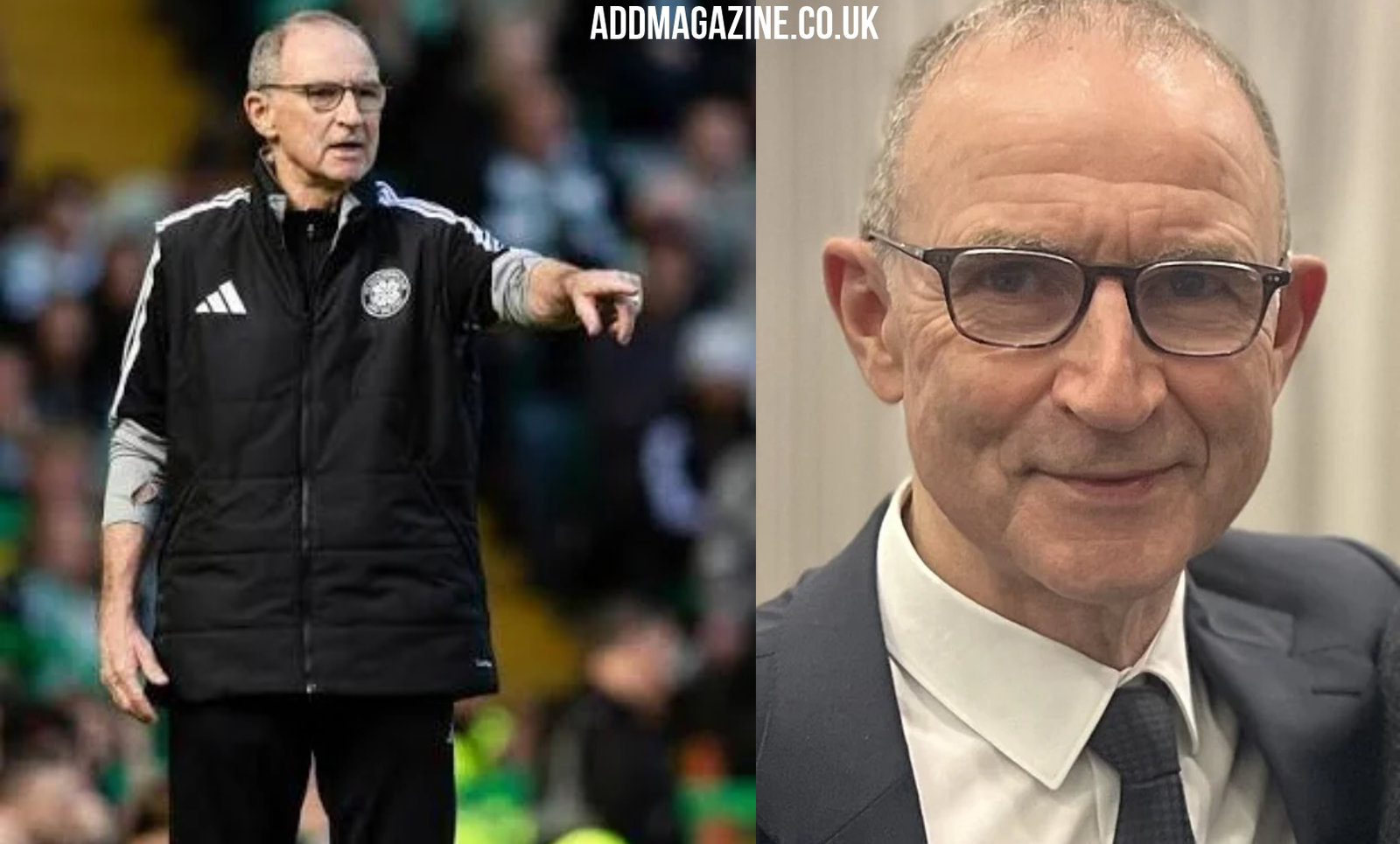
Martin O’Neill is a Northern Irish football manager and former professional midfielder whose career has included major achievements in English, Scottish and international football. Born on 1 March 1952 in Kilrea, County Londonderry, he first gained recognition as a player before developing a managerial career that lasted several decades. His experience includes winning European trophies with Nottingham Forest, leading Celtic to Scottish championships and guiding the Republic of Ireland into the knockout stages of a European Championship.
Throughout his career, O’Neill has worked in different football environments, from lower-division clubs to established teams competing in European tournaments. His reputation developed through his ability to organise players, improve team performances and build competitive squads. Although some managerial appointments ended in disappointment, his achievements at Leicester City, Celtic and Aston Villa established him as an important figure in British football.
His return to Celtic in 2025 introduced another chapter in his professional life. After initially accepting an interim role, he returned again in January 2026 and helped the Scottish club secure a domestic league and cup double. This success eventually led to his appointment as permanent manager in June 2026, more than twenty years after his original arrival at Celtic Park.
Martin O’Neill’s Early Life and Education
Martin Hugh Michael O’Neill grew up in a large family in Northern Ireland. He was the sixth of nine children, with four brothers and four sisters. Sport was an established part of his family background, particularly Gaelic football, which was widely played in his local community. His father helped establish a Gaelic Athletic Association club in Kilrea, while other family members participated in competitive Gaelic football at county level.
During childhood, O’Neill developed an interest in several sports rather than concentrating exclusively on association football. He played Gaelic football at school and represented local teams during his early years. His education included attendance at St Columb’s College in Derry and St Malachy’s College in Belfast, where he continued participating in organised sporting competitions.
His involvement in association football created complications because Gaelic Athletic Association regulations at the time restricted participation in sports classified as foreign games. When St Malachy’s reached the MacRory Cup final in 1970, questions arose about his eligibility because he had also played association football. The match was eventually moved to another venue, allowing him to participate.
O’Neill later enrolled at Queen’s University Belfast to study law. However, his academic plans changed when he received an opportunity to pursue professional football in England. He left university without completing his degree, choosing a sporting career that eventually brought him considerable success.
Beginning His Football Career in Northern Ireland
Before moving to England, O’Neill developed his football abilities with Rosario, a Belfast-based club. His performances attracted attention from Distillery, where he gained experience in the Irish League and began establishing himself as a promising midfielder.
A major development came during the 1970–71 season when Distillery reached the Irish Cup final against Derry City. O’Neill scored twice as his team secured a 3–0 victory, contributing directly to one of the club’s important domestic achievements. His performances demonstrated technical ability, attacking movement and confidence in competitive matches.
The Irish Cup victory also allowed Distillery to compete in European football. During a European Cup Winners’ Cup match against Barcelona in 1971, O’Neill scored despite his team losing 3–1. Playing against an internationally recognised opponent provided valuable experience and increased attention from professional scouts.
In October 1971, Nottingham Forest opened the door for him to begin a new chapter in English football. Accepting the transfer meant leaving Northern Ireland and adapting to a more demanding professional league structure. The decision became an important turning point in his career.
Nottingham Forest and European Cup Success
O’Neill joined Nottingham Forest during a difficult period for the club. Despite scoring on his league debut against West Bromwich Albion, he experienced relegation from the First Division during his first season. Forest spent several years attempting to return to the highest level of English football before a managerial appointment changed their direction.
Brian Clough became Forest manager in January 1975 and gradually transformed the team’s performances. Working alongside Peter Taylor, Clough developed a squad capable of competing against more established opponents. O’Neill became part of this rebuilding process, contributing as a midfielder who could support attacking movements while maintaining defensive responsibilities.
Forest achieved promotion to the First Division in 1977 and immediately exceeded expectations by winning the English league championship during the 1977–78 season. The achievement was particularly significant because the club had only recently returned to the top division. O’Neill played his part in a team recognised for its organisation, teamwork and ability to perform under pressure.
The club’s progress continued in European competition. Nottingham Forest claimed their first European Cup title in 1979 by beating Malmö, before securing a second consecutive triumph against Hamburg in 1980. Although injury affected O’Neill’s involvement in the first final, he participated in the second triumph. These achievements placed him among the players associated with one of the most successful periods in Forest’s history.
His experience under Clough also influenced his later managerial thinking. He witnessed how effective communication, player confidence and clearly defined responsibilities could transform a team’s performances. The lessons learned during these years became relevant when he eventually moved into management.
Later Playing Career and Retirement
After spending almost a decade with Nottingham Forest, O’Neill joined Norwich City in February 1981. His arrival brought additional experience to the midfield, although the club experienced relegation during the same season. He subsequently moved to Manchester City but struggled to establish a long-term position in the team.
A return to Norwich followed in 1982, and he helped the club achieve promotion to the First Division. His experience remained valuable, particularly in matches requiring tactical awareness and leadership. However, the later stages of his career became increasingly affected by physical difficulties.
O’Neill eventually joined Notts County, where he experienced further challenges as the club struggled in league competition. He later attempted to continue playing through opportunities at Chesterfield and Fulham, but persistent knee injuries restricted his progress.
By February 1985, the seriousness of his injury problems had made retirement unavoidable. Although his playing career ended earlier than he had hoped, he had already achieved major honours in England and Europe.
International Career With Northern Ireland
O’Neill also represented Northern Ireland at senior international level, earning 64 appearances and scoring eight goals between 1971 and 1984. His performances for the national team demonstrated his ability to compete against international opposition while fulfilling an important leadership role.
The most notable experience of his international career came during the 1982 FIFA World Cup in Spain. O’Neill captained Northern Ireland in a tournament where the team produced results that attracted attention across European football. Their achievement included defeating host nation Spain 1–0 in Valencia, a result remembered as one of Northern Ireland’s most important World Cup victories.
Northern Ireland progressed to the second group stage, competing against experienced international teams. O’Neill’s responsibilities as captain included helping organise teammates, maintain concentration and respond to difficult situations during matches. His international career contributed to his understanding of leadership and preparation, qualities that later became important in coaching.
Martin O’Neill’s First Steps Into Football Management
Following retirement, O’Neill spent time working outside professional football before beginning his managerial career with Grantham Town in 1987. He also had a short spell at Shepshed Charterhouse, gaining practical experience in the responsibilities involved in coaching, recruitment and managing players.
His first major managerial opportunity arrived in February 1990 when Wycombe Wanderers appointed him. At the time, Wycombe competed outside the Football League and were attempting to establish themselves among the stronger teams in non-league football.
O’Neill gradually improved the squad through careful organisation and a consistent approach to player preparation. Wycombe became increasingly competitive and eventually achieved promotion to the Football League in 1993, a historic moment for the club. Another promotion followed in 1994, demonstrating that the team’s initial success was supported by continued progress.
During his time at Wycombe, the club also won the FA Trophy twice, in 1991 and 1993. These achievements attracted interest from clubs competing at higher levels and established O’Neill as a manager capable of producing results with relatively limited resources.
Leicester City and Major Domestic Trophies
After briefly managing Norwich City in 1995, O’Neill accepted the managerial position at Leicester City in December of the same year. Leicester were competing in the second tier of English football and wanted to secure promotion to the Premier League.
His first season ended successfully when Leicester won promotion through the play-offs. O’Neill subsequently developed a competitive Premier League team built around disciplined defending, effective midfield organisation and attacking players capable of making an impact in important matches.
Several players became closely associated with Leicester’s progress under his leadership, including Matt Elliott, Neil Lennon, Muzzy Izzet and Emile Heskey. Their contributions helped the team maintain league stability while competing for domestic trophies.
Leicester won the Football League Cup in 1997 after defeating Middlesbrough in a replayed final. The team returned to the competition’s final in 1999 but lost to Tottenham Hotspur. Another opportunity followed in 2000, when Leicester defeated Tranmere Rovers to secure a second League Cup trophy under O’Neill.
These results strengthened his managerial reputation. Leicester also achieved consistent Premier League finishes, demonstrating the effectiveness of his approach across several seasons. He eventually left the club in 2000 to accept the Celtic managerial position.
Celtic and the Transformation of a Scottish Football Club
O’Neill arrived at Celtic in June 2000 when the club needed significant improvement to compete consistently with Rangers. Celtic had finished the previous season well behind their Glasgow rivals, increasing expectations surrounding the new manager.
He began rebuilding the team through tactical adjustments and important player recruitment. Chris Sutton, Neil Lennon and Alan Thompson became central figures, while Henrik Larsson continued to provide an important attacking contribution.
The changes produced immediate results. Celtic defeated Rangers 6–2 in August 2000 and maintained strong domestic performances throughout the season. By the end of the campaign, the club had won the Scottish Premier League, Scottish Cup and Scottish League Cup, completing a domestic treble.
O’Neill continued developing the squad, helping Celtic retain the league championship during the following season. His management encouraged attacking football supported by defensive organisation and strong performances from experienced players.
The club also became increasingly competitive in European tournaments, regularly facing opponents from major continental leagues. These achievements helped restore Celtic’s confidence and strengthened its reputation beyond Scottish football.
The 2003 UEFA Cup Final and Celtic’s European Progress
One of O’Neill’s most important managerial achievements occurred during the 2002–03 season when Celtic reached the UEFA Cup final. The club progressed through several demanding matches against teams including Blackburn Rovers, Liverpool and Boavista.
The final took place in Seville against Porto, managed by José Mourinho. Celtic competed strongly, with Henrik Larsson scoring twice, but Porto eventually won 3–2 after extra time. Although the result was disappointing, reaching the final represented Celtic’s strongest performance in a major European final for more than three decades.
O’Neill continued to deliver domestic success and guided Celtic to another Scottish league championship during the 2003–04 season. His first managerial period ended in May 2005 when he stepped away from football to support his wife, Geraldine, during her treatment for lymphoma.
Across five seasons, Celtic won three league titles, three Scottish Cups and one Scottish League Cup. The achievements established O’Neill as one of the club’s most successful modern managers.
Aston Villa and Premier League Improvement
O’Neill returned to management in August 2006 when Aston Villa appointed him. The club wanted to become more competitive in the Premier League and improve its league position after several inconsistent seasons.
He gradually developed the squad through recruitment and tactical changes, placing particular emphasis on pace, direct attacking movements and disciplined team organisation. Players such as Ashley Young, James Milner, Gabriel Agbonlahor and Gareth Barry contributed to the club’s progress.
Villa improved their performances and finished sixth in the Premier League for three consecutive seasons between 2008 and 2010. Although qualification for the Champions League remained beyond their reach, the results represented a sustained period of improvement.
The club also reached the 2010 League Cup final against Manchester United. Villa took an early lead but eventually lost 2–1, missing an opportunity to secure a major domestic trophy.
O’Neill resigned in August 2010 following disagreements about the club’s future direction and financial arrangements. His departure occurred shortly before the beginning of the new Premier League season.
Sunderland and His Return to Nottingham Forest
In December 2011, O’Neill became manager of Sunderland, a club he had supported during his childhood. His appointment initially improved the team’s performances, and Sunderland recorded important victories against opponents including Manchester City and Liverpool.
However, the team’s form declined during the following season. Sunderland struggled to maintain consistency and became involved in another relegation battle. O’Neill was dismissed in March 2013 after a disappointing series of results left the club close to the relegation places.
In January 2019, he returned to Nottingham Forest as manager, creating a professional reunion with the club where he had enjoyed major success as a player. The appointment attracted interest because of his previous achievements at the City Ground.
However, his managerial period lasted only a few months. Nottingham Forest finished ninth in the Championship, and O’Neill was dismissed in June 2019. His departure demonstrated the challenges involved in managing clubs with demanding expectations and limited patience for inconsistent performances.
Managing the Republic of Ireland National Team
O’Neill became Republic of Ireland manager in November 2013, with former international midfielder Roy Keane appointed as his assistant. The role required a different approach from club management because international teams have limited preparation time between competitive fixtures.
His greatest achievement with Ireland was securing qualification for UEFA Euro 2016. The team defeated Bosnia and Herzegovina in the qualifying play-offs, earning a place at the tournament in France.
During the competition, Ireland defeated Italy 1–0 in their final group match, with Robbie Brady scoring the winning goal. The result allowed the team to progress to the knockout stage, where they faced host nation France.
Ireland initially took the lead against France but eventually lost 2–1. Despite the elimination, reaching the round of 16 represented an important achievement for O’Neill and the national team.
The following World Cup qualification campaign ended unsuccessfully when Ireland were defeated by Denmark in the play-offs. Results later deteriorated during the UEFA Nations League, and O’Neill left his position in November 2018.
Martin O’Neill’s Return to Celtic in 2025 and 2026
Following Brendan Rodgers’ departure in October 2025, Celtic brought O’Neill back to take temporary charge of the team.. His return attracted attention because he had previously enjoyed considerable success with the club and had not managed a professional team since leaving Nottingham Forest in 2019.
Despite the long absence from club management, he quickly improved Celtic’s performances. His brief appointment included domestic victories and progress in cup competition, demonstrating that his experience remained valuable.
Wilfried Nancy replaced him in December 2025, but the new manager’s appointment lasted only 33 days. Following Nancy’s dismissal, Celtic turned to O’Neill again in January 2026.
The club faced a demanding Scottish Premiership title race, requiring improved consistency during the remaining matches. O’Neill helped Celtic recover ground in the standings and eventually secure the championship after defeating Heart of Midlothian 3–1 on the final day.
Celtic followed that achievement by defeating Dunfermline Athletic 3–1 in the Scottish Cup final, completing a domestic double. The results added another league title and cup victory to O’Neill’s Celtic record.
On 11 June 2026, Celtic confirmed his appointment as permanent manager on a one-year contract with an option for a further season. His return demonstrated the importance of his established relationship with the club and his ability to work within a familiar football environment.
Coaching Philosophy and Management Approach
Throughout his managerial career, O’Neill has generally favoured a practical approach based on player confidence, team discipline and effective organisation. His teams have often demonstrated physical commitment, tactical awareness and an ability to compete against opponents with greater financial resources.
Rather than concentrating exclusively on complicated systems, he has placed importance on assigning players clear responsibilities. His management has also involved developing strong relationships within the dressing room and encouraging individuals to contribute to collective objectives.
The influence of Brian Clough can be recognised in aspects of his leadership, particularly his emphasis on belief, communication and maintaining authority. However, O’Neill has also developed his own methods through experiences across different leagues and competitions.
His managerial history includes unsuccessful periods, particularly at Sunderland and Nottingham Forest, where results did not meet expectations. These experiences demonstrate that his methods have sometimes faced limitations when applied to different squads and club circumstances.
Martin O’Neill’s Personal Life and Interests
O’Neill has generally kept his family life separate from his professional responsibilities. He is married to Geraldine, and the couple have two daughters. His decision to leave Celtic in 2005 reflected the importance he placed on family responsibilities during his wife’s illness.
Outside football, he has maintained an interest in law and criminology, subjects connected to his earlier university education. Although he did not complete his law degree, his interest in legal history continued throughout his professional life.
He has also worked as a football analyst for television broadcasters, discussing major international tournaments and European club competitions. His experience as both a player and manager has enabled him to provide detailed perspectives on tactical decisions and football leadership.
In November 2022, O’Neill published his autobiography, On Days Like These, discussing different stages of his career and his experiences working with influential figures in football. He later began co-hosting The Football Authorities podcast alongside commentator Clive Tyldesley, examining football developments and responding to questions from listeners.
Awards, Honours and Professional Recognition
O’Neill has received recognition for achievements in both playing and management. His honours as a footballer include the English First Division championship and two European Cups with Nottingham Forest, while his managerial achievements include domestic cups with Leicester City and multiple Scottish championships with Celtic.
His contributions to football were officially recognised when he received an MBE in 1983. He was later appointed an OBE in 2004, reflecting his continued involvement and achievements within the sport.
He has also received recognition from football organisations and supporters, particularly those associated with Nottingham Forest and Celtic. His career achievements span more than five decades and demonstrate the range of responsibilities he has undertaken in professional football.
Martin O’Neill’s Legacy in British and Irish Football
O’Neill’s professional legacy includes success across different levels of football. At Wycombe Wanderers, he helped a non-league club reach the Football League. At Leicester City, he secured promotion and domestic trophies while maintaining Premier League stability. His achievements at Celtic included Scottish championships, domestic cup victories and a European final appearance.
His international management experience also contributed to his reputation, particularly Ireland’s qualification for Euro 2016 and progression into the knockout rounds.
The success of his return to Celtic in 2026 provided another important achievement late in his managerial career. It showed that his leadership experience could still influence results in a competitive football environment.
Although his career has included dismissals, disagreements and unsuccessful periods, his overall record reflects sustained involvement at important levels of British and Irish football.
Conclusion
Martin O’Neill’s career has developed through several stages, beginning with his early football experiences in Northern Ireland and progressing to European success as a Nottingham Forest player. His later transition into management brought achievements with Wycombe Wanderers, Leicester City, Celtic and the Republic of Ireland.
His first period at Celtic established him as an important figure in Scottish football, while his return in 2026 added another domestic double to his record. His work at Aston Villa and Leicester City also demonstrated his ability to develop teams capable of competing consistently in England.
Beyond trophies and league positions, his career reflects the importance of leadership, organisation and understanding different football environments. His experiences as a player, club manager and international coach have given him a lasting place in the history of British and Irish football.