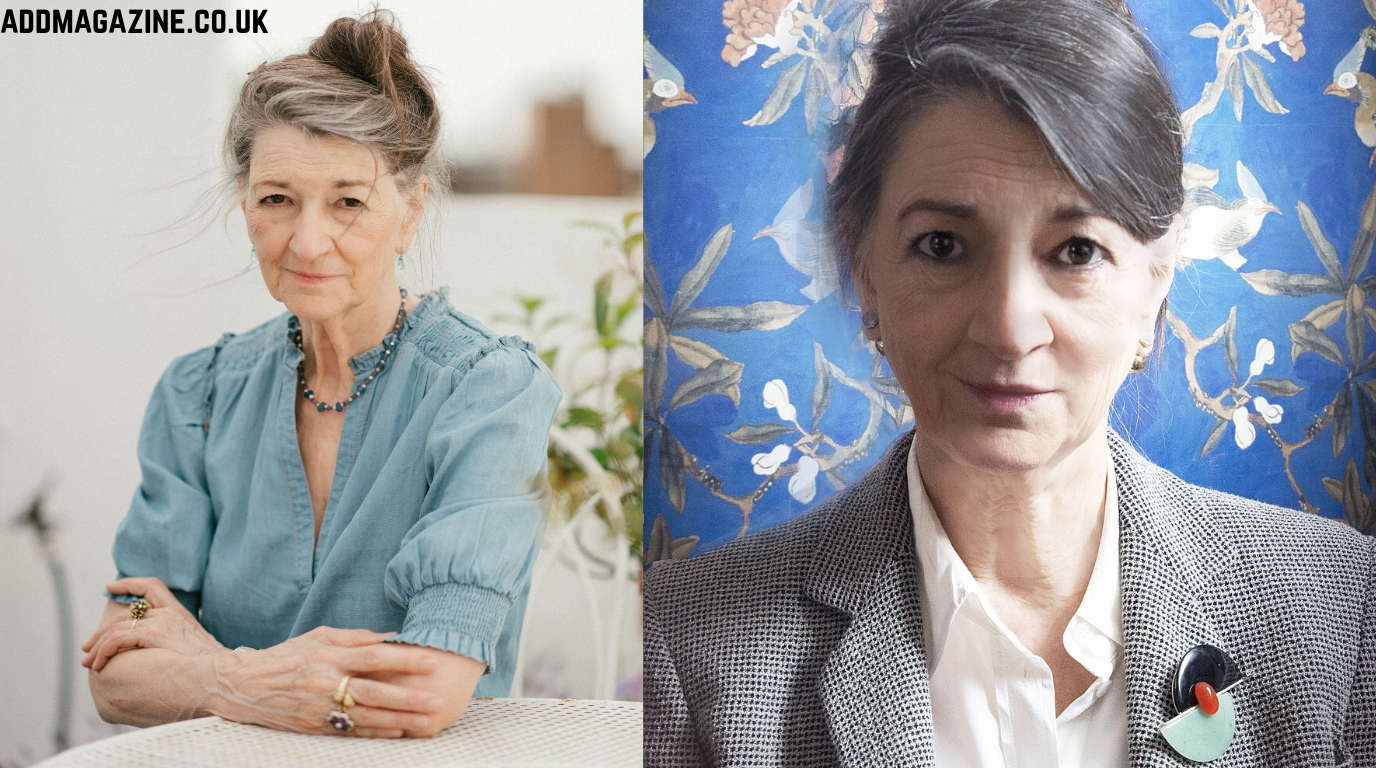
Marina Warner built her career around questions that conventional historical studies often leave unanswered. She examines why certain fictional characters survive for centuries, how religious images influence society and what traditional stories reveal about the people who originally shared them. Her publications bring historical evidence into conversations about imagination, gender and cultural identity.
Born on November 9, 1946, Dame Marina Sarah Warner is a British writer whose professional work includes novels, cultural criticism, historical studies and short fiction. Although her interests cover several areas of literature, she is particularly associated with the study of mythology and the historical representation of women.
Childhood Between Different Cultures
Warner’s family background brought together English and Italian traditions. Her father, Charles Esmond Henry Pelham Warner, was involved in the bookselling business, while her mother, Emilia Terzulli, was Italian. During her childhood, the family lived in Egypt, where she experienced a social environment considerably different from that of Britain.
These family circumstances became important to her later writing. Questions about nationality, family memories and belonging appear throughout her literary career. Her childhood experiences also supplied material for her autobiographical book Inventory of a Life Mislaid, which reconstructs aspects of her family’s past through personal belongings and remembered events.
Education and Entry Into Publishing
Warner completed her university education at Lady Margaret Hall, Oxford, studying French and Italian. Her familiarity with European languages enabled her to explore literature beyond English-language publications and consider how cultural ideas develop across national boundaries.
Magazine journalism occupied the early years of her professional life. She worked at Vogue before expanding her activities into literary criticism and independent authorship. Her subsequent contributions to newspapers and literary journals addressed books, exhibitions, historical subjects and developments in cultural life.
Looking at History Through Female Figures
Much of Warner’s historical research examines the difference between women’s actual experiences and the identities assigned to them through cultural traditions. She investigates how religious institutions, artists and writers have presented femininity across different periods.
Her 1976 publication, Alone of All Her Sex, studies the cultural position of the Virgin Mary. Rather than approaching Mary exclusively as a religious figure, Warner considers how devotion to her developed alongside particular expectations of women. She continued examining female representation in subsequent works, including her study of Joan of Arc.
Why Fairy Tales Became Central to Her Work
For Warner, a traditional tale can preserve information that rarely appears in official historical documents. Stories about abandoned children, difficult marriages and dangerous households may reflect circumstances familiar to the communities that produced them.
She also pays attention to the individuals responsible for passing these narratives forward. Before printed books became widely available, storytelling often took place within domestic environments. Warner considers how women participated in this exchange of knowledge and how their contributions were sometimes overlooked when oral narratives entered published literature.
The Ideas Behind From the Beast to the Blonde
Warner’s 1994 book From the Beast to the Blonde investigates the relationship between traditional narratives and their historical surroundings. Its subject extends beyond the adventures of fictional princesses, witches and magical creatures to include the circumstances of the storytellers themselves.
The book encourages readers to consider why particular characters receive sympathy while others are presented as threatening. It also examines how expectations surrounding marriage, beauty and female independence influence the construction of familiar plots. Through these observations, Warner connects children’s literature with questions of social history.
Exploring Transformation in Fantastic Metamorphoses
Physical transformation provides the central subject of Fantastic Metamorphoses, Other Worlds, which appeared in 2002. Warner examines fictional situations in which the distinction between human beings and other forms of existence becomes uncertain.
Such narratives allow writers to explore experiences that ordinary descriptions cannot easily communicate. A character’s transformation might express a loss of freedom, a changing identity or resistance to established rules. Warner studies these possibilities through examples taken from literature, mythology and artistic traditions.
Phantasmagoria and the Representation of Spirits
In 2006, Warner published Phantasmagoria, a study concerned with the human desire to give visible form to things that cannot ordinarily be seen. Its subjects include supernatural appearances, spiritual beliefs and methods of producing unusual visual experiences.
The book places older beliefs alongside developments in image-making technology. It considers how inventions changed the presentation of ghosts and other imagined beings without necessarily removing people’s fascination with them. This combination of cultural history and visual analysis demonstrates the range of Warner’s research.
Stranger Magic and Stories Across Borders
With Stranger Magic, Warner turned her attention to the collection commonly known as the Arabian Nights. Published in 2011, the book investigates how these narratives travelled between languages and influenced literary imagination outside their original cultural settings.
Warner considers the significance of magical objects, extraordinary journeys and encounters with unfamiliar beings. She also examines how translation changes the relationship between a narrative and its audience. Her discussion presents storytelling as a form of cultural exchange rather than an activity restricted by geographical boundaries.
Once Upon a Time and Accessible Literary History
Readers seeking a shorter introduction to Warner’s research can explore Once Upon a Time: A Short History of Fairy Tale. Published in 2014, it explains the characteristics that distinguish fairy tales from other narrative traditions.
The book considers how these stories accommodate changing interpretations without losing their recognisable features. Warner discusses their continued presence in literature and popular culture, showing how familiar narrative patterns can be adapted to address different social concerns.
Her Contributions to Novels and Short Fiction
Warner’s creative writing allows her to investigate historical and personal experiences without following the restrictions of academic research. Her novel The Lost Father draws upon family history, while Indigo develops a fictional exploration of colonialism and inherited identities through material connected with Shakespeare’s The Tempest.
Her short story collection Fly Away Home appeared in 2015. These narratives demonstrate her interest in the uncertain territory between ordinary experience and imagination. Rather than always explaining unusual events, her fiction often leaves readers to consider several possible interpretations.
Public Broadcasting and the Reith Lectures
In 1994, Warner presented a series of BBC Reith Lectures called Managing Monsters: Six Myths of Our Time. The broadcasts examined how inherited cultural ideas continue to influence public discussions and collective attitudes.
Her participation brought subjects normally associated with literary scholarship to a broader audience. She demonstrated that mythology is not simply a record of ancient beliefs but can also provide a framework for examining contemporary assumptions about identity, authority and human behaviour.
Personal Relationships and Family Life
Warner was married to journalist and author William Shawcross. Their son, Conrad Shawcross, pursued a professional career in sculpture, developing installations that incorporate mathematical structures, movement and scientific concepts.
Warner’s partner is mathematician Graeme Segal. Despite her connections with individuals working in other intellectual and creative fields, her professional reputation has developed independently through decades of publishing, teaching and historical investigation.
Sanctuary and the Social Purpose of Storytelling
Warner’s later research has increasingly addressed displacement and the meaning of protection. Her book Sanctuary: Ways of Telling, Ways of Dwelling considers how communities understand refuge and the responsibilities associated with offering safety to others.
She has also developed storytelling activities through Stories in Transit, an initiative involving people affected by migration. These activities extend her interest in literature beyond published books by creating opportunities for participants to communicate experiences through shared imaginative work.
Literary Awards and Academic Recognition
Warner’s contributions have received recognition from institutions concerned with literature, education and the humanities. In 2015, she received the Holberg Prize and was appointed Dame Commander of the Order of the British Empire.
Alongside her writing, she has undertaken university teaching and served as president of the Royal Society of Literature. Her professional achievements reflect a career that has developed across academic research, creative writing and public education rather than within a single literary category.
Conclusion
Marina Warner’s literary contribution lies in her examination of the historical information concealed within imaginative narratives. Her books investigate how communities communicate beliefs, establish expectations and preserve experiences through fictional characters and symbolic images.
From religious history to supernatural literature, her research encourages a closer examination of familiar cultural material. Her novels, essays and historical publications collectively offer readers different ways of understanding the relationship between storytelling and human experience.