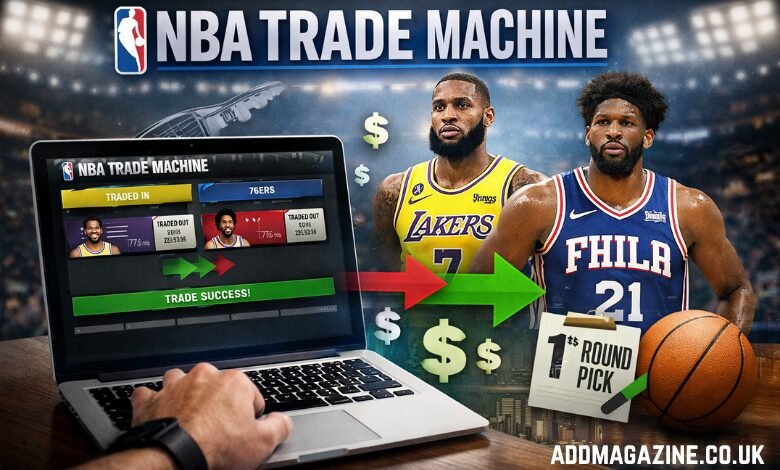
The NBA Trade Machine is an online tool used by fans, analysts, and enthusiasts to simulate potential player trades within the National Basketball Association (NBA). It allows users to propose trades between teams while ensuring that all the financial and contractual rules of the NBA are respected. In essence, the NBA Trade Machine helps explore trade scenarios, making it easier for people to understand how different player exchanges could impact teams and their rosters.
This tool has become an essential part of NBA discussions, especially during the trade deadlines and offseason, when trades and roster moves are highly anticipated. It provides an interactive platform to visualize and evaluate how teams might reshape their lineups, assess the impact of those changes, and understand the constraints posed by the NBA’s salary cap system.
Understanding the Basics of the NBA Trade Machine
At its core, the NBA Trade Machine functions as a simulator. Fans and analysts can input different trade scenarios, including player names, teams, and contract details. Once the trade is proposed, the system checks if the transaction works under the NBA’s salary cap rules and trade regulations.
The NBA has a complex set of financial rules that govern player contracts, salary caps, and the luxury tax threshold. The Trade Machine takes these rules into account, ensuring that any trade generated complies with the league’s guidelines. For example, a trade must balance the salaries of the involved players, as the NBA requires that the combined salaries of traded players be within a certain percentage of each other. This is important because the salary cap is designed to maintain competitive balance among the league’s teams.
The tool can also simulate other aspects of a trade, such as draft picks, player options, and trade exceptions. These variables allow users to fine-tune their trade scenarios and see how different deals can be structured to benefit both teams.
Key Features of the NBA Trade Machine
Salary Cap Compliance
One of the most critical features of the NBA Trade Machine is its ability to ensure that the proposed trade complies with the NBA’s salary cap rules. The NBA operates with a soft salary cap, which allows teams some flexibility to exceed the cap under certain conditions, such as through exceptions (e.g., the mid-level exception, bi-annual exception, etc.). The Trade Machine checks that the total salaries of the players involved in the trade meet the cap requirements, either by matching the salaries directly or falling within a specific range.
Trade Scenarios with Multiple Teams
The NBA Trade Machine isn’t limited to simple one-on-one trades between two teams. It also allows users to simulate trades involving multiple teams, which is useful for more complex deals. These multi-team trades can involve players, draft picks, and salary cap considerations, offering a more comprehensive view of how large trades could unfold.
Draft Picks and Trade Exceptions
In addition to player swaps, the NBA Trade Machine also allows users to include draft picks and trade exceptions in their scenarios. Draft picks are an important asset in trades, as they can help teams build for the future or add value to a deal. Trade exceptions, which arise when a team sends out more salary than it receives in a trade, allow teams to acquire players without matching salaries. The Trade Machine accommodates these elements, helping users see the full picture of potential trades.
Player Contracts and Options
Player contracts are complex, with varying lengths, salaries, and clauses. For example, some contracts include player or team options, which give the player or team the right to extend or opt out of the deal. The NBA Trade Machine takes these details into account when evaluating a trade, ensuring that the trade works for both teams, considering contract lengths, options, and other financial elements.
User-Friendly Interface
The Trade Machine is designed to be user-friendly, allowing anyone, regardless of their familiarity with NBA contracts or trade rules, to simulate trades with ease. The interface typically consists of dropdown menus for team selection, player rosters, and salary information. This makes the tool accessible to a wide audience, from casual fans to more serious analysts.
How the NBA Trade Machine Works
Using the NBA Trade Machine is a straightforward process. Here’s how it typically works:
Select the Teams
Users begin by selecting the NBA teams involved in the trade. The Trade Machine usually allows for a range of team choices, from the 30 NBA teams to the minor league teams, if applicable. Once the teams are selected, the users can move on to the player selection process.
Choose the Players
After choosing the teams, users can select the players they want to trade. The Trade Machine lists all players under contract for each team, showing their salaries and contract lengths. Users can either manually search for a player or select them directly from a list. For more advanced users, the Trade Machine allows the inclusion of additional trade variables like draft picks and trade exceptions.
Check Salary Cap Compliance
Once the players are selected, the Trade Machine will check if the trade works within the NBA’s salary cap rules. If the trade is not salary-cap-compliant, the tool will notify the user and suggest ways to adjust the trade, such as adding or removing players or draft picks. This ensures that the trade follows the NBA’s financial regulations.
Evaluate the Trade
After the trade is processed, the user can see a breakdown of the deal. This typically includes an analysis of how the trade impacts each team’s roster, salary cap, and future flexibility. Some versions of the NBA Trade Machine will also provide a trade grade, assessing whether the trade would be beneficial for both teams involved.
Simulate and Share
Once the trade is confirmed as valid, users can simulate how the trade might impact team dynamics, player performance, and financial standings. Some NBA Trade Machines allow users to share their trade scenarios with others, enabling a broader conversation around the proposed moves.
The Importance of the NBA Trade Machine
The NBA Trade Machine holds significant value, both for fans and analysts. It serves as a valuable resource for exploring trade possibilities, helping fans understand the financial and strategic considerations behind player moves. Here are a few reasons why it has become an integral part of NBA discussions:
Interactive Fan Engagement
The NBA Trade Machine allows fans to engage with the game in a new way. Instead of merely discussing trades on social media or forums, fans can actively participate in the process by testing out different scenarios. This gives them a deeper understanding of how trades work and what factors teams need to consider when making deals.
Simplifying Complex Trades
NBA trades can be incredibly complex, especially when multiple players, draft picks, and trade exceptions are involved. The Trade Machine simplifies these complexities by providing an easy-to-use interface that automatically calculates the salary cap implications and contract details. This makes it easier for fans and analysts to explore multiple trade scenarios without needing to be experts in NBA contracts.
Analyzing Team Needs and Roster Construction
Teams are constantly looking for ways to improve their rosters, whether through trades, the draft, or free-agent signings. The NBA Trade Machine is a powerful tool for simulating how trades might help a team fill specific needs, such as adding a star player, bolstering defense, or acquiring a reliable bench player. It also allows fans to visualize how trades could impact team chemistry and performance.
Providing Insight for Media and Analysts
Media members, analysts, and even front-office personnel use the NBA Trade Machine to evaluate potential trades. It gives them a hands-on way to test ideas and see how they fit within the league’s financial structure. Analysts can use the tool to assess the impact of trade rumors and evaluate the potential success of player moves.
Tracking the NBA’s Evolving Landscape
The NBA is a dynamic league, with teams constantly adjusting their rosters to compete for championships. The NBA Trade Machine allows fans to track this evolution in real-time, testing the impact of trade scenarios and speculating on how changes in the roster might affect a team’s championship aspirations.
Limitations of the NBA Trade Machine
While the NBA Trade Machine is a powerful tool, it is not without its limitations. The most significant drawback is that it only focuses on the financial and contractual side of trades, without considering other intangible elements such as player personalities, locker room chemistry, or coaching strategies. Additionally, the NBA Trade Machine doesn’t account for factors like injuries or team dynamics, which can significantly impact a trade’s success or failure.
Moreover, the Trade Machine cannot predict how a trade will affect player performance or team results. While it can simulate the financial and roster changes, it cannot predict how well players will mesh on the court. These are elements that only time and actual gameplay can reveal.
Conclusion
The NBA Trade Machine is an invaluable tool for exploring potential trades, understanding salary cap complexities, and engaging with the broader NBA community. Whether you’re a casual fan or a seasoned analyst, it offers a simple and interactive way to test trade scenarios and gain insight into the inner workings of the NBA. By offering real-time simulations of trades, it allows users to engage with the game on a deeper level and provides a platform for creative and informed trade discussions. However, like all simulations, it is not without its limitations and should be used alongside other forms of analysis to fully understand the impact of any proposed trades.