Railings are necessary border and perimeter solutions that are utilised in residential, commercial, and civic areas in the UK. They are a mixture of security, safety, and beauty, hence are an overly favoured product in gardens, schools, parks, estates, and corporate landscapes. The railings that are made out of high-quality galvanised steel create a durable and long-lasting system that can resist the British weather and other day-to-day usage.
What Are Railings?
Railings are straight, vertical structures that outline property line boundaries, establish territory, and beautify the appearance. Railings, unlike the solid fences, give visibility and control over the boundaries. The most common types of railings used in the UK are made of galvanised steel and coated with protective Polyester Powder Coating (PPC) to prevent corrosion, weathering, and wear.
Key Benefits of Installing Railings
Security & Safety
The modern metal fences offer an idea of high strength to the defence of children, property, and the general population. Vertical spacing and rail design of the top-rail makes it less climbable but open to sight.
Sturdiness and Resistance to the weather
Galvanised steel with high-quality powder coating provides a high level of corrosion resistance, which means that railings are perfect to use in the UK climate, which is characterised by fluctuations.
Aesthetic Versatility
Railings are available in various designs, including the traditional ball top to modern flat top and EnviroRail® Sustainable designs, and they are designed to easily blend with the architecture and landscape.
Low Maintenance
Galvanised railings, once fixed, need little maintenance after installation as opposed to wood or untreated alternatives, and this saves money and time in the long run.
Types of Railing Systems
Standard Railing Systems
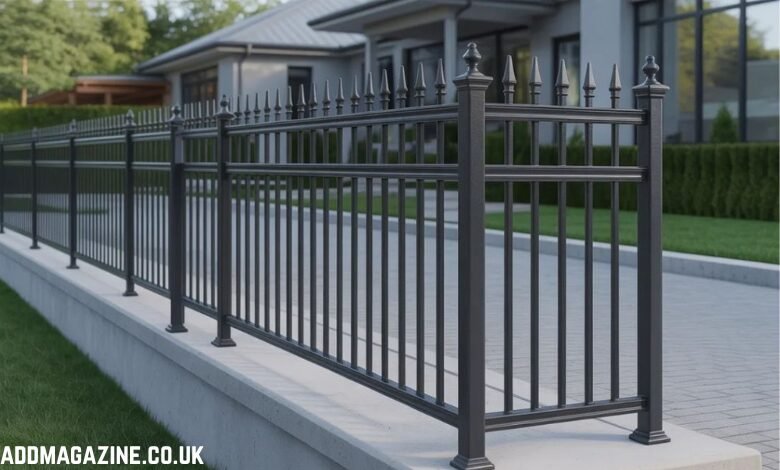
These are traditional galvanised steel railings that have had different styles that include bow top, vertical bar, ball top, and flat-top style. They are appropriate in gardens, schools, parks, and residential places.
Bow Top Railings
The top of the Bow Top railings is curved, thus giving them a visual appeal, and they are the best in places of heavy foot traffic. The lack of sharp points enhances the safety of children, and this can be used in playgrounds and other social areas.
Flat Top Railings
The flat-top railings give a modern look and clean edge that suits modern houses. Their horizontal top bar provides subtle lines that are clean, and they complement the minimalist garden and boundary designs.
Vertical Bar Railings
Vertical Bar railings have close spacing of upright bars that provide strength, visibility, and successful perimeter definition. They come in different heights and with dig-in or bolt-down posts, thus very versatile.
EnviroRail(r) Green Railings
EnviroRail® systems consider both sustainability and strength and performance. Reduced-weld design and precision laser-cutting minimise manufacturing carbon footprint, and the PPC finishes prevent corrosion. These are quite appropriate for eco-friendly developments.
Fencing and Ornamental Railings
Estate railings integrate the beauty of the classic fencing, as well as the contemporary, galvanised steel durability. The systems provide decorative value to wealthy properties, rural or heritage sites, as well as providing good boundary delimitation.
Matching Gates and Installation Options
Single or two-leaf gates are normally used to ensure that railing systems have similar aesthetic value. Installation may be through dig-in posts, which are fixed in the ground, or by the use of bolt-down posts, which can be fitted on paved surfaces.
Practical Applications of Railings
Railings are used in various locations:
- Home gardens and lawns – improve the home aesthetics and demarcation of the property.
- Schools and playgrounds – secure and aesthetically appealing grounds.
- Walkways and public parks – mark eliminate danger.
- Commercial and Heritage sites– combine security and traditionally designed railings.
Choosing the Right Railings for Your Project
Assess Your Needs:
Determine the need for railings due to security, aesthetic, safety, or sustainable reasons.
Material & Finish:
PPC galvanised steel guarantees extended life and longevity in the UK climate.
Compliance & Safety Standards:
Ensure spacing and height comply with public safety standards, especially in playgrounds or schools.
Railings Maintenance Guide
- Frequent Washing: Clean with a light detergent and water.
- Checks: Loose fixings, post stability.
- Protective Coating: Repaint the areas when finishes become worn out with time.
Planned maintenance assists in increasing the life of your railing system.
Frequently Asked Questions (FAQs).
Q: Are galvanised railings resistant to corrosion?
A: Yes. PCA has better resistance to rust and weathering and is made of galvanised steel and PPC.
Q: Can railings be customised?
A: A lot of suppliers have PPC colour options and allow custom sizing to fit the requirements of the project.
Q: What can be installed?
A: There are dig-in posts when used in the soil, and bolt-down posts when used on paved or concrete areas.
Conclusion
Selecting the appropriate railing system in the UK is based on the awareness of the environmental needs, design choice, security issues, and sustainability. Regardless of whether you use standard galvanised metal railings, environmentally friendly EnviroRail® systems, or ornamental estate railings, galvanised metal railings are of high quality, secure, and help increase durability and appearance in a large number of applications.