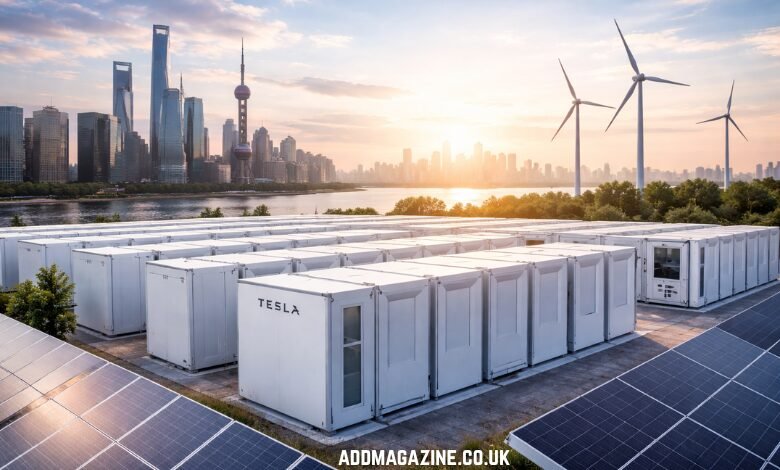
Tesla’s foray into the realm of large-scale energy storage has gained significant attention in recent years, particularly with its ambitious battery projects in China. The company, widely recognized for its electric vehicles, has increasingly positioned itself as a global leader in sustainable energy solutions. In 2025, Tesla made a noteworthy move by securing a substantial agreement to develop a grid-scale battery storage facility in Shanghai, marking a significant expansion of its energy division and underlining its commitment to contributing to China’s energy transformation.
Overview of the Tesla-China Partnership
In June 2025, Tesla announced a strategic partnership with China Kangfu International Leasing and the Shanghai municipal government to develop a $556.8 million battery storage facility. This collaboration aims to enhance the city’s energy infrastructure by integrating more renewable energy sources, including solar and wind, into the grid. The facility is Tesla’s first large-scale grid storage project in China and represents a new phase in the company’s broader plan to establish a more resilient and sustainable global energy network.
The core technology behind this project is Tesla’s Megapack, a powerful energy storage solution designed to stabilize electrical grids by storing excess renewable energy for later use. The Shanghai facility will harness the Megapack to provide critical energy storage services, ensuring that power is available when demand peaks or when renewable generation is low. By utilizing Tesla’s advanced software, the system can perform dynamic dispatch and predictive load balancing, helping to reduce grid instability caused by the intermittent nature of renewable energy sources.
The Role of Tesla’s Megapack Technology
Tesla’s Megapack is a key component in the company’s strategy to revolutionize energy storage. Each Megapack unit can store up to 3.9 megawatt-hours (MWh) of energy, allowing the system to provide substantial storage capacity. The technology is already deployed across various countries, including the United States and Australia, but the Shanghai project represents its first major deployment in China.
The Megapack’s capabilities are designed to help cities manage peak demand and improve the reliability of power grids. In China, a country experiencing rapid urbanization and industrial growth, the need for efficient energy storage solutions is more pressing than ever. Traditional energy generation methods, such as coal-fired power plants, are struggling to keep up with the country’s ever-increasing demand for electricity, while simultaneously facing pressure to reduce carbon emissions in line with national climate goals.
Shanghai’s Renewable Energy Ambitions
The Tesla project is also part of Shanghai’s broader efforts to build a smarter, more efficient power grid. The city is already making strides in incorporating renewable energy into its infrastructure, and the Tesla battery storage facility will be integral in supporting this transition. The addition of a rooftop solar array and on-site Megapack storage, totaling 6 megawatts and 8 megawatt-hours, will enhance the local energy supply by reducing transmission losses and increasing the resilience of the grid.
This project aligns with China’s ongoing efforts to phase out coal and increase its reliance on renewable energy sources, including solar, wind, and hydropower. In recent years, China has emerged as the world’s largest producer and consumer of renewable energy, with ambitious plans to reduce its carbon footprint and achieve carbon neutrality by 2060. The Tesla project in Shanghai is expected to play a crucial role in these efforts by stabilizing the grid and enabling the greater integration of renewable energy into the city’s power supply.
Tesla’s Strategic Move in the Energy Storage Market
Tesla’s involvement in China’s energy storage sector comes at a time when the global market for grid-scale energy storage is expanding rapidly. In 2024, China’s grid-scale energy storage market was valued at nearly $2 billion, and projections suggest a compound annual growth rate (CAGR) of 26.9 percent through 2030. By entering this market, Tesla is positioning itself as a major player in a sector that is expected to grow substantially in the coming years.
Tesla’s investment in a local battery production facility in Lingang, China, further strengthens its position in the country’s energy storage market. The facility, which began production in February 2025, is capable of producing 10,000 Megapack units annually, amounting to approximately 40 gigawatt-hours of energy storage capacity. This capacity allows Tesla to meet the growing demand for energy storage solutions both within China and internationally. With a competitive advantage in local production, Tesla can reduce shipping costs and improve the efficiency of its supply chain, ensuring timely delivery of energy storage products to customers.
Benefits of Battery Storage for Grid Modernization
Battery storage systems, such as Tesla’s Megapacks, provide several benefits to power grids, particularly in urban areas where energy demands are high and the integration of renewable energy is crucial. Traditional power plants, especially those reliant on fossil fuels, are limited in their ability to quickly respond to fluctuations in energy demand. In contrast, battery storage systems can rapidly discharge stored energy to the grid during peak demand, ensuring a continuous and stable power supply.
Moreover, large-scale energy storage solutions like Megapacks help to smooth out the variability of renewable energy generation. Solar and wind power are intermittent by nature, meaning their availability can fluctuate throughout the day. Energy storage systems can store excess renewable energy when generation is high and release it when generation is low, thus enabling a more reliable and consistent power supply. This capability is essential for integrating renewable energy into the grid and reducing the reliance on fossil fuels.
Market Competition and Tesla’s Differentiation
Tesla enters a competitive market in China, where domestic companies such as CATL and BYD dominate the battery storage sector. However, Tesla’s approach stands out due to its integrated business model, which combines hardware and software solutions. While many companies focus on either the manufacturing of storage batteries or the development of energy management software, Tesla offers a seamless integration of both. This strategy differentiates Tesla from its competitors, providing added value to customers by ensuring that the storage systems operate efficiently and reliably.
The company’s strong brand recognition and expertise in electric vehicle manufacturing also play a significant role in its success in the energy storage market. Tesla’s reputation for innovation and quality makes it an attractive partner for cities and utilities looking to modernize their power grids and reduce their environmental impact.
Long-Term Implications for China’s Energy Sector
The success of Tesla’s battery storage project in Shanghai could pave the way for similar initiatives across China. The collaboration between Tesla, China Kangfu Leasing, and the Shanghai government serves as a model for future public-private partnerships aimed at modernizing the energy grid and accelerating the adoption of clean energy technologies. As China continues to reduce its reliance on coal-fired power and invest in renewable energy, the demand for advanced energy storage solutions is likely to increase.
Furthermore, the project’s success could encourage other companies to invest in China’s rapidly growing energy storage market. As Tesla demonstrates the potential of battery storage to improve grid stability and integrate renewable energy, other players in the energy sector may follow suit, leading to a more diverse and competitive market. This shift could help drive innovation and reduce costs, ultimately benefiting consumers and contributing to China’s goal of achieving carbon neutrality.
The Role of Policy Support and Local Partnerships
One of the key factors contributing to the success of Tesla’s energy storage project in China is the strong support from local policies and partnerships. China has been at the forefront of promoting clean energy technologies, including renewable energy generation and energy storage solutions, through various government incentives and regulatory frameworks. The Chinese government has set ambitious goals for carbon reduction and energy transition, which creates a conducive environment for large-scale projects like Tesla’s battery storage facility in Shanghai.
In this case, the collaboration between Tesla, China Kangfu International Leasing, and the Shanghai municipal government underscores the importance of public-private partnerships in achieving these goals. By teaming up with local partners, Tesla can navigate regulatory landscapes more effectively while also benefiting from local expertise and market access. This partnership model has the potential to expand to other regions within China, accelerating the rollout of energy storage solutions across the country.
Moreover, China’s commitment to clean energy development is reflected in the increasing investments in energy storage infrastructure. The government’s support for energy storage solutions, including battery technologies, aims to drive the integration of renewable energy into the grid, reduce reliance on coal-fired power plants, and improve grid reliability. This regulatory push for cleaner energy is helping to shape the energy storage market, creating opportunities for companies like Tesla to enter and thrive in the sector.
Impact on the Global Energy Storage Landscape
Tesla’s expansion into China’s energy storage market is also a reflection of the growing global interest in sustainable energy solutions. As countries around the world seek to transition to cleaner energy sources, the need for efficient and scalable energy storage systems has never been more critical. The success of Tesla’s Shanghai project could have ripple effects beyond China’s borders, influencing energy storage policies and projects in other emerging markets.
The deployment of Tesla’s Megapacks in China adds to the growing global demand for battery storage solutions that can help manage the variability of renewable energy sources. Similar projects are already underway in other regions, including North America, Europe, and Australia, where Tesla has established a strong foothold in the energy storage sector. By demonstrating the effectiveness of its Megapack technology in China, Tesla is positioning itself as a global leader in energy storage, driving innovation and setting the standard for future projects.
As the global energy storage market continues to grow, Tesla’s integrated approach, combining hardware and software solutions, provides a competitive advantage. The company’s ability to offer both the physical infrastructure for energy storage and the software needed to manage and optimize the grid positions it uniquely within the market. This combination of expertise in both the hardware and software aspects of energy storage enables Tesla to provide more efficient and reliable solutions for utilities, cities, and businesses seeking to transition to renewable energy.
Environmental and Economic Benefits
In addition to the environmental benefits of renewable energy integration, Tesla’s energy storage projects also offer significant economic advantages. Battery storage systems, such as Megapacks, reduce the need for costly infrastructure investments associated with traditional energy generation methods. By using energy storage systems to manage peak demand, cities and utilities can avoid the need to build new power plants or invest in expensive grid upgrades.
Furthermore, energy storage solutions can help reduce the overall cost of electricity by enabling better load management. During periods of low demand, renewable energy can be stored and used later, reducing the need for expensive, high-emission peaker plants that are typically relied upon to meet energy demands during peak hours. By providing a more cost-effective solution for managing energy, Tesla’s energy storage technology helps improve the efficiency and affordability of the energy grid.
Tesla’s local production model in China, particularly the Megapack factory in Lingang, also contributes to job creation and economic development. The factory produces large-scale battery storage units for both domestic and international markets, contributing to the growth of the clean energy sector and strengthening China’s position as a global leader in renewable energy technologies. Additionally, the establishment of Tesla’s energy storage projects in China creates opportunities for local businesses to engage in the supply chain, further boosting the economy.
Moving Beyond Shanghai: Future Potential in China and Beyond
While the Shanghai project represents a significant step for Tesla in China, it is likely only the beginning of the company’s expansion into the country’s energy storage sector. As the demand for clean energy solutions grows, Tesla’s role in China’s energy transition will likely continue to evolve. The success of the Shanghai facility may pave the way for similar projects in other cities across China, where the need for energy storage is becoming increasingly urgent.
Moreover, Tesla’s experience in China could provide valuable lessons for other emerging markets looking to modernize their energy infrastructure. As countries around the world continue to invest in renewable energy, energy storage will play a critical role in ensuring the reliability and stability of the grid. Tesla’s expertise in both energy storage and renewable energy technologies makes it a valuable partner for governments and utilities seeking to meet their clean energy goals.
Tesla’s global energy storage portfolio is expanding rapidly, and the company is continuing to innovate in the field of renewable energy solutions. In addition to its work in China, Tesla is deploying Megapack systems in the United States, Australia, and other regions, helping to stabilize grids and integrate renewable energy into the power supply. Tesla’s efforts to scale up its energy storage operations globally are driving the adoption of clean energy solutions and contributing to the global effort to combat climate change.
Conclusion
Tesla’s grid-scale battery storage project in Shanghai marks a significant milestone in the company’s ongoing efforts to expand its energy business. By deploying Megapack technology in China, Tesla is playing a pivotal role in the country’s transition to renewable energy. The partnership with China Kangfu Leasing and the Shanghai municipal government highlights the growing demand for advanced energy storage solutions and positions Tesla as a leader in the global energy storage market. As China continues to invest in renewable energy and grid modernization, Tesla’s involvement will likely have a lasting impact on the country’s energy infrastructure and the broader energy transition.