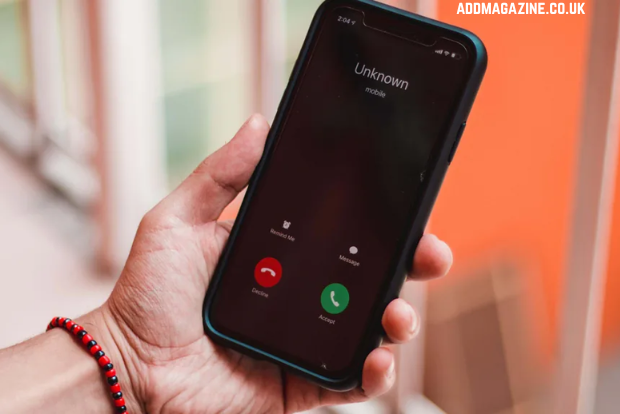
It’s still possible to keep your phone number private, but it takes more than a few privacy settings.
According to a 2024 Pew Research Center survey, the majority of Americans believe it’s impossible to go through daily life without having their personal data tracked, and a phone number sits right at the center of that tracked data. It shows up in marketing lists, data broker databases, and breach dumps within days of being shared with the wrong service.
So the question isn’t really whether your number can be found. It’s whether you can make it much harder to find, and much less useful once someone does.
How Your Mobile Number Quietly Became One of Your Most Valuable Digital Assets
Your phone number is a universal identifier. When a data broker or a scammer gets your number, they don’t just get a way to call you; they get a thread to pull. A reverse phone number detector tool, freely available online, can return a full consumer profile from a single-digit search in seconds, illustrating exactly how exposed most people already are.
The 2024 National Public Data breach made this vivid. That data circulates in underground marketplaces long after the original breach is forgotten.
Phone numbers are especially sticky because they rarely change. An email address can be abandoned in a day. A number tied to your bank and your identity is a different story entirely.
How Do Data Brokers Get Your Number in the First Place?
The FTC has documented how companies like X-Mode/Outlogic collected location and contact data from users without meaningful informed consent, selling it to downstream clients who then used it for targeting and profiling.
There are over 500 data brokers registered in California alone, according to digital rights organization Fight for the Future. Most operate with little public scrutiny and aggregate contact data from dozens of upstream sources simultaneously.
The uncomfortable part: opting out of one broker doesn’t stop the next one from collecting your data from a different source. This is why reactive removal isn’t enough on its own, and why learning how to keep your phone number private from the start of a sign-up process is the more durable approach.
What Actually Works to Keep Phone Number Private
The most effective strategies combine upfront protection (not giving your real number to begin with) with periodic cleanup (removing it from places it’s already landed).
The key use cases where a secondary number pays off:
- Online marketplaces (Facebook Marketplace, Craigslist, eBay): buyers don’t need your real number
- Dating apps: share a virtual number until trust is established
- Service sign-ups: subscriptions, loyalty cards, delivery apps
- One-time verifications: any site asking for SMS confirmation before account creation
Carrier-Level Settings Worth Using
Most carriers offer settings that reduce how exposed your number is, though they’re rarely advertised:
- Enable STIR/SHAKEN caller ID verification where supported: it doesn’t hide your number, but it does flag spoofed calls targeting you
- Ask your carrier to add a port freeze or SIM lock to prevent SIM-swapping attacks
- Enable number privacy on outbound calls by dialing *67 before the number, which blocks your caller ID on a per-call basis
- Register with the National Do Not Call Registry at donotcall.gov, which won’t stop all spam but does create legal liability for certain callers
Removing Your Number from Data Broker Sites
This requires some patience. The major people-search sites (Spokeo, Whitepages, BeenVerified, Intelius) all have opt-out pages, but each has its own process. A realistic removal workflow:
- Search your name + city on the major aggregator sites to find which ones list your number
- Submit removal requests one by one, following each site’s specific opt-out form
- Screenshot confirmation emails, as some sites re-list data after 30–60 days, and you’ll need a paper trail
- Repeat every 3–6 months or use a paid removal service like DeleteMe or Incogni to automate the process
Comparing Your Privacy Options: Tools and Trade-offs
Not every solution fits every situation.
| Method | Cost | Effort | Effectiveness | Best For |
| Google Voice (secondary number) | Free | Low | High for sign-ups | Everyday use, US-based |
| Burner / Hushed app | $5–$8/month | Low | High | Dating, marketplace listings |
| Carrier number privacy settings | Free | Low | Moderate | Reducing inbound spam |
| Manual data broker opt-outs | Free | High | Moderate (fades over time) | One-time cleanup |
| Paid removal service (e.g., DeleteMe) | ~$130/year | Very low | High ongoing | Long-term maintenance |
| *67 caller ID blocking | Free | Very low | Low (caller ID only) | One-off private calls |
No single tool covers all scenarios. The most practical setup for most people: a Google Voice or Hushed number for public-facing activities, carrier settings locked down, and an annual data broker sweep.
Virtual Number vs. VoIP Number: Understanding the Real Difference
If your number is already circulating, the damage isn’t permanent, but it does require deliberate action to contain. Start by requesting removal from the major data broker aggregators; that single step cuts off a significant portion of spam and robocall sources.
Beyond that, consider whether the number is worth keeping at all. For people who’ve dealt with stalking, harassment, or SIM-swap fraud, changing the primary number and building a fresh privacy layer from scratch is sometimes the most practical option.
The most important shift is mental: stop treating your phone number as a public identifier and start treating it like a partial password. It’s not meant to be shared with every service that asks for it.
How to Keep Your Phone Number Private on Social Media
Social media platforms are one of the fastest routes from “number given once” to “number in 40 databases.” Most platforms ask for your number during sign-up or two-factor authentication setup.
Audit Your Social Accounts Now
Check the privacy settings on each major platform for your phone number:
- Instagram: Remove your number from your profile entirely; use an authenticator app for 2FA instead
- LinkedIn: Under Settings → Visibility → Contact Info, set your number to “Only you”
- Twitter / X: In Privacy settings, disable “Let others find you by your phone number”
These settings don’t necessarily stop the platform from using the number internally, but they do prevent other users (and by extension, scrapers) from pulling it.
How Private Can a Phone Number Realistically Get in 2026?
Keeping your phone number fully private is no longer realistic in the way it once was. But keeping it meaningfully private, out of data broker listings, off public profiles, and away from services that don’t genuinelyPhone Number Private need it, is still very achievable.
The goal isn’t zero exposure. It’s controlled exposure: your number goes to your bank, your doctor, and people you trust. Everything else gets a virtual number or nothing at all.
If you want to take the next step, a privacy audit of your existing accounts is a solid place to start.
FAQ
Can your home address be traced using only your phone number?
Data broker sites like Spokeo and Whitepages cross-reference phone numbers with public records, reverse-lookup databases, and purchased consumer data to return a full profile including address, family members, and sometimes employment history. This is one reason keeping your phone number private isn’t just about spam; it has real physical safety implications.
Is it legal for apps to share my phone number with third parties without telling me?
Federal law doesn’t prohibit it outright, though FTC rules around deceptive practices apply if a company’s privacy policy claims otherwise. California’s CCPA gives residents the right to opt out of the sale of personal information, which includes phone numbers.
Will removing my number from data broker sites stop all spam calls?
No, but it reduces them significantly over time. Some spam operations buy freshly compiled lists from multiple brokers, so the effect isn’t immediate.
Virtual Number vs. VoIP Number: Key Differences Explained?
VoIP (Voice over Internet Protocol) is the underlying technology: calls travel over the internet rather than a traditional phone network. A virtual number is a phone number that uses VoIP infrastructure. All virtual numbers are VoIP-based, but not all VoIP lines are designed for privacy. Services like Skype or Teams give you VoIP calling but aren’t built around number anonymity the way Burner or Hushed are.
Can two-factor authentication (2FA) via SMS create a privacy risk?
Yes. When you use your real number for SMS-based 2FA, that number is stored by the platform and may be used for advertising targeting or shared with partners. More critically, SMS-based 2FA is vulnerable to SIM-swap attacks, where a fraudster convinces your carrier to transfer your number to their SIM. Switching to an authenticator app (like Google Authenticator or Authy) eliminates both risks.