
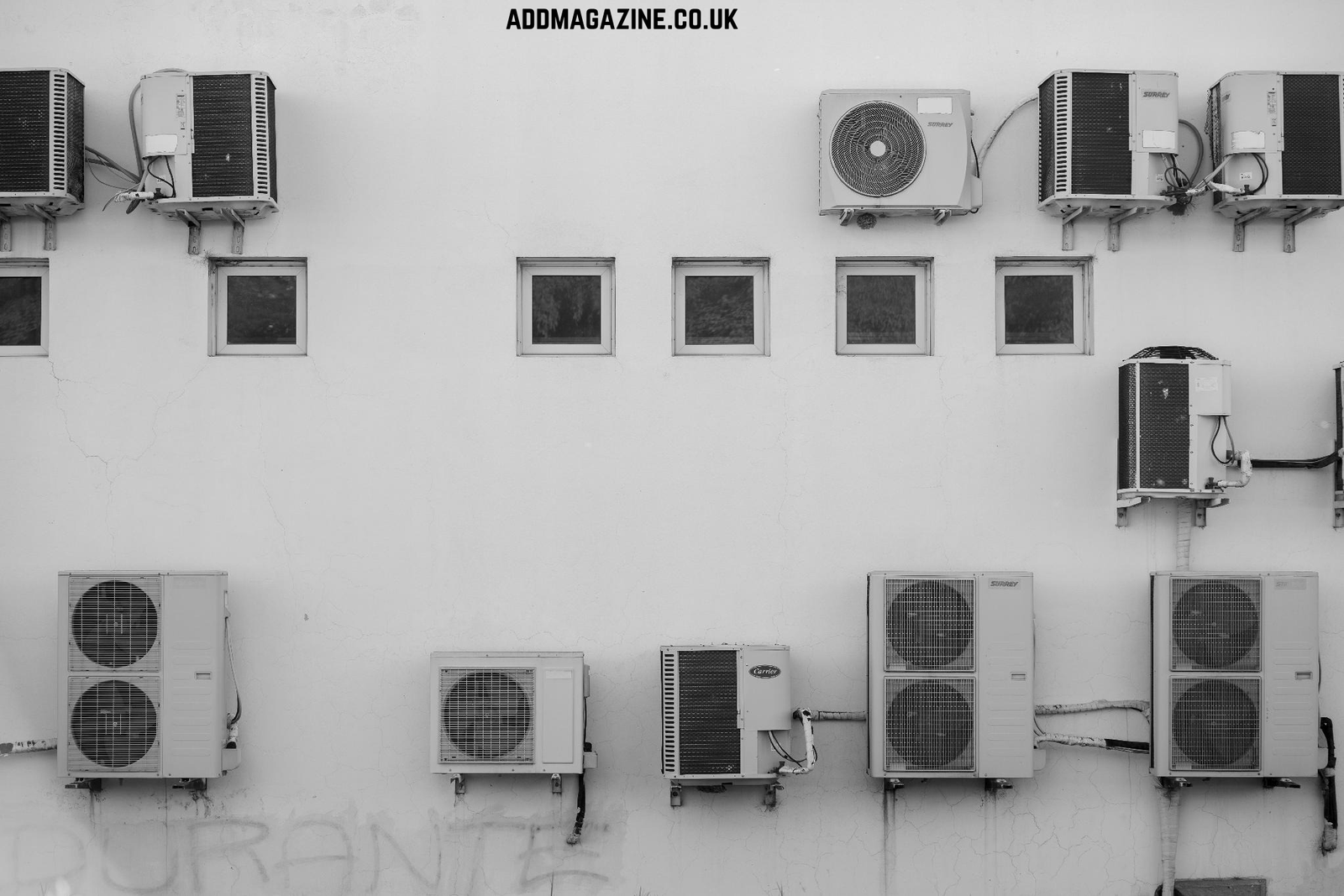
Many homeowners in Kent are weighing up two jobs at once: replacing an ageing gas boiler, and finding a way to keep the house cool through summer. The products for those two jobs overlap more than most people expect. The government now classifies air conditioning units that can also heat homes as air source heat pumps.
Your choice of system determines its capabilities, the funding available to you, and whether planning approval is required. This guide sets out the differences before you ask anyone for a quote.
Understanding the Two Main Categories of Air Source Heat Pumps
Both types take heat from the outside air using an outdoor unit. What sets them apart is the way they distribute warmth throughout your home.
- Air-to-water. This heats water, which then runs through radiators or underfloor heating and supplies your hot water cylinder. This system takes the place of a conventional boiler and is designed to keep indoor spaces warm, not provide cooling.
- Air-to-air. This blows warm or cool air into the room through indoor units, in the same way as air conditioning. The government describes air-to-air heat pumps as working like an air conditioning unit that can provide both hot and cold air. They do not heat your hot water, so that needs a separate solution.
Which One Suits Which Home?
An air-to-water system usually makes sense if your main aim is to replace a gas boiler, you already have radiators, and you have room for a hot water cylinder.
An air-to-air system makes more sense if summer cooling matters to you as much as winter heating, or if you would rather not run new pipework to radiators. The trade-off is hot water, which you will need to heat another way.
Some homes are suited to either, and the answer depends on the size of the property, how well it is insulated and where an outdoor unit can go. A survey from an installer who fits both types, such as JP Air Conditioning in Kent, will show which option works for your home before you commit to one.
What the Boiler Upgrade Scheme Covers
In England and Wales, the Boiler Upgrade Scheme offers financial support to help homeowners switch from fossil fuel heating to eligible alternatives. According to GOV.UK, the available grant amounts are as follows:
- £7,500 towards installing an air-to-water heat pump that extracts warmth from the outside air.
- £2,500 for an air-to-air heat pump
Households that rely on oil or LPG heating and are not connected to the mains gas network may qualify for an additional £1,500 towards an air-to-water or ground source heat pump. According to GOV.UK, this extra financial support is available until March 2027.
Air-to-air heat pumps became eligible on 28 April 2026, and the conditions are strict. The system must be able to meet the full space heating demand of the home and must replace the existing heating system. A single unit fitted to cool a bedroom will not qualify, and air-to-air grants are not available for non-residential buildings.
For either type, you must own the property, and the system must replace fossil fuel heating such as gas, oil, LPG or electric heating. Most newly constructed properties and social housing homes are not eligible for the scheme. Homeowners do not need to submit an application, as the installer handles the Ofgem paperwork and deducts the approved grant from the installation cost. This reduction should be clearly shown on both the quotation and final invoice. The heat pump must be fully installed and commissioned within 120 days of the application date.
Do You Need Planning Permission in Kent?
Many air source heat pumps on houses can be installed under permitted development, which means no planning application. The rules were relaxed in 2025: the requirement to keep the unit at least one metre from the boundary was removed, and air-to-air units that also provide cooling were brought into the same right.
England’s national regulations set out the following key requirements:
- The outdoor unit must be no larger than 1.5 cubic metres on a house, or 0.6 cubic metres on a block of flats.
- A detached property may accommodate a maximum of two separate residential units. Other houses can have one.
- The installation must comply with the MCS 020 planning standard, which covers noise.
- Units cannot go on a pitched roof. On a flat roof, every part must be at least one metre from the edge.
- In a conservation area, no unit can be nearer to a highway than any part of the building, and units cannot face a highway.
- Units cannot be installed on a listed building or within its grounds under permitted development, and any heat pump on a listed property needs listed building consent.
In Kent, planning decisions are made by your district or borough council, or by Medway Council, not by Kent County Council. Before deciding where to install the outdoor unit, check with your local authority for any conservation area restrictions or special planning controls under Article 4 Directions. If you own a leasehold flat, check your lease as well, because the wall or roof the unit would sit on may not be yours.
Questions to Ask Before You Get Quotes
- Is the installer MCS certified? According to GOV.UK guidance, installations funded through the Boiler Upgrade Scheme should be carried out by MCS-certified professionals.
- Does the company hold an F-gas certificate? Heat pumps use refrigerants, so businesses installing F-gas-containing systems for customers must hold valid F-gas company certification.
- Will the quote show the grant? Qualifying applicants should see the grant amount deducted from the total cost, with the reduction clearly detailed in their quotation.
- Has the position been checked against the planning rules? Ask the installer to confirm the unit meets the size, siting and MCS 020 noise conditions, or tell you if an application is needed.
- How will hot water be provided? Before selecting an air-to-air system, check with your installer about suitable hot water solutions and their expected installation costs.
Choosing With the Full Picture
Air-to-water heat pumps replace a boiler and qualify for the larger grant. Air-to-air heat pumps give you cooling as well as heating, but need a separate plan for hot water and only qualify for a grant when they heat the whole home. Settle which job matters most to you, check the planning position, and then compare quotes on the same basis.