
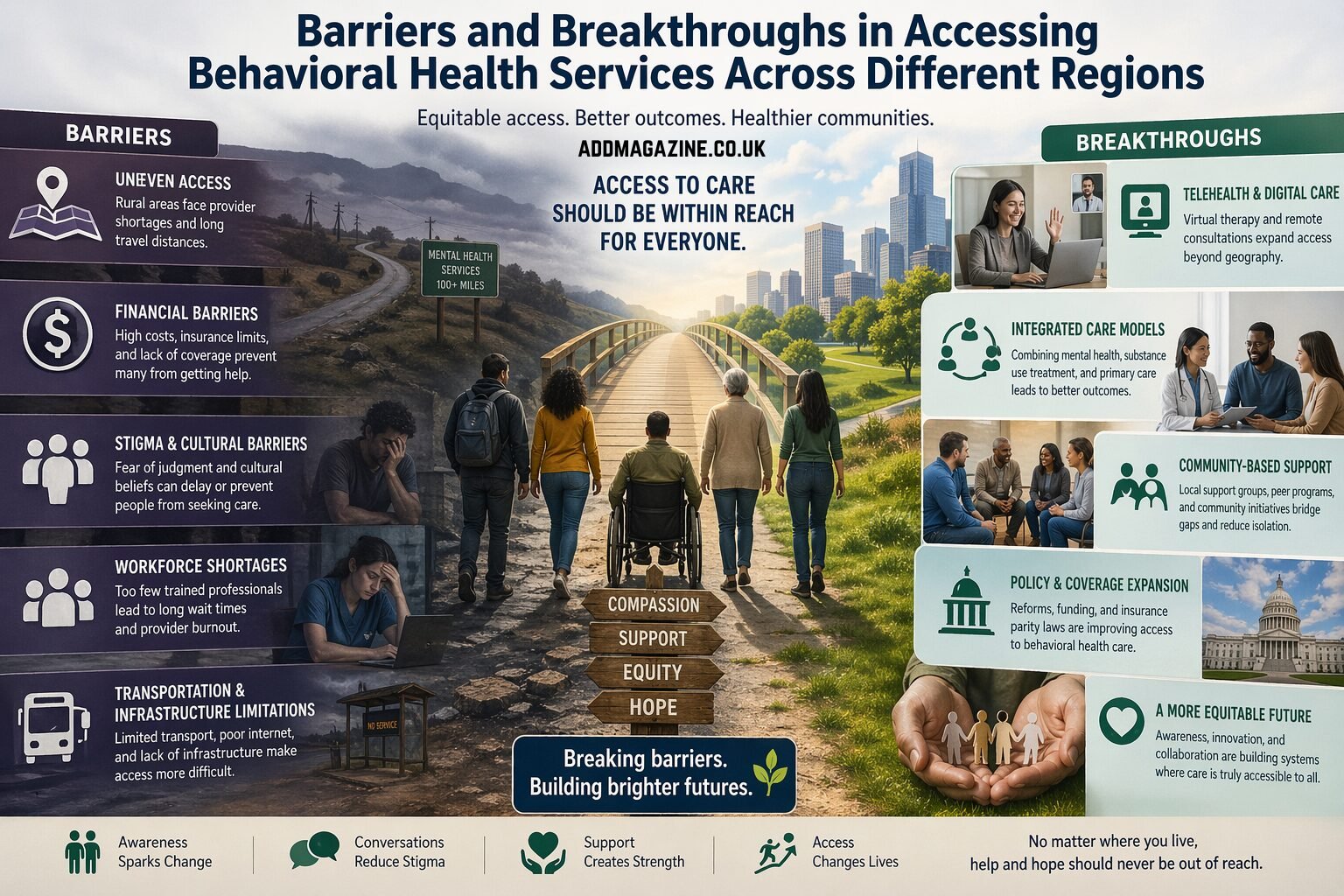
Access to behavioral health services has become one of the most pressing public health concerns in recent years. While awareness around mental health and substance use has significantly improved, access to care remains uneven across different regions. Some communities benefit from well-developed systems, while others struggle with limited resources, long waiting times, and social stigma that prevents people from seeking help.
Understanding these disparities is essential not only for policymakers and healthcare providers but also for individuals and families navigating recovery. From rural isolation to urban overcrowding, the challenges vary widely—but so do the innovations that are reshaping the landscape of care.
Uneven Access Across Geographic Regions
One of the most persistent issues in behavioral health care is geographic inequality. In urban centers, services may be more readily available, but demand often exceeds capacity. This leads to long waitlists, rushed consultations, and overburdened professionals. In contrast, rural areas frequently face a shortage of qualified mental health providers altogether.
In some regions, individuals may need to travel hours just to attend therapy or receive specialized treatment. This is especially challenging for those dealing with substance use disorders or severe mental health conditions, where consistency and accessibility are crucial for recovery.
For example, individuals seeking Drug rehab in Massachusetts may find a wide range of options compared to those in less densely populated areas. However, even within states that have relatively strong healthcare infrastructures, access can still depend heavily on insurance coverage, transportation, and socioeconomic status.
Financial Barriers That Limit Treatment
Cost remains one of the most significant obstacles to behavioral health care. Even when services are available, they are not always affordable. Many individuals delay or avoid treatment due to concerns about out-of-pocket expenses, insurance limitations, or lack of coverage altogether.
Insurance complexity also plays a role. Some plans cover only a limited number of therapy sessions or restrict access to certain types of treatment programs. For individuals requiring long-term support, especially in cases of substance use recovery, these limitations can interrupt progress and increase the risk of relapse.
Financial strain doesn’t only affect individuals—it also impacts families and caregivers who often bear indirect costs such as transportation, unpaid leave from work, and additional support needs at home.
Social Stigma and Cultural Barriers
Even as public awareness grows, stigma continues to be a powerful barrier to care. Many people still hesitate to seek help due to fear of judgment from family, friends, or employers. In some communities, mental health and addiction issues are still misunderstood or viewed as personal failings rather than medical conditions.
Cultural beliefs also influence how individuals perceive behavioral health services. In certain regions, traditional healing practices may be preferred over clinical care, while in others, discussing mental health openly may be discouraged.
This stigma often delays early intervention, which is critical in preventing conditions from worsening. By the time individuals seek help, their conditions may already be more severe and harder to treat.
Workforce Shortages and System Strain
Psychiatrists, psychologists, counselors, and addiction specialists are in high demand but limited supply. This shortage is particularly severe in rural and underserved regions.
Even in more developed areas, burnout among healthcare workers is increasing. High caseloads, administrative burdens, and emotional strain contribute to turnover, which further reduces system capacity.
As a result, many individuals experience delays in care or are unable to find providers who match their specific needs, such as dual diagnosis treatment or culturally competent care.
Transportation and Infrastructure Limitations
Access to behavioral health care is not only about availability—it is also about mobility. Transportation challenges can significantly limit access, especially for individuals without private vehicles or those living in remote areas.
Public transportation may be limited or nonexistent in some regions, making it difficult to attend regular appointments. This is particularly problematic for individuals undergoing structured treatment programs that require consistent attendance.
Telehealth has helped address some of these challenges, but it is not a complete solution. Reliable internet access, digital literacy, and privacy concerns can still limit its effectiveness for certain populations.
Breakthroughs in Telehealth and Digital Care
Despite these challenges, recent years have seen meaningful progress in expanding access to behavioral health services. One of the most significant breakthroughs has been the rise of telehealth.
Virtual therapy sessions, online counseling platforms, and remote psychiatric consultations have made it easier for individuals to receive care without geographical constraints. This has been especially beneficial for those in rural areas or with mobility limitations.
Telehealth has also helped reduce stigma by allowing individuals to seek help privately from their own homes. While not suitable for all types of treatment—particularly severe cases requiring intensive supervision—it has become an important complement to traditional care models.
Integrated Care Models Improving Outcomes
Another positive development is the shift toward integrated care models. These approaches combine mental health services, substance use treatment, and primary healthcare under one coordinated system.
This integration helps address the interconnected nature of physical and behavioral health. For example, individuals dealing with addiction often experience co-occurring mental health conditions such as anxiety or depression. Treating these conditions separately can lead to fragmented care, while integrated systems offer a more holistic approach.
In regions where these models have been implemented effectively, patients often experience improved outcomes, better continuity of care, and reduced hospitalization rates.
Community-Based Support Systems
Community involvement is also playing a growing role in improving access to care. Local support groups, peer counseling programs, and nonprofit initiatives help bridge gaps in formal healthcare systems.
These community-based approaches are especially valuable in areas where professional services are limited. They provide emotional support, reduce isolation, and encourage individuals to seek further treatment when needed.
In addition, schools, workplaces, and faith-based organizations are increasingly participating in mental health awareness and early intervention efforts. These environments can help identify issues early and guide individuals toward appropriate care.
Policy Changes and Expanding Coverage
Policy reforms in many regions are gradually improving access to behavioral health services. Expanded insurance coverage, mental health parity laws, and increased funding for public health programs have all contributed to better availability of care.
However, implementation remains uneven. Some regions still struggle with funding limitations and administrative barriers that delay the impact of these policies.
Ongoing advocacy is essential to ensure that behavioral health receives equal priority alongside physical health in healthcare systems worldwide.
Moving Toward a More Equitable Future
Despite the barriers, the field of behavioral health is undergoing meaningful transformation. Awareness is growing, technology is advancing, and communities are becoming more engaged in supporting mental well-being.
Still, significant work remains. Addressing geographic disparities, reducing stigma, expanding workforce capacity, and improving affordability are all critical steps toward a more equitable system.
Access to care should not depend on where someone lives, how much they earn, or whether they feel safe speaking about their struggles. Whether someone is in a major city or a rural town, the right support should be within reach.
As conversations around mental health and addiction continue to evolve, the hope is that barriers will continue to fall—and that breakthroughs will lead to systems where care is not just available, but truly accessible to all.