Growing electricity prices and greater environmental awareness have encouraged many homeowners to invest in solar energy for long-term savings. At the same time, smart home technology has evolved rapidly, allowing homeowners to automate lighting, heating, security, and appliances with just a smartphone or voice command.
The combination of these two innovations raises an interesting question: Can a smart home run entirely on solar power?
Yes, although the outcome depends on a few important conditions. Advances in solar panel efficiency, battery storage, and energy management systems have made it possible for many homes to generate and consume their own electricity. However, achieving complete energy independence depends on factors such as location, energy consumption, system size, and weather conditions.
Here’s a closer look at how solar-powered smart homes work and what it takes to make them a reality.
What Is a Smart Home?
Smart home technology links connected devices, making it possible to monitor and operate household features from virtually anywhere. By linking to a single smart platform, connected home devices automate everyday tasks, increase safety, and promote more efficient energy use.
Common smart home devices include:
- Smart thermostats
- Intelligent lighting systems
- Smart plugs
- Voice assistants
- Security cameras
- Smart locks
- Automated blinds
- Smart appliances
- Energy monitoring systems
Many of these technologies are designed to optimize electricity usage, making them excellent companions for solar energy systems.
How Solar Power Works
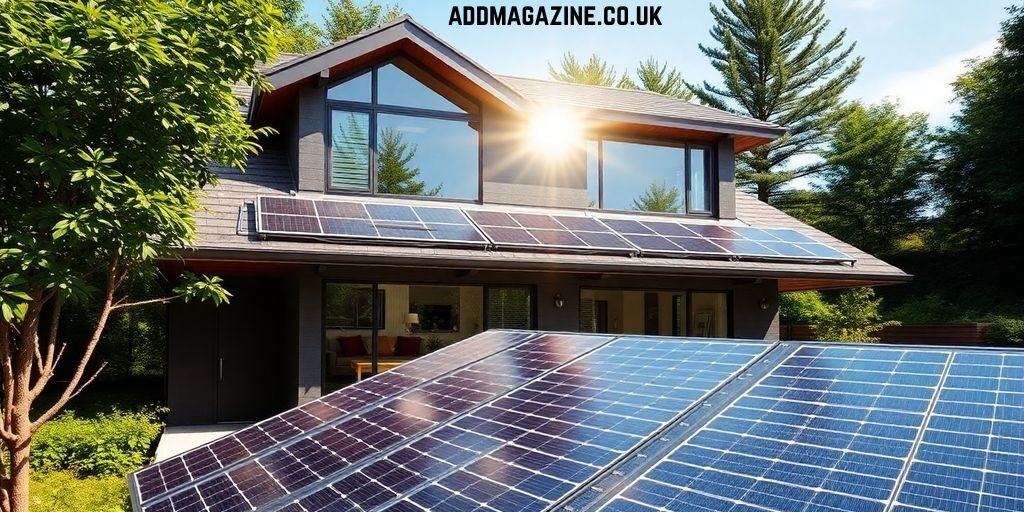
Solar panels convert sunlight into electricity using photovoltaic (PV) cells installed on rooftops or ground-mounted systems. The electricity generated is first used to power the home’s appliances. If production exceeds demand, the excess electricity can either be stored in a battery or exported to the electrical grid, depending on the system configuration.
A typical residential solar system consists of:
- Solar panels
- An inverter
- Battery storage (optional)
- A smart energy management system
- A monitoring application
The Role of Battery Storage
Battery storage is one of the biggest factors that determines whether a smart home can operate entirely on solar power. Without batteries, homeowners still need electricity from the grid during the evening or on cloudy days.
Battery systems store excess solar energy generated during the day and release it when needed. This allows homeowners to continue powering essential devices long after the sun has set.
Battery technology has improved significantly in recent years, offering longer lifespans, faster charging, and greater storage capacity than earlier systems.
Smart Energy Management Makes the Difference
Creating electricity represents just one aspect of a much broader energy strategy. Managing energy consumption is equally important.
Smart energy management systems automatically monitor electricity production and household demand. Instead of running every appliance at once, they can prioritize energy-intensive tasks during periods of high solar production.
For example, the system might automatically:
- Charge an electric vehicle during peak sunlight hours
- Run the dishwasher in the afternoon
- Heat water using surplus solar electricity
- Reduce air conditioning when rooms are unoccupied
- Delay laundry cycles until solar generation increases
Can Solar Power Meet Every Household Need?
In many cases, yes. But it depends on several factors.
Home Energy Consumption
Electric vehicle chargers, multiple HVAC units, and heated pools can greatly increase energy demand, requiring a more extensive solar panel setup.
Improving energy efficiency through LED lighting, smart thermostats, and efficient appliances reduces the amount of electricity needed, making complete solar operation more achievable.
Geographic Location
Solar energy production varies based on climate and available sunlight. Homes located in regions with abundant sunshine can generate more electricity throughout the year than homes in areas with frequent cloud cover or shorter winter days. Roof orientation, shading from trees, and roof angle also influence overall system performance.
System Size
The size of the solar array plays a major role. A system that generates enough electricity during the summer may struggle to meet winter demand if energy production decreases significantly. Professional installers typically analyze annual energy usage before recommending the appropriate system size.
Smart Appliances Help Maximize Solar Energy
Today’s smart appliances are far more energy-efficient than older models.
Examples include:
- Refrigerators that optimize cooling cycles
- Washing machines that schedule operation during off-peak periods
- Smart water heaters that learn household usage patterns
- Heat pumps with adaptive temperature controls
- Lighting systems that automatically switch off in empty rooms
When integrated with a home energy management platform, these devices help maximize every kilowatt-hour generated by the solar panels.
Electric Vehicles Add New Possibilities
Electric vehicles (EVs) are becoming an important part of the smart home ecosystem. Homeowners can power their electric vehicles with energy produced by rooftop solar systems instead of depending entirely on the local electricity network.
Some emerging vehicle-to-home (V2H) technologies even allow electric vehicle batteries to supply electricity back to the home during outages or periods of low solar generation. As these technologies mature, EVs may become an important backup energy source for solar-powered households.
Challenges of Running Entirely on Solar
Although the technology exists, complete energy independence still presents several challenges.
Weather Dependence
Solar panels rely on sunlight, so extended periods of cloudy weather or seasonal changes can reduce electricity production. While batteries help bridge the gap, prolonged low-sunlight conditions may still require backup power.
Upfront Costs
Installing a complete solar energy system with battery storage represents a significant initial investment. However, many homeowners recover these costs over time through lower electricity bills, available incentives, and increased property value.
Battery Capacity
Even advanced batteries have storage limits. Homes with exceptionally high electricity usage may require multiple battery units, increasing installation costs.
Growing Energy Demand
As households adopt electric vehicles, heat pumps, and additional smart devices, electricity consumption continues to rise. Planning for future energy needs is essential when designing a solar-powered smart home.
The Benefits of a Solar-Powered Smart Home
Despite these challenges, the advantages are substantial.
Lower Electricity Bills
Generating your own electricity significantly reduces monthly utility costs, especially in regions with high energy prices.
Greater Energy Independence
Producing and storing electricity on-site reduces dependence on utility companies and provides greater resilience during grid outages.
Reduced Carbon Emissions
Solar energy produces electricity without direct greenhouse gas emissions, making it one of the cleanest energy sources available.
Intelligent Energy Use
Smart home systems continuously monitor consumption and automatically optimize energy usage, reducing waste without sacrificing comfort.
Increased Property Value
Energy-efficient homes equipped with renewable energy systems are increasingly attractive to buyers seeking lower operating costs and sustainable living.
What Does the Future Hold?
Rapid advances in renewable energy technology are making fully solar-powered smart homes more practical than ever.
Researchers continue to improve solar panel efficiency, while manufacturers are developing batteries with higher capacities, faster charging times, and longer service lives. Artificial intelligence is also beginning to play a larger role in home energy management, learning household routines and automatically adjusting energy consumption for maximum efficiency.
Future innovations may include smart grids that enable neighborhoods to share excess solar power, more affordable home battery systems, and bidirectional electric vehicles that act as mobile energy storage units. Together, these developments will make energy independence increasingly accessible to homeowners around the world.
Conclusion
So, can smart homes run entirely on solar power? In many cases, the answer is yes. With a well-designed solar panel system, sufficient battery storage, energy-efficient appliances, and intelligent home automation, homeowners can generate and manage enough electricity to meet most or even all of their daily energy needs.
While factors such as climate, household energy consumption, and installation costs still influence feasibility, the gap between traditional grid reliance and complete energy independence continues to narrow. As solar technology becomes more efficient and smart home systems grow more sophisticated, the fully solar-powered home is transitioning from an ambitious goal to a practical reality for an increasing number of households.
For homeowners looking to lower energy costs, reduce their environmental impact, and embrace the future of connected living, investing in a smart solar-powered home is no longer just a vision—it’s an achievable step toward a cleaner, more sustainable future.