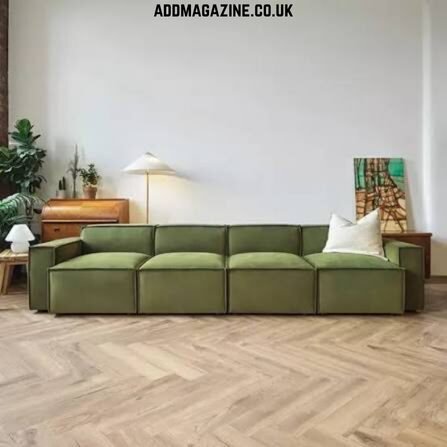
Buying furniture online provides access to more configurations, colours, and sizes than many local showrooms can display. A compressed sofa online may also arrive in smaller packages than traditional upholstered furniture, making it easier to move through apartments, lifts, hallways, and restricted entrances.
The restricted entrances.
The compressed delivery format is only one part of the decision. Buyers still need to evaluate the complete dimensions, module arrangement, comfort materials, upholstery, expansion process, delivery service, warranty, and return conditions.
Modular designs add another layer of flexibility. Individual sections can be combined to suit a room and, in some cases, rearranged when the household or layout changes.
Why modular furniture works in modern homes
A fixed sofa has a predetermined length, shape, and orientation. Modular furniture consists of separate units that create different layouts.
Depending on the range, modules may include:
- Armless seats.
- Corner sections.
- End units.
- Chaise sections.
- Ottomans.
- Additional back cushions.
- Connecting components.
This structure can work well in apartments, open-plan rooms, rental homes, and properties where furniture needs may change. Buyers can select a small arrangement initially and consider additional compatible modules later if the collection remains available.
Modularity does not mean that every section from every range will connect. Compatibility, connectors, seat height, upholstery, and production changes should be checked before adding pieces.
Selecting a compressed modular sofa
A compressed modular sofa combines configurable seating with compact delivery. The upholstered sections may be compressed or packaged separately so they can be moved into the room before final setup.
Start by deciding how the room will be used. A household that regularly entertains may prioritise more seats and an open arrangement. A smaller home may benefit from a compact two- or three-module layout with an ottoman that can serve several purposes.
Evaluate:
- Number of regular users.
- Preferred seating positions.
- Need for a chaise or corner.
- Available floor area.
- Clear walking routes.
- Position of windows and doors.
- Television or conversation orientation.
- Possibility of future expansion.
People comparing a compressed sofa online can review available modules and then map the listed dimensions onto their room before choosing a configuration.
A larger setup is not always more useful. Leaving adequate space around the furniture can make the entire room feel more comfortable and functional.
Planning a modular sofa compressed for delivery
A modular sofa compressed into separate packages may be easier to bring inside, but the buyer should still review package dimensions and weights. A compact box can remain heavy, and some modules may require two people to move safely.
Before delivery:
- Confirm the number of packages.
- Measure the narrowest doorway.
- Check lift dimensions and weight limits.
- Clear the hallway and room.
- Protect floors and nearby walls.
- Plan where each box will be placed.
- Arrange assistance where required.
Move the packaged modules into the intended room before opening them. Once the upholstery and foam expand, the sections may be more difficult to carry through restricted areas.
Follow the stated unpacking order. Avoid cutting deeply into the wrapping, as sharp tools can damage fabric or internal materials.
Measuring and mapping the layout
Online furniture shopping depends on accurate measurements. Product images may show a large sofa in an equally large studio, making the arrangement look more compact than it will in a typical home.
Create a simple floor plan showing:
- Wall lengths.
- Door swings.
- Window positions.
- Walkways.
- Power points.
- Heating or cooling vents.
- Existing tables and storage.
- Each proposed sofa module.
Use the external dimensions rather than the seating area alone. Mark the planned arrangement on the floor with removable tape or sheets of paper.
Check whether the configuration blocks access to curtains, balcony doors, cupboards, or frequently used pathways. A modular design should improve flexibility rather than create a crowded room.
Understanding module orientation
Terms such as left-facing, right-facing, corner, and end section can be interpreted differently by shoppers. Always use the retailer’s diagram instead of relying on assumptions.
Ask:
- Is orientation described when facing the sofa?
- Does the chaise attach permanently or remain movable?
- Are connectors included?
- Can modules be used independently?
- Can the configuration be reversed?
- Are additional sections available separately?
- Will future production match the current fabric?
Save the product diagram and order confirmation. These documents can help verify that the delivered configuration matches the purchase.
Comparing comfort online
Comfort cannot be assessed through photographs alone. Product descriptions should explain seat depth, seat height, cushion materials, back support, and firmness.
Compare:
- Foam or filling composition.
- Seat depth.
- Back height.
- Cushion thickness.
- Upholstery texture.
- Whether cushions are fixed or removable.
- Recommended care.
- Intended use.
Customer reviews may reveal patterns, but comfort remains personal. Give more weight to consistent comments supported by specifications than to isolated reactions.
If the retailer offers a showroom, swatches, or a return policy, consider how these options reduce uncertainty before ordering.
Choosing fabric and colour
A modular sofa occupies a large visual area, so fabric and colour affect the entire room. Online photographs may vary because of lighting, screen calibration, and image editing.
When possible, compare a physical sample in morning, afternoon, and artificial light.
Practical questions include:
- Is the fabric appropriate for regular use?
- How should spills be treated?
- Can covers be removed?
- Is professional cleaning recommended?
- Does the texture catch loose fibres?
- Is the colour likely to show dust or marks?
- Can matching modules be ordered later?
A fashionable colour can be appealing, but long-term compatibility with the room may be more valuable when the furniture is expected to remain for several years.
Delivery and expansion
Compressed upholstery needs time to regain its intended shape. The exact process varies by product, so general assumptions should not replace the supplied instructions.
After delivery:
- Inspect the boxes for visible damage.
- Confirm that all modules have arrived.
- Move the boxes into the correct room.
- Read the setup instructions.
- Open packaging carefully.
- Position each section.
- Allow the stated expansion time.
- Attach connectors where provided.
- Check the completed arrangement.
Temporary creasing may reduce as the material settles. Contact the retailer if the product does not develop as described after the recommended period.
Reconfiguring the sofa later
One attraction of modular furniture is the ability to adjust the layout. An ottoman may move from one side to another, or separate seats may be arranged for conversation rather than television viewing.
Before buying with future changes in mind, confirm:
- Whether all sections are finished on every side.
- How modules connect.
- Whether connectors can be moved.
- Which units work independently.
- Whether the range is expected to continue.
- How replacement covers or parts are ordered.
Photograph connector positions before rearranging. This can make it easier to restore the original layout.
Care and maintenance
Regular maintenance helps keep upholstery looking consistent across modules.
A typical routine may include:
- Vacuuming seats and seams.
- Rotating compatible cushions.
- Repositioning modules to prevent uneven exposure.
- Cleaning spills according to the label.
- Avoiding unapproved chemicals.
- Protecting fabric from excessive direct sunlight.
- Checking connectors periodically.
Modules used more frequently may soften sooner. Occasional rearrangement can help distribute use when the configuration permits it.
Returns, warranties, and future additions
A modular order may contain several products under one purchase. Check how the retailer handles partial returns, damaged individual modules, colour variation, and warranty claims.
Read:
- Return eligibility after opening.
- Time limits for reporting damage.
- Responsibility for transport.
- Warranty coverage for foam, fabric, and construction.
- Availability of replacement parts.
- Policies for colour variation.
- Conditions for ordering additional modules.
Keep the product names, colour codes, and order records. These details can be important if a matching section is purchased later.
Conclusion
Buying a compressed sofa online can provide convenient delivery and a flexible modular layout. The most successful purchase begins with accurate measurements and a clear plan for how the room will function.
Compare module orientation, comfort specifications, fabric care, package information, expansion guidance, return terms, and future compatibility. When these details are checked before ordering, a modular setup can adapt to both the current home and later changes.
Frequently asked questions
What is a compressed modular sofa?
It is a modular upholstered seating system packaged in a compressed format for delivery. Separate sections are unpacked, expanded, and arranged in the chosen layout.
Can modules be rearranged?
Many modular systems can be reconfigured, but this depends on the product design and connectors. Check the specific range before ordering.
How do I choose the correct orientation?
Use the retailer’s layout diagram and orientation definitions. Do not rely only on terms such as left-facing or right-facing.
How long does expansion take?
Expansion time varies by product. Follow the instructions provided and avoid assuming that every section will reach its final shape immediately.
Can more modules be added later?
Possibly, if compatible sections remain available. Keep the range name, colour code, and order details for future reference.