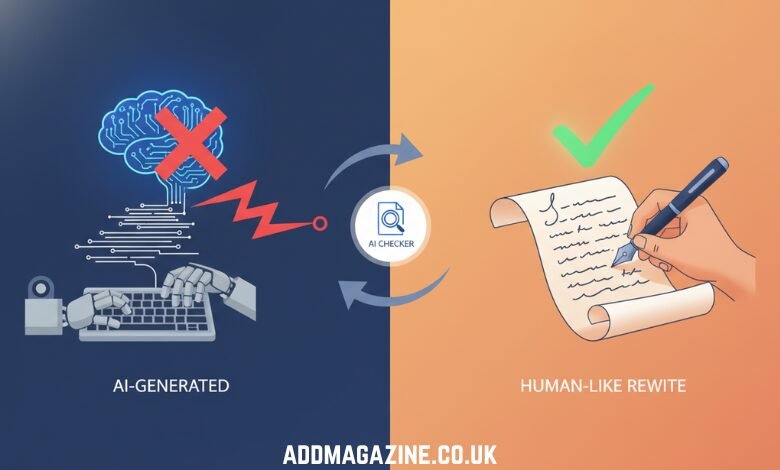
AI has quietly changed how writing gets done. Drafting is faster, revisions are easier, and getting something on the page is no longer the hard part. The harder part comes later, when writers look at a finished text and ask a simple question: does this still sound like something a person would stand behind? Dechecker was created for that moment of uncertainty.
The New Friction in Everyday Writing
When efficiency starts to feel suspicious
Many people don’t notice the problem while drafting. The text flows, arguments line up, and nothing blocks progress. The discomfort appears during review, when everything feels a bit too balanced, too neutral, too safe.
That feeling isn’t abstract. It’s a warning that the writing may not hold up once it leaves your screen.
Why AI patterns don’t hide for long
AI-generated text tends to smooth out rough edges. Sentences follow similar lengths. Transitions behave predictably. Ideas resolve cleanly without friction.
Readers might not label this as “AI-written,” but they sense a lack of decision-making. Over time, that erodes trust.
Detection is now part of the environment
In academic, professional, and publishing contexts, automated detection is becoming routine. Even imperfect tools influence how content is evaluated.
Running a draft through an AI Checker gives writers early awareness of how their text may be perceived, before that judgment happens elsewhere.
How Dechecker Fits Into a Real Workflow
Starting with a reality check
Writers don’t usually need motivation to improve a draft. They need clarity. Dechecker works as an early diagnostic step, showing whether concerns are justified or just anxiety.
That clarity changes how revisions begin.
Identifying structural signals, not surface flaws
Most issues aren’t about single words. They show up in structure. Paragraphs move at the same pace. Arguments unfold too evenly. Conclusions retreat instead of commit.
AI Checker feedback highlights these patterns, giving writers something concrete to work with.
Saving time by revising selectively
Without guidance, writers often rewrite too much. With feedback, they revise only where it matters.
This targeted approach keeps momentum intact and prevents unnecessary rework.
From AI Draft to Human-Ready Text
Editing for intent rather than style
Human writing shows intent. It emphasizes certain points, slows down when something matters, and skips ahead when it doesn’t.
Effective revision focuses on these decisions, not decorative language changes.
Where AI Humanizer adds value
Some drafts remain rigid even after careful editing. In those cases, Dechecker’s AI Humanizer helps break repetitive phrasing and overly mechanical flow.
It works best as a support tool, not an automatic replacement for judgment.
Avoiding the temptation to overcorrect
There’s a point where revisions stop improving clarity and start adding noise. Overly casual phrasing or forced hesitation can feel as artificial as the original draft.
Dechecker helps writers recognize when the text is “good enough to trust.”
How Different Users Apply Dechecker
Students working under scrutiny
Students often use AI to understand material or structure answers. Trouble starts when explanations sound generic rather than reasoned.
An AI Checker highlights where arguments feel thin, prompting students to add reasoning steps and personal understanding.
Content creators managing voice
Blogs, newsletters, and landing pages live or die by tone. AI-generated drafts can drift into a bland middle ground.
Dechecker helps creators spot where voice fades and focus revisions there, without slowing publishing schedules.
Professionals protecting credibility
Reports, proposals, and internal documents carry reputational weight. If they read like automated output, confidence drops immediately.
Using an AI Checker before review reduces that risk quietly and efficiently.
Interpreting Feedback Without Losing Control
Scores as signals, not commands
Detection results provide direction, not orders. A high-risk section doesn’t mean failure; it means attention is needed.
Writers who treat scores as context make better decisions than those who chase perfect numbers.
Learning patterns across projects
Repeated use reveals habits. Writers see which structures trigger concern and adjust earlier in the drafting process.
Over time, drafts improve before they’re even checked.
Building confidence through repetition
Confidence doesn’t come from hiding AI use. It comes from knowing when and how to intervene.
Dechecker accelerates that learning curve.
Writing With AI, Not Behind It
Keeping authorship visible
AI can generate text, but it doesn’t choose emphasis or responsibility. Dechecker reinforces the writer’s role by making those choices explicit.
The tool supports authorship instead of replacing it.
Why credibility still depends on judgment
Readers respond to judgment more than polish. Writing that shows intention feels trustworthy, even if AI was involved.
An AI Checker helps ensure that intention isn’t lost in automation.
Content that survives real evaluation
The real test of writing isn’t whether it passes a tool, but whether it holds up to human review.
Dechecker helps writers prepare for that reality rather than react to it.
A More Deliberate Way to Use AI
AI has removed many barriers to writing, but it hasn’t removed expectations. People still look for clarity, commitment, and a sense that someone thought carefully before publishing.
Dechecker fits into modern writing as a practical control point. It helps writers decide when AI has helped enough, when revision is needed, and when a draft is ready to be taken seriously. Used with intent, an AI Checker becomes part of a workflow that values speed without sacrificing credibility.