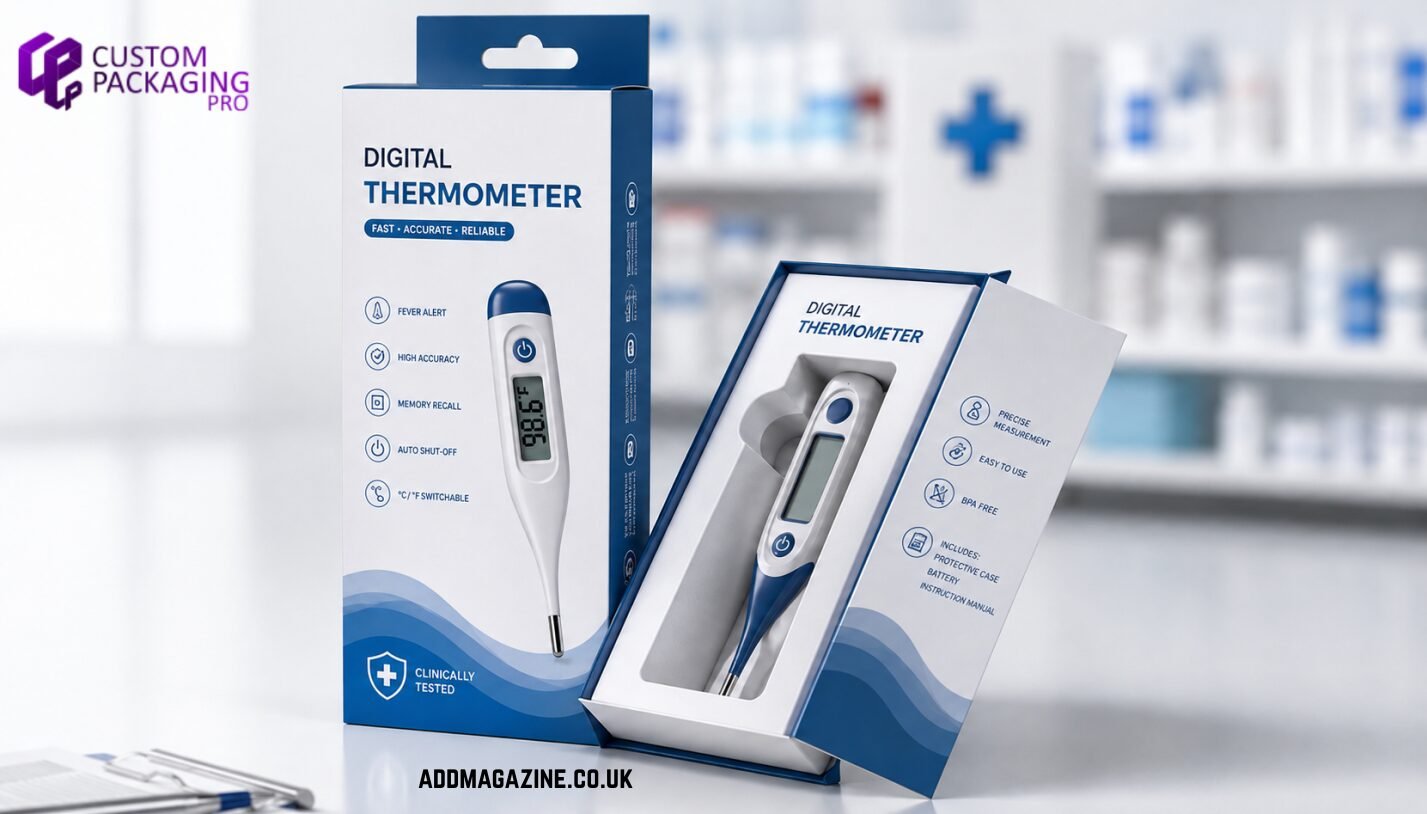
A thermometer may be small, but packaging one correctly is not always simple. Digital displays can be scratched, probes can move during transportation, accessories can become separated, and poorly organized instructions can make an otherwise professional healthcare product feel unreliable. These challenges make custom thermometer boxes more than decorative retail packaging. They provide a structured way to protect precision devices, organize their components, communicate essential information, and present products professionally across pharmacies, healthcare stores, laboratories, and ecommerce channels.
For manufacturers and distributors, the most effective thermometer packaging begins with the device itself. Its dimensions, sensitivity, accessories, distribution method, and intended market should determine how the package is designed.
A Small Device Can Create Several Packaging Challenges
Unlike many ordinary retail products, thermometers often combine electronic and physical components within a compact device. Depending on the model, a thermometer may contain a digital screen, sensor, infrared system, probe, battery compartment, or detachable accessories.
This means a standard box with excessive empty space may not provide sufficient support. If the product repeatedly moves inside its packaging during distribution, sensitive areas can experience unnecessary impact.
There is also the question of organization. A thermometer may be sold with batteries, probe covers, instructions, storage accessories, or other components. Putting everything loosely into a carton creates a poor first impression and makes smaller pieces easier to overlook.
Well-designed custom thermometer boxes address these challenges by creating a package around the complete product rather than merely its external dimensions.
Start With the Device, Not the Box
A common packaging mistake is choosing a standard carton first and trying to make the product fit afterward. Precision devices benefit from the opposite approach.
Packaging development should begin by assessing:
- Exact product dimensions
- Device weight
- Sensitive areas such as screens or probes
- Included accessories
- Required documentation
- Retail display requirements
- Shipping conditions
- Storage requirements
Once these details are understood, the box structure can be developed around them.
For example, a slim clinical thermometer may require a compact folding carton with an internal holder. An infrared forehead thermometer may need a wider structure that prevents the device from moving. A professional temperature-monitoring kit may require separate compartments for the main unit, probes, batteries, and instructions.
This product-first approach reduces unnecessary packaging while improving protection.
Internal Organization Is Often More Important Than Exterior Decoration
A visually attractive package has value, but the inside of a thermometer box can determine how effectively it performs.
Custom inserts and partitions can create designated spaces for different components. This prevents accessories from moving freely and keeps the presentation organized when customers first open the package.
For a thermometer kit, an insert might hold the main device in the center while providing smaller sections for probes or accessories. Printed instructions can be positioned above or below the insert so they remain easy to find.
Paperboard-based inserts can also support businesses seeking to minimize unnecessary plastic components where appropriate.
Good internal organization offers three practical benefits: better product protection, easier inventory checking, and a cleaner unboxing experience.
Healthcare Packaging Has to Communicate Clearly
Thermometer packaging often appears alongside other healthcare and pharmaceutical products, making clarity especially important.
A decorative design should never make essential product information difficult to locate. Customers may need to identify the thermometer type, model, measurement method, included accessories, or intended application quickly.
The exterior of the package can provide space for:
- Product name and model
- Brand identity
- Key device features
- Usage information
- Storage instructions
- Barcode and SKU
- QR code
- Serial or batch information where applicable
- Manufacturer details
- Safety or handling information where required
This is one area where thermometer packaging shares characteristics with professional pharma packaging. Both benefit from structured information, clear identification, consistency, and careful presentation.
However, packaging requirements for a thermometer should not automatically be treated as identical to the packaging of drugs. Pharmaceutical products may require specialized primary packaging and controls that do not apply to a secondary carton for a temperature-measuring device.
What Thermometer Brands Can Learn From Pharma Packaging
The pharmaceutical sector offers useful packaging principles that can inform healthcare-device presentation.
One is traceability. Modern pharmaceutical packaging systems frequently use batch information, machine-readable codes, serialization, and structured labeling to support product identification throughout distribution.
Another is tamper awareness. Depending on the product, market, and regulatory requirements, a healthcare brand may consider tamper evident packaging features that help customers recognize whether a package has previously been opened.
Information hierarchy is equally important. Good healthcare packaging separates critical instructions from promotional claims instead of filling every available surface with marketing copy.
These principles can make thermometer packaging more professional even when the product does not require the same packaging system as medicine.
Any medical-device or healthcare packaging should, of course, be developed according to the requirements that apply to the specific product and intended market.
Retail Packaging and Ecommerce Packaging Face Different Risks
A thermometer sold through a pharmacy has different packaging demands from one shipped directly to an online customer.
Retail packaging must use shelf space efficiently. The product name, thermometer type, and important specifications should be easy to understand from the front and side panels. Where appropriate, hang-friendly structures can also support pharmacy or retail displays.
Ecommerce introduces physical distribution challenges.
Packages may be stacked, dropped, vibrated, or handled multiple times before reaching the customer. A retail carton with an attractive printed surface does not automatically provide sufficient shipping protection.
For online sales, businesses should consider how the retail box interacts with the outer shipping carton. Appropriate sizing, internal support, and corrugated protection can reduce unnecessary movement while helping the retail package arrive in presentable condition.
Designing for the actual sales channel produces better results than using one packaging assumption for every distribution environment.
Material Selection Should Follow the Product’s Risk Profile
Not every thermometer requires heavy packaging. Adding excessive material can increase costs and waste without providing meaningful benefits.
Lightweight clinical and digital thermometers can often use paperboard cartons that provide a clean printing surface and compact structure. Larger devices or products shipped through demanding distribution networks may benefit from corrugated protection.
Kraft board can provide a straightforward paper-based presentation, while rigid construction may suit professional kits or premium temperature-monitoring products where presentation is particularly important.
Instead of asking which packaging material looks best, manufacturers should ask which material provides the required strength for the actual product journey.
That creates a better balance between performance, cost, and material use.
Sustainability Begins With Better Packaging Decisions
Healthcare packaging sustainability is not simply about using less material.
An undersized level of protection can result in damaged devices, returns, replacements, and additional transportation. On the other hand, an oversized carton with excessive inserts wastes material and shipping space.
A more practical approach is right-sizing.
Custom dimensions can reduce unnecessary empty space. Paper-based inserts may replace certain unnecessary plastic components where suitable. Recyclable paperboard and corrugated materials can also support more responsible packaging strategies.
The goal should be efficient protection: enough packaging to perform reliably without adding components that serve no meaningful purpose.
Where Branding Fits Into Thermometer Packaging
Healthcare packaging should look professional rather than overly promotional, but that does not mean branding is unimportant.
Consistent colors, typography, logo placement, and packaging layouts help customers recognize products across a manufacturer’s range. A company selling clinical, infrared, and food thermometers can create one visual system while using model-specific details to distinguish individual devices.
High-quality printed pharma packaging demonstrates how technical information and branding can coexist without compromising readability. The same principle can be applied to thermometer packaging.
A strong design should make the brand recognizable while allowing the product information to remain the focus.
Before Production, Test the Complete Packaging System
A digital mockup can show how graphics will appear, but it cannot fully demonstrate how a physical product behaves inside the package.
Before larger production runs, businesses should evaluate prototypes with the actual thermometer and all included accessories. Check whether the product moves, whether sensitive areas have enough protection, whether instructions fit properly, and whether customers can remove the device without unnecessary difficulty.
The package should also be reviewed in the context of its distribution method. Products intended for ecommerce may require shipping tests or additional outer protection beyond what is necessary for retail display.
For healthcare products, applicable labeling, manufacturing, and packaging requirements should also be verified by qualified professionals. Packaging design can support regulatory objectives and good manufacturing practice, but it cannot replace product-specific compliance assessment.
Building Better Thermometer Packaging With Custom Packaging Pro
Effective custom thermometer boxes begin with understanding the device rather than applying a generic packaging template. Custom Packaging Pro develops packaging around product dimensions, internal organization, printing requirements, sales channels, and brand presentation, helping healthcare and temperature-monitoring businesses create packaging suited to their individual products.
Alongside thermometer packaging, the company supports customized healthcare and pharma packaging solutions for businesses requiring professionally manufactured secondary cartons. Brands can develop custom boxes with logo, tailored custom product packages, and scalable custom wholesale packaging while keeping protection and usability at the center of the design. Working with an experienced custom packaging supplier also gives businesses greater flexibility when developing packaging for multiple product models or expanding product ranges.
FAQs
- Why do thermometers need custom packaging?
Thermometers can contain sensitive displays, sensors, probes, batteries, and other components. Custom packaging provides a better fit than generic cartons and can reduce unnecessary movement while organizing the device and its accessories.
- Can custom thermometer boxes include inserts?
Yes. Inserts and partitions can be designed around the thermometer, probes, batteries, protective covers, instructions, and other included components. This improves organization and helps keep individual pieces in position.
- What information can be printed on thermometer packaging?
Depending on the product and applicable requirements, packaging can include branding, model information, specifications, usage guidance, storage instructions, barcodes, QR codes, serial information, and relevant safety details.
- Is thermometer packaging considered pharmaceutical packaging?
Not automatically. Thermometers are healthcare or temperature-measuring devices, while pharmaceutical packaging often refers to packaging used for medicines and related products. The exact requirements depend on the product, intended use, and market.
- Can thermometer boxes be designed for both retail and ecommerce?
Yes, but the packaging should account for the different demands of each channel. Retail packaging emphasizes clear presentation and efficient display, while ecommerce packaging may require additional structural protection to withstand fulfillment and courier transportation.